

AI search readiness: How AI-Ready Websites Improve Law Firm SEO and Client Acquisition
AI search readiness matters more now than ever for law firms seeking visibility and growth. When search shifts toward AI-driven discovery, websites that lack structured data lose prospects quickly. Therefore law firms must evaluate content readiness, flexible architecture, and integration with modern CMS platforms like Drupal.
As a result, firms that prepare for AI search readiness win higher organic visibility and convert more qualified leads. This introduction outlines how AI-driven discovery reshapes SEO strategy, client acquisition, and revenue impact. You will learn a clear framework to assess strategic fit, technical readiness, and content gaps.
Before reallocating budget or rewriting roadmaps, test fit and expected revenue impact. Because most CMS stacks were not built for this shift, developers and marketers need to collaborate closely. However, small technical changes can yield large gains in discoverability and client conversions. By the end of this piece, you will have practical steps to measure AI readiness and plan next actions.
Understanding AI Search Readiness
AI search readiness describes how prepared a website is for AI-driven discovery and modern search behavior. In practice, it means your site serves clear signals that AI systems can read and act upon. For law firms, this includes structured data, consistent content models, and flexible architecture. Structured data helps search systems understand attorney profiles, practice areas, and case outcomes. For guidelines on structured data, see Google Search Central. In addition, content readiness matters because generative systems prefer concise, authoritative content. Therefore law firms must audit content for clarity, accuracy, and legal compliance. Also, systems that adapt quickly to new signals win visibility as AI models evolve.
Why AI Search Readiness Matters for Law Firms
AI search readiness matters for law firms because discoverability now depends on machine understanding, not only keywords. As a result, firms with structured data and modern CMS setups attract more qualified inquiries. For example, an AI system can pull a lawyer’s specialty from schema and answer user questions directly. However, without flexible architecture, implementing these signals takes longer and costs more. Many legacy CMS stacks were not built for rapid change, especially when integrating structured data at scale. For guidance on adapting SEO strategy to AI-driven search, review expert analysis from Search Engine Journal.
Key components of AI search readiness include
- Structured data that exposes entity attributes and relationships
- A flexible architecture that supports APIs and headless delivery
- Content readiness with clear intent mapping and legal expertise
- Systems to measure KPIs and revenue impact quickly
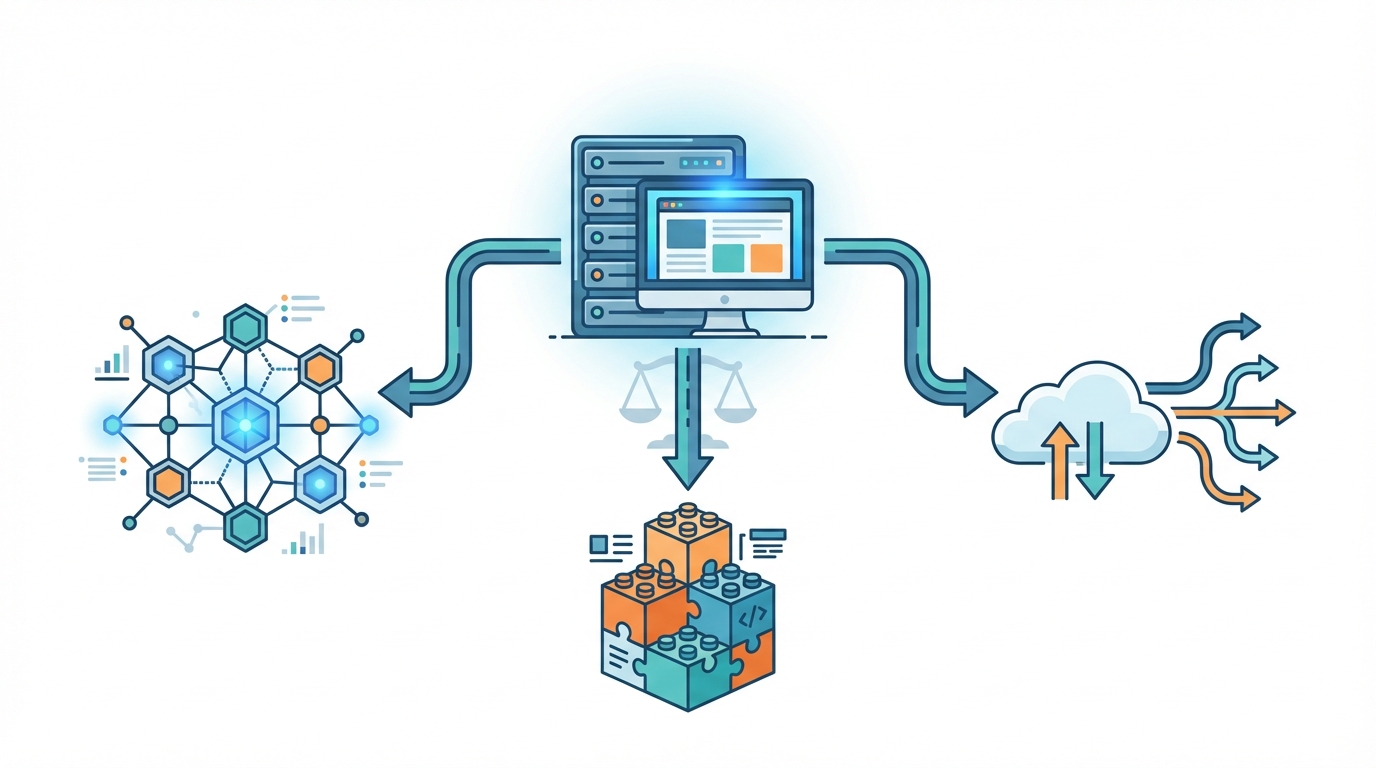
Together these elements reduce friction for AI discovery and improve client acquisition. Therefore firms should treat AI readiness as both a technical and editorial initiative. In other words, developers and marketers must align on roadmap priorities. As a result, small investments in schema, modular templates, and content mapping can yield significant gains in visibility and conversions.
How to Evaluate Strategic Fit for AI
Start by mapping business goals to search outcomes. Identify which practice areas benefit most from AI driven discovery and prioritize them. Then score strategic fit by potential case value, search demand, and conversion likelihood. In addition, involve partners from marketing, IT, and practice leadership early. Doing so reduces silos and speeds decision making.
Assessing Content Readiness
Content readiness means content is accurate, authoritative, and structured for machines. First, inventory your content by attorney, practice area, and common client questions. Next, tag content with clear intent and entity attributes so AI systems can parse value. For best practices on schema and structured data consult Google Search Central. Also audit legal disclaimers and review dates to ensure compliance and trust.
Measuring Revenue Impact and KPIs
Tie SEO and AI efforts to revenue impact with direct metrics. Track qualified lead volume, lead to client conversion rate, and average case value. Also measure assisted conversions to capture AI driven discovery influence. Use time series tests to compare pages after schema or template changes. For KPIs use baseline traffic, visibility in answer features, and conversion velocity to report quickly.
CMS Considerations: Drupal Versus Other Options
Evaluate whether your CMS supports flexible architecture and rapid iteration. Drupal offers robust content modeling and an active ecosystem at Drupal. However other modern CMS options can also support headless delivery and APIs. Legacy CMS stacks often block quick schema rollout and template updates. Therefore teams must test how fast content models and structured data can be published.
Ensuring the System Adapts Quickly
Build modular templates and reusable content blocks for faster updates. Use APIs to expose entity data to external systems and AI platforms. Also add monitoring that alerts you to drops in answers and feature visibility. In addition adopt continuous integration for content and code changes to reduce release friction. As a result your site will respond faster to evolving AI search behaviors.
Practical Evaluation Checklist
- Score strategic fit by case value, search demand, and conversion potential
- Audit content readiness for intent, freshness, and structured entity attributes
- Implement schema for attorneys, practice areas, reviews, and results
- Measure KPIs including qualified leads, conversion rate, and assisted conversions
- Test CMS for API support, modular templates, and headless capabilities
- Run A/B tests or time series comparisons to isolate revenue impact
- Establish monitoring for visibility in AI answer features and snippets
- Align marketing and development roadmaps to remove silos
Use this framework to decide whether to adjust your roadmap or reallocate budget. In the next sections, we will show how to prioritize fixes and estimate return on investment.
| CMS | Flexibility | Scalability | Structured Data Handling | AI Adaptability | Pros | Cons | Reference |
|---|---|---|---|---|---|---|---|
| Drupal | Highly flexible content modeling and modular templates | Scales for enterprise with caching and CDN support | Strong support via modules and custom schema; easy to add JSON-LD | Good for headless, APIs, and integrating AI pipelines | Mature ecosystem and developer control | Steeper learning curve and higher maintenance cost | Drupal Official Site |
| Contentful | Headless CMS with flexible content models | Cloud-first platform that scales well | Excellent API-first approach for structured content delivery | Designed for APIs so easy to connect AI services | Fast iteration and decoupled delivery | Can be costly at scale and requires developer resources | Contentful Official Site |
| Joomla | Good out-of-the-box flexibility with extensions | Suitable for small to mid-market with tuning | Supports schema via extensions; less native tooling | Supports APIs but often needs custom work | Lower cost and faster to launch | Smaller ecosystem and fewer headless features | Joomla Official Site |
| HubSpot CMS | Integrated marketing CMS with modular templates | Scales for SMB to mid-market; enterprise options exist | Basic schema support; marketer friendly controls | Integrates with HubSpot AI tools; limited headless options | Tight CRM and marketing stack integration | Less developer control and potential vendor lock-in | HubSpot Official Site |
Conclusion
AI-ready websites give law firms a clear competitive advantage in modern search. By prioritizing AI search readiness, firms improve visibility in AI-driven discovery and capture more qualified leads. Structured data, flexible architecture, and content readiness matter most for machine understanding. Therefore teams should treat AI readiness as a strategic priority, not a technical afterthought.
Measuring revenue impact helps justify investment and guides prioritization. Track KPIs like qualified leads, assisted conversions, and conversion velocity to measure progress. In addition, modular CMS design speeds iteration, so your system adapts quickly to AI search behaviors. As a result, small upgrades often produce outsized gains in client acquisition.
Case Quota specializes in legal marketing for small and mid-sized law firms. They apply the same high-level strategies big law uses to improve SEO and growth. For expert help evaluating AI readiness, visit Case Quota. Their team can assess your CMS, content readiness, and expected revenue impact.
Start your AI readiness review today by scoring strategic fit, auditing content, and testing structured data. If you need assistance, consider bringing together marketing and development resources. Contact a specialist to run a quick AI readiness audit. Ultimately, AI-ready websites are an investment in sustainable growth and better client acquisition.
Frequently Asked Questions (FAQs)
What is AI search readiness and why does it matter for law firms?
AI search readiness means a website signals clearly to AI systems. It uses structured data, modular content, and flexible architecture. Because AI-driven discovery prioritizes machine-readable signals, readiness improves visibility and lead quality. Therefore firms that invest early often gain search features and direct answers that drive client acquisition.
How can law firms assess their website’s content readiness?
Start with a content inventory by attorney, practice, and common queries. Next, map user intent and tag content with entity attributes. Also add schema for attorney profiles, practice areas, reviews, and outcomes. Finally run quick A/B tests and track changes in visibility and conversions to validate content readiness.
Do I need to change my CMS to be AI-ready?
Not always. First test whether your CMS supports APIs, headless delivery, and schema insertion. If it does, adapt templates and deploy structured data. However legacy stacks often block fast changes. For those cases, consider migrating to Drupal or a modern headless CMS for faster iteration.
What KPIs should firms track for AI-driven SEO impact?
Measure qualified lead volume, assisted conversions, and lead to client conversion rate. Also track visibility in AI answer features and time to conversion. In addition estimate revenue impact by multiplying case value with conversion lifts. Use time series tests to isolate the effect of AI signals.
What quick wins improve client acquisition fastest?
Add or standardize schema for attorneys and practice areas. Improve attorney bios and FAQ content for user intent. Build modular templates to speed updates. As a result you can often see improved visibility and higher-quality inbound inquiries within weeks.