
Embracing Answer Engine Optimization (AEO) for Law Firms
In the evolving landscape of digital marketing, Answer Engine Optimization (AEO) emerges as a pivotal strategy, especially for law firms seeking to enhance their visibility and influence. Unlike traditional SEO, which emphasizes keywords and backlinks, AEO focuses on providing concise and accurate answers to users’ queries, thereby aligning with the preferences of AI-driven search technologies. This shift towards answer-based searches underscores the importance of AEO in capturing the attention of potential clients and positioning your law firm as an authoritative source of legal expertise.
TL;DR
- AEO: Essential for enhancing visibility in AI-driven search results.
- Importance: AEO aligns law firms with search engine preferences, improving client acquisition.
- Strategies: Implement AEO by focusing on structured content and accurate answers.
- Impact: Establish your law firm as an authoritative figure in the legal industry, drawing more attentions from potential clients.
What is Answer Engine Optimization (AEO)?
Answer Engine Optimization (AEO) means designing content so AI systems and answer engines can extract clear, concise answers. In practice, AEO prioritizes direct answers, structured markup, and readable hierarchy over dense, keyword-stuffed pages. Because AI search and large language models favor content they can cite, law firms that adopt AEO improve the chance of being surfaced in AI-driven responses and snippets.
Why this matters is simple. AI Overviews and chat-style results now summarize and cite web pages before users click. Google documented these changes and how sites are cited in AI responses: here. As a result, being readable to LLMs, not just optimized for classic ranking factors, is now essential.
Key elements of AEO include:
- Clear question-based headings that match natural queries
- Short, authoritative answers front-loaded at the top of sections
- Structured data such as FAQPage schema, HowTo schema, and Article schema
- Expert authorship signals, timestamps, and reliable citations
Why should law firms care about AEO?
Law firms should care because potential clients ask legal questions conversationally on AI platforms. Therefore, firms that provide crisp, trustworthy answers gain visibility where users begin their search. LinkedIn research and industry reports show that information hierarchy, expert authorship, and clear headings influence AI visibility. See LinkedIn insights here.
Moreover, Google has repeatedly updated how AI Overviews connect users to the web, adding in-line links and right-hand citations to help users visit sources. Read more at this link. Therefore, AEO is not a niche tactic. Instead, it is a strategic shift from ‘rank-first’ thinking to ‘answer-first’ design.
In short, AEO changes priorities for legal marketers. Focus on extractable answers, signal trust through authorship and schema, and update answers regularly. Doing so increases citation share in LLM responses, improves discovery on AI search, and ultimately drives qualified client inquiries from conversational search channels.
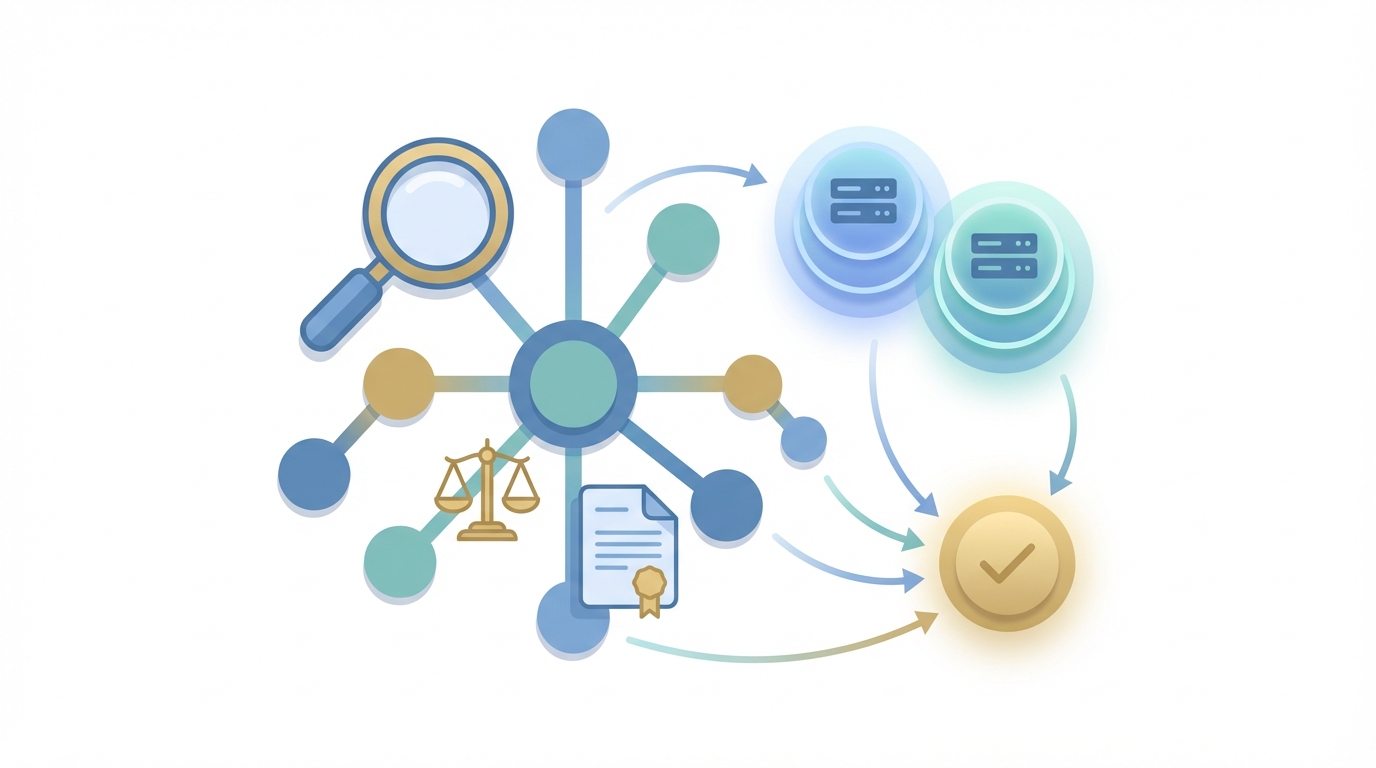
How to Structure Pages for Answer Engine Optimization (AEO)
Lead with the answer. Front-load a concise, one to two sentence answer at the top of each page. This helps LLMs and answer engines extract the key point quickly.
Use clear H1s and question-based H2s that mirror natural queries. For example, write an H2 like “How long does a personal injury claim take?” and answer immediately below it. This matches user intent and improves extractability.
What page elements matter for AEO?
- Short lead answers placed before longer explanations
- Question-based H2s and H3s that match conversational queries
- Bullet lists and numbered steps for quick scannability
- Author bylines, credentials, and timestamps to signal expertise and recency
- Internal links to related answers to create a content graph
These elements make content easier for answer engines to parse. As a result, AI search systems can cite your firm more often.
How should law firms use schema markup for AEO?
Add FAQPage, HowTo, and Article schema to pages where they apply. Schema signals structure and intent to search engines. For validation, use Google’s Rich Results Test: Google’s Rich Results Test. Also, reference FAQPage schema details at FAQPage schema details.
Use schema to highlight simple QandA pairs, step-by-step legal processes, and article metadata. Therefore, LLMs receive clearer signals when they build responses.
How to write content for LLMs and answer engines?
Start with the answer, then expand using the inverted pyramid. Keep paragraphs short and sentences simple. Because LLMs favor concise, authoritative text, provide a 1 to 2 sentence summary first. Then add context, examples, and supporting citations.
Use plain language for legal topics. Also, include common phrasing and synonyms to match varied user prompts. For example, include “statute of limitations” and “time limit to sue” within the same section.
Quote guidance and industry best practices. For instance, experts note “Use question-based H2s and H3s to match natural query patterns.” Moreover, “the more structured and logical your content is, the easier it is for LLMs to understand and surface.” These points underline the need for clarity and hierarchy.
What tools help with AEO content quality?
- Clearscope for semantic optimization and topic depth: Clearscope
- MarketMuse for content planning and competitive gaps: MarketMuse
- Google’s Rich Results Test for schema validation: Google’s Rich Results Test
Use these tools to tune headings, depth, and topical coverage. Then run schema tests and iterate quarterly.
In short, design pages for extraction, not only for ranking. Structure answers, add schema, and prove expertise. Doing so improves citation share in AI search and drives qualified client inquiries.
| Tool or Technique | Purpose | Key Features | Integration Suitability for Legal Marketing | Pricing Considerations |
|---|---|---|---|---|
| Clearscope | Semantic content optimization and topic depth for AEO | Keyword intent analysis, content grading, recommended terms, editor integrations | Very suitable. Helps law firms match answer engines and LLMs by improving topical coverage and readability | Mid market SaaS pricing. Budget for monthly subscriptions and per-seat costs |
| MarketMuse | Content planning and gap analysis to prioritize AEO topics | Content briefs, competitive analysis, content scoring, topic models | Highly suitable. Useful for mapping pillar pages and question-based H2s for legal practice areas | Tiered plans. Consider enterprise for high-volume content and strategic planning |
| Claude | LLM for drafting, summarization, and citation-aware answers | Conversational responses, context windows, instruction following, safety controls | Useful for drafting concise legal answers and QandA pairs. Use cautiously with client data | Pricing varies by usage and deployment. Evaluate API costs versus hosted options |
| ChatGPT (tool entry) | LLM for drafting, ideation, and quick answer generation | Fast prototyping, prompt engineering, large model access | Useful for drafting plain-language legal summaries and FAQs. Verify facts and citations | Freemium to paid tiers. Consider subscription and API usage costs |
| Perplexity (tool entry) | Answer-engine style LLM with source citations for quick answers | Conversational answers with provenance, web citation features | Useful to test how answers appear to users on answer engines. Use for competitive research | Freemium or usage-based models. Check vendor site for enterprise options |
| Gemini | Google’s LLM ecosystem for summarization and AI search proofs | Multimodal models, deep search integration, summarization, citation signals | Very suitable when aligning with Google AI Overviews and AEO signals | Pricing and access vary. Evaluate enterprise licensing and integration fees |
Notes
- Use Clearscope or MarketMuse to optimize content depth and semantic relevance for answer engines and LLMs. These tools help tune question-based headings and related keywords.
- Use LLMs such as Claude, ChatGPT, Perplexity, or Gemini to draft concise answers and test extractability. However, always verify facts and add authoritative citations.
- Validate schema and rich results after publishing. For schema validation, use Google’s Rich Results Test: Google Rich Results Test.
Conclusion: AEO, Resilient Roadmaps, and LinkedIn Visibility
Answer Engine Optimization (AEO) changes where and how law firms appear in AI-driven search. Instead of chasing rankings alone, firms must deliver extractable answers for LLMs and answer engines. AI Overviews and chat-style engines now prefer concise, citable answers. Therefore, AEO shifts priorities toward concise answers, schema markup, and expert signals. Consequently, your content must be structured for extraction, not only for clicks.
Resilient roadmaps make this shift operational. Adopt quarterly diagnostic cycles and mid-quarter reviews to reduce technical debt. Use FAQPage and HowTo schema to surface quick answers. Moreover, measure new KPIs such as citation share, visibility rate, and LLM mentions. LinkedIn visibility complements AEO by amplifying authorship signals and professional credibility.
Small and mid-sized firms gain disproportionate advantage from AEO. As a result, focused content and answer-first pages increase citation share and client inquiries. Focused practices like personal injury and employment law often win quickly. Because these areas have repeatable questions, AEO yields faster ROI. Be seen, be mentioned, be considered, be chosen.
For firms that need help executing these changes, Case Quota offers specialized legal marketing strategies. Visit their site to review services that align AEO, resilient roadmaps, and LinkedIn strategies. Case Quota works with growing firms to prioritize content that LLMs cite. They translate legal expertise into answer-first pages and measurable KPIs.
Start by auditing high-value pages for extractable answers and schema. Then iterate every quarter while testing LLM extractability and tracking citations. Move steadily, measure impact, and document authorship and timestamps. In time, AEO becomes a sustainable pipeline for qualified leads. Ultimately, firms that adopt AEO will win in AI-driven search.
Frequently Asked Questions (FAQs)
What is Answer Engine Optimization (AEO) and how does it differ from traditional SEO?
AEO focuses on crafting extractable answers that LLMs and answer engines can cite. Traditional SEO centers on rankings, keywords, and backlinks. Therefore, AEO prioritizes clear question headings, short lead answers, and structured schema. As a result, AEO improves visibility in AI search and chat-style results.
How will AI search and LLMs change where clients find legal answers?
AI search and LLMs will surface concise answers directly in search and chat interfaces. Because these systems prefer citable sources, they often cite web pages without a click. Consequently, law firms must ensure their content is extractable and trustworthy. Moreover, being cited in AI responses increases brand consideration.
Should law firms use schema markup and which types help AEO most?
Yes. Use FAQPage, HowTo, and Article schema to signal structure and intent. FAQPage schema helps short QandA pairs, while HowTo suits step-by-step legal processes. Article schema conveys authorship and timestamps, which signal expertise and recency. Therefore, schema increases the chance LLMs can identify and cite your content.
How often should firms update content and run quarterly SEO roadmaps?
Update quick answers at least quarterly as a baseline. However, update monthly for fast-moving legal topics or regulatory changes. Break planning into quarterly diagnostic cycles with mid-quarter reviews. Doing so reduces technical debt and keeps answers current for AI search.
How can LinkedIn visibility support AEO and AI-driven search strategies?
LinkedIn strengthens authorship signals that AI systems value. By publishing expert posts and clear headings, you amplify credibility and citation potential. Additionally, LinkedIn content creates secondary citation paths that LLMs may reference. In short, combine LinkedIn visibility with answer-first pages to improve citation share and client trust.
If you have more questions about implementing Answer Engine Optimization for your firm, audit high-value pages for extractable answers and schema. Then schedule quarterly review cycles to measure citation share and visibility rate.