

AI visibility tools: How AEO boosts law firm SEO and lead quality
AI visibility tools are changing search and discovery for legal services, and law firm marketers must adapt quickly. As AI systems like large language models surface direct answers, they shift user behavior from clicking through many results to accepting concise, AI-curated responses. Therefore, law firms that measure and optimize AI visibility gain a clear advantage. HubSpot AEO Grader and HubSpot Smart CRM make that process practical. For example, the AEO Grader tracks recognition, presence quality, sentiment, share of voice, and market score, which helps teams build a reliable visibility baseline.
Because search now blends organic listings, AI answers, and in-platform recommendations, traditional SEO alone no longer suffices. Answer Engine Optimization, or AEO, focuses on crafting content that AI systems can ingest, cite, and recommend. As a result, optimized content attracts higher-intent prospects and improves lead quality. Moreover, integrating AI visibility signals into HubSpot Smart CRM maps those signals to contacts, deals, and pipeline fields. This creates measurable connections between mentions and closed business.
However, the change is not hypothetical. AI-driven discovery drives different intent signals and conversion behavior. Consequently, legal marketers must combine content designed for AEO with tracking that captures AI referrals. In addition, teams should adopt AI visibility tools that feed into GA4 or CRM dashboards, because reliable reporting proves value to stakeholders. In short, embracing AI visibility tools and HubSpot-centric AEO workflows helps law firms win the new search era, improve qualified leads, and show measurable pipeline impact. Ready to adapt, legal marketers can turn AI mentions into higher-quality client opportunities.
What are AI visibility tools?
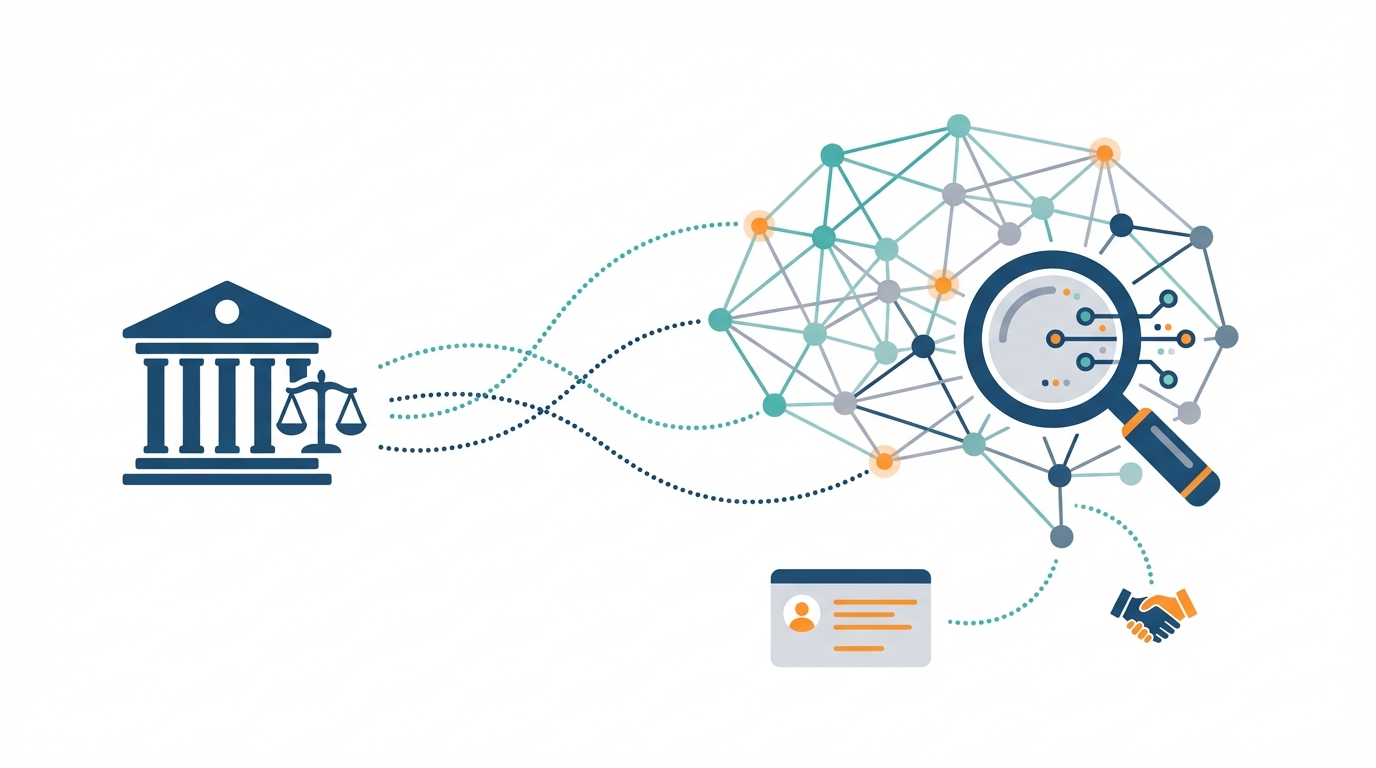
AI visibility tools monitor how content appears inside AI-driven search and answer engines. They track brand mentions, answer snippets, and citations across large language model ecosystems. Because modern discovery increasingly happens inside chat and assistant interfaces, these tools reveal where a law firm shows up in AI recommendations. Major ecosystems to watch include ChatGPT, Gemini, Claude, Copilot, and Perplexity. For HubSpot users, HubSpot AEO Grader measures recognition, presence quality, sentiment, share of voice, and market score, and it connects to HubSpot Smart CRM for mapping visibility to contacts and deals HubSpot.
AI visibility tools and law firm SEO performance
AI visibility tools play three important roles for law firm SEO. First, they expose how and where AI systems cite a firm. Second, they show which content the systems prefer. Third, they feed visibility signals into analytics and CRM systems, enabling direct pipeline attribution. As a result, firms can move beyond vanity metrics. They can measure lead quality and show revenue impact.
Key functions and outcomes
- Track mentions across LLM ecosystems and monitor sentiment and share of voice. This helps firms see which pages AI uses as authoritative.
- Map AI mentions to landing pages and conversions, so teams can attribute pipeline value. For example, HubSpot Smart CRM maps AI-influenced contacts to deals and lead quality fields.
- Improve AEO by shaping content that AI systems can ingest and cite, because AEO writing stores factual chunks agents can pull later.
- Feed AI visibility data into GA4 or CRM dashboards for ongoing reporting and proof of value.
Supporting evidence
Ahrefs found AI search visitors converted 23 times better than traditional organic traffic, which implies higher-intent discovery inside AI answers Ahrefs. SE Ranking also observed AI-referred users spent about 68 percent more time on site than standard organic visitors, which suggests stronger engagement SE Ranking. Moreover, many teams refresh visibility weekly and review patterns monthly to spot trends and opportunities.
Pricing and practical choices
Several commercial tools help law firms gain AI visibility. Aivisibility.io starts around $19 to $49 per month. Peec.ai ranges from €89 to €199 per month. Otterly.ai lists plans from $29 to $189 per month. Parse.gl typically starts at about $159 per month. These tools vary by depth and integration complexity, so firms should prioritize solutions that feed visibility data into CRM and analytics platforms.
In short, AI visibility tools convert AI mentions into measurable SEO gains and higher-quality leads. Therefore, legal marketers who adopt these tools can capture AI-driven intent and prove its impact on pipeline and revenue.
| Tool | Pricing | Key Features | Integration Capabilities | Target Users |
|---|---|---|---|---|
| HubSpot AEO Grader | Free tier; advanced features via HubSpot plans | Tracks Recognition, Market Score, Presence Quality, Sentiment, Share of Voice; native AEO assessments | Native to HubSpot Smart CRM; can feed GA4 dashboards via HubSpot integrations HubSpot | Law firms using HubSpot; marketing teams focused on pipeline attribution |
| Peec.ai | €89 to €199 per month | AI mention tracking; competitor monitoring; sentiment analysis | API access; can export data to CRMs and analytics tools Peec.ai | Mid market law firms and agencies needing turnkey monitoring |
| Aivisibility.io | $19 to $49 per month | Lightweight AI mention tracking; visibility alerts; basic sentiment | Exports and integrations to analytics platforms; CSV and API options Aivisibility.io | Small law firms and solo practitioners on a budget |
| Otterly.ai | $29 to $189 per month | AI mention capture; content scoring; prompt testing | API and integrations for data export; connects to analytics and CRM tools Otterly.ai | Content teams and SEO specialists optimizing AEO workflows |
| Parse.gl | Starts around $159 per month | Deep LLM scraping and citation tracking; advanced query analysis | Robust API; enterprise integrations for CRM and analytics Parse.gl | Enterprise law firms and data-driven agencies |
This table helps law firms compare AI visibility tools by cost, features, and connectivity. Choose solutions that can feed visibility signals into CRM and GA4 so you can map mentions to landing pages, conversions, and pipeline metrics. Remember Ahrefs found AI search visitors converted 23 times better than traditional organic traffic, and SE Ranking observed AI-referred users spent about 68 percent more time on site, which makes integration and attribution especially valuable.
Mapping AI visibility metrics to lead quality and HubSpot Smart CRM
AI visibility metrics translate brand mentions, sentiment scores, and share of voice into tangible lead signals. When law firms combine these signals with CRM data, they can judge lead quality better. As a result, teams prove how AI discovery drives pipeline. HubSpot Smart CRM lets firms map AI-influenced contacts to deals and lead quality fields. For HubSpot resources, see HubSpot.
Why map AI visibility to CRM
- Brand mentions indicate awareness and rising intent. Therefore, a spike in mentions often precedes inbound inquiries.
- Sentiment analysis reveals perception. Negative sentiment triggers outreach, while positive sentiment identifies warm prospects.
- Share of voice shows relative visibility. Higher share means a firm wins more AI recommendations.
How to operationalize mapping
-
Collect AI visibility signals centrally
- Use an AI visibility tool to capture mentions across ChatGPT, Gemini, Claude, Copilot, and Perplexity. Then export mention metadata and sentiment.
- Standardize fields such as mention date, source ecosystem, sentiment score, and cited URL.
-
Enrich leads when AI signals appear
- Create automation that adds an AI mention tag to a contact record. In HubSpot Smart CRM, map the tag to a custom property for AI influence.
- Record related page views and UTM parameters to trace landing pages to mentions.
-
Score and route leads based on AI signals
- Use lead scoring rules that add weight for positive AI mentions and high share of voice.
- Route higher-scoring contacts to senior intake teams or partners, because they show stronger intent.
-
Attribute pipeline and run closed loop reporting
- Map mentions to deals and revenue using CRM reporting. Then compare conversion rates for AI-influenced leads versus other channels.
- For ongoing dashboards, feed visibility data into GA4 and CRM dashboards. Third-party studies show AI search visitors convert far better. See Ahrefs for conversion insights and SE Ranking for engagement data.
Benefits for law firms
- Better lead qualification because AI-referral signals align with intent.
- Faster routing to the right intake resource, improving conversion rates.
- Clear pipeline attribution that links mentions to revenue.
- Evidence-based budgets for AEO and content investment.
Practical metrics to track
- Mention velocity per ecosystem and per practice area
- Sentiment change over time for key terms
- Share of voice compared to competitors
- Conversion rate and average deal size for AI-influenced deals
Expert perspective
“AI visibility metrics connect to lead quality and pipeline attribution.” This view highlights measurement as the path from visibility to value. Because only a minority of brands track AI search, firms that implement mapping gain an early advantage. In practice, teams refresh visibility weekly and analyze patterns monthly. As a result, law firms can respond faster to shifts and capture higher-quality leads from AI-driven discovery.
CONCLUSION
AI visibility tools and Answer Engine Optimization together reshape how law firms attract clients. They help firms appear inside AI answers and recommendation panels. As a result, firms capture higher intent traffic and improve lead quality.
When teams measure mentions, sentiment, and share of voice, they gain actionable signals. Then they map those signals into HubSpot Smart CRM and other systems. Because visibility ties to contacts, deals, and pipeline fields, legal marketers can prove ROI. Moreover, linking visibility data to landing pages and conversions shows clear attribution. Therefore, reporting moves from vague metrics to revenue-focused KPIs.
Adopting AEO workflows also changes content strategy. For example, teams write concise answer-ready content and validate it against AI visibility signals. In practice, this approach increases engagement and raises the odds of qualified inquiries. In addition, automating tags, lead scores, and routing based on AI mentions speeds intake. Consequently, conversion rates improve and intake teams close higher-value matters.
For small and mid-sized law firms seeking a strategic partner, Case Quota offers tailored legal marketing services. Case Quota combines AEO, AI visibility tools, and HubSpot-centric integrations. Then they align content, tracking, and CRM to win market share. Visit Case Quota to explore their services and book a strategy session.
In short, AI visibility tools are not optional. They make SEO measurable, scalable, and revenue-driven. Therefore, law firms that act now will earn more qualified leads and stronger pipeline outcomes.
Frequently Asked Questions (FAQs)
What are AI visibility tools and why do law firms need them?
AI visibility tools track how content appears inside AI and LLM search systems. They monitor brand mentions, answer citations, and sentiment across ecosystems like ChatGPT, Gemini, Claude, Copilot, and Perplexity. Because AI-driven discovery sends higher-intent visitors, firms that use these tools gain a visibility edge. Moreover, Ahrefs found AI search visitors convert 23 times better than traditional organic traffic. Therefore, tracking visibility helps firms capture more qualified leads.
How do AI visibility tools differ from traditional SEO tools?
Traditional SEO tools measure rankings and backlinks. In contrast, AI visibility tools track mentions inside LLM outputs and answer engines. As a result, they focus on answer readiness and citation quality. Also, these tools report share of voice and sentiment, which matter for AI recommendations. Consequently, teams must write AEO-ready content and validate it with AI visibility signals.
How can law firms measure AI visibility and link it to lead quality?
Start by recording mention metadata, sentiment score, and cited page. Next, feed that data into analytics and CRM systems. For example, map AI-influenced contacts to HubSpot Smart CRM custom fields. Then run dashboards that compare AI-influenced conversion rates to other channels. Importantly, SE Ranking noted AI-referred users spend about 68 percent more time on site. Therefore, visibility often equates to stronger engagement.
What are common integration steps with HubSpot Smart CRM?
- Export mentions from your AI visibility tool as CSV or via API.
- Create custom HubSpot properties for AI influence and source ecosystem.
- Use automation to tag and score contacts when mentions appear.
- Route high-value AI-influenced leads to senior intake staff.
This approach enables pipeline attribution and closed-loop reporting. As a result, marketing proves its revenue impact.
What challenges should legal marketers expect and how do they start?
Expect noise from broad mentions and uneven LLM coverage. However, start small. First, pick one tool and one practice area. Then set weekly checks and monthly pattern reviews. Finally, score and route AI-influenced leads, because consistent processes turn visibility into pipeline.