

The Importance of AI Visibility Tools in Enhancing Law Firm SEO
In today’s rapidly evolving digital landscape, AI visibility tools have become indispensable for law firms looking to enhance their search engine optimization (SEO) strategies. As the AI era ushers in new technological advancements, law firms must adapt to maintain their competitive edge. Here, AI visibility tools play a pivotal role in ensuring optimal visibility across multiple AI ecosystems.
Why AI Visibility Tools Matter
AI visibility tools are designed to track and analyze how often and accurately a brand is mentioned within AI-generated responses. These tools help law firms to:
- Monitor Brand Mentions: Swifthly assess brand visibility and reputation in AI-driven platforms.
- Evaluate Share of Voice: Understand their market presence relative to competitors.
- Measure Sentiment: Gauge public perception and engagement levels within AI ecosystems.
As AI ecosystems like ChatGPT, Gemini, Claude, Copilot, and Perplexity dominate AI search platforms, monitoring these domains becomes crucial for law firms aiming to stand out.
Navigating the AI Ecosystem
Understanding key players in the AI ecosystem is vital. Leading platforms such as OpenAI’s ChatGPT, Google’s Gemini, Anthropic’s Claude, Microsoft’s Copilot, and Perplexity are shaping how brands interact with AI-generated content. These systems facilitate a new realm of search visibility, requiring law firms to harness AI visibility tools to track and optimize their online presence.
With these tools, law firms can align their SEO strategies with AI-driven ecosystems, turning data into actionable insights and maximizing their digital footprint. Embracing this shift not only aligns with modern advancements but also opens the door to innovative strategies that can transform traditional marketing approaches.
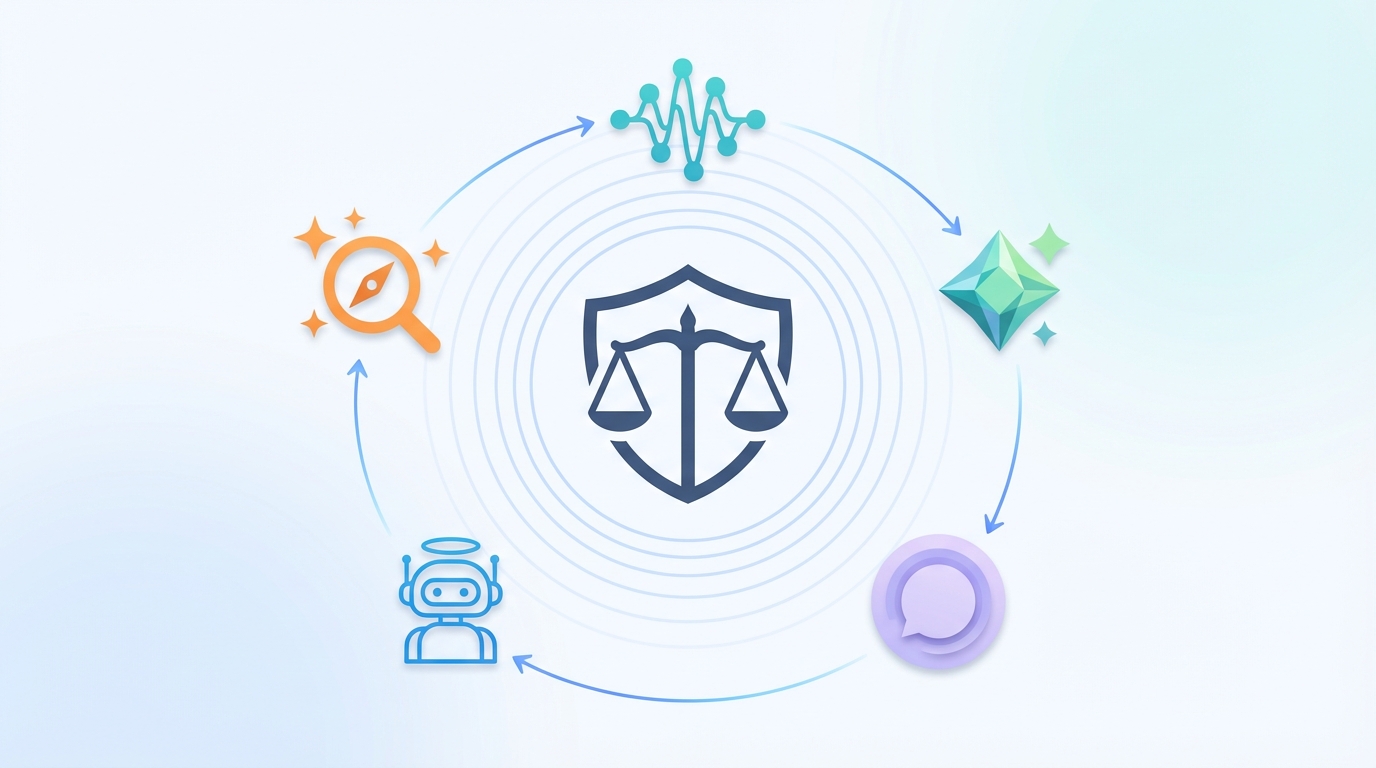
How AI visibility tools analyze brand mentions, citations, sentiment, and share of voice
AI visibility tools work by treating AI engines as distinct publishing channels. First, they query large language models and AI search systems with real user prompts. Then, they parse the generated answers to find brand mentions, citations, and context. As a result, these tools turn opaque AI outputs into measurable signals for SEO teams.
Core workflow in plain steps
- Simulate queries and prompts across major ecosystems. For example, tools test ChatGPT, Gemini, Claude, Copilot, and Perplexity.
- Extract named entities and brand mentions from AI responses. Next, they match citations to source URLs and knowledge bases.
- Score sentiment and confidence for each mention. Therefore, marketers learn whether AI presents the brand positively or negatively.
- Aggregate share of voice across ecosystems. As a result, teams see which platforms favor their brand.
Key technical methods
- Natural language processing to identify entities and intent.
- Citation matching against indexed sources and canonical pages.
- Sentiment analysis using lexicons and model-based classifiers.
- Time series reporting to track trends and sudden shifts.
Five essential metrics tracked by AI visibility tools
- Recognition: Measures how often AI systems mention the brand in relevant answers.
- Market Score: Benchmarks visibility against competitors and categories.
- Presence Quality: Assesses whether mentions include helpful, actionable content.
- Sentiment: Rates the emotional tone for each brand mention.
- Share of Voice: Calculates percentage of total AI responses that reference the brand.
Case examples and platform integrations
HubSpot AEO Grader surfaces a baseline for brand visibility across ChatGPT, Gemini, Claude, and Perplexity. It uses the five metrics above to create an AEO score. Importantly, HubSpot AEO Grader offers native integration with HubSpot Smart CRM. This connection helps teams sync visibility signals with lead and account records. Learn more about the grader at HubSpot AEO Grader and HubSpot Smart CRM at HubSpot Smart CRM.
Other AI visibility tools scale similar processes for different budgets. For instance, Peec.ai provides continuous monitoring and dashboards at Peec.ai. Otterly.ai offers prompt-level tracking and competitive benchmarks at Otterly.ai.
How teams use these outputs
- Prioritize content updates where Presence Quality is low.
- Create ready-for-purchase pages when Sentiment and Recognition climb.
- Route high-intent AI referrals into CRM workflows for follow up.
Ultimately, AI visibility tools convert AI-driven answers into clear SEO signals. Therefore, law firms can act quickly and maintain visibility across evolving AI ecosystems.
AI visibility tools comparison table
| Tool | AI ecosystems covered | Pricing range | Key features |
|---|---|---|---|
| Peec.ai | ChatGPT, Gemini, Claude, Copilot, Perplexity | €89–€199/mo | Continuous monitoring, dashboards, brand mentions, sentiment, share of voice |
| Aivisibility.io | ChatGPT, Gemini, Claude, Perplexity | $19–$49/mo | Lightweight monitoring, alerts, citation tracking, competitive benchmarks |
| Otterly.ai | ChatGPT, Gemini, Claude, Copilot, Perplexity | $29–$189/mo | Prompt-level tracking, competitive analysis, share of voice, API access |
| Parse.gl | ChatGPT, Gemini, Claude, Copilot, Perplexity | $159+/mo | Enterprise dashboards, deep citation matching, time-series trends |
| HubSpot AEO Grader | ChatGPT, Gemini, Claude, Perplexity | Free (advanced via HubSpot) | Recognition, Market Score, Presence Quality, Sentiment, Share of Voice; native HubSpot Smart CRM integration HubSpot CRM |
Notes
- Choose lower-cost tools for basic monitoring and alerts.
- Choose enterprise tools for deep citation matching and API integrations.
- If you use HubSpot CRM, HubSpot AEO Grader syncs visibility signals with your records.
Strategic SEO optimizations with AI visibility tools
AI visibility tools give law firms clear signals about how AI systems present their brand. Therefore, firms can move beyond traditional keyword chasing. Instead, they align content with how AIs answer legal queries.
Start with AEO patterns and prompt development. As Takeo Apitzsch noted, “We coined the term ‘AI-driven Multimodal Funnel’ to describe the shift in user behavior and platform dynamics that will eventually likely replace the ‘traditional’ AIDA marketing funnel, from active search and exploration to passive, one-click actions driven by AI recommendations.” Consequently, law firms must create content that looks and reads like the chunks AI systems will store and cite.
Actionable tactical checklist
- Audit current content for AEO patterns first. Next, identify the facts, statistics, and expert quotes that AI systems can cite.
- Build prompt sets that surface target pages. Therefore, craft prompt templates for internal testing and for vendor tools to run at scale.
- Track LLM referral tracking in your analytics. In this way, you can determine which AI ecosystems send the most valuable referral intent.
- Map AI referrals into GA4 events and conversion funnels. Then, label those events to capture lead quality and downstream pipeline value.
Use metrics as a feedback loop. For example, when AI visibility tools report low Presence Quality, update the content with clearer answers and citations. As a result, you increase the chance AI systems will reference your pages with confidence.
Integration and workflow recommendations
- Connect visibility signals to CRM systems. HubSpot AEO Grader offers a native integration with HubSpot Smart CRM, which helps teams route AI referrals into account records and follow up efficiently. See HubSpot AEO Grader and HubSpot Smart CRM for more details.
- Automate alerts for sentiment shifts. Because sentiment changes can signal reputation risk, set thresholds for human review.
- Prioritize pages for “ready for purchase” intent. Kimberly Jefferson explains, “We’ve focused on optimizing content to answer the user intent behind our clients’ target queries and prompts. That includes leaning into on-page SEO best practices for content published across paid, earned, shared, and owned media [and] reinforcing real-world credibility via studies, impact data, and quotes from proven subject-matter experts.” Therefore, prepare transactional pages that AI can surface when intent is high.
Tool strategy and budget choices
- Small firms can start with lightweight tools and prompt libraries. For example, Peec.ai provides continuous monitoring and dashboards at Peec.ai to show quick wins.
- Larger firms should invest in enterprise platforms that offer deep citation matching and API access. This choice supports programmatic updates and broad testing.
Finally, treat AI visibility as an operational signal, not a one time audit. As AI ecosystems evolve quickly, continuous tracking, prompt testing, and GA4 event mapping will preserve and grow your law firm’s presence in AI driven search.
Conclusion: Case Quota’s role in AI-era SEO
AI visibility tools give law firms measurable control over AI-driven discovery. Therefore, they convert opaque model outputs into actionable SEO signals. As a result, firms can track brand mentions, citations, and sentiment. They can also measure share of voice across ChatGPT, Gemini, Claude, Copilot, and Perplexity. Consequently, this visibility improves content prioritization, builds trust, and drives qualified referrals.
Benefits
- Faster content prioritization based on Presence Quality and Recognition metrics.
- Better lead routing when LLM referral tracking sends high-intent signals.
- Stronger reputation management through sentiment alerts and citation fixes.
Case Quota is a specialized legal marketing agency. It helps small and mid-sized law firms dominate local and national markets. Because they apply advanced strategies usually reserved for Big Law, they level the playing field. They integrate AI visibility tools, AEO patterns, LLM-referral tracking, and GA4 event mapping into coherent systems. As a result, clients gain measurable pipeline improvements and higher lead quality.
Their team combines legal domain knowledge with technical SEO and data engineering. For example, they map AI-derived intent to client intake paths and test prompt sets for high-converting answers. Consequently, firms see faster case intake and improved ROI from digital channels. Contact them to begin a pilot program tailored to your practice area.
If you want help implementing these strategies, visit Case Quota to learn more. Visit the site, request a demo, or schedule a strategy call. For law firms that aim to lead in the AI era, Case Quota offers focused expertise and clear execution.
Frequently Asked Questions (FAQs)
What are AI visibility tools and why do law firms need them?
AI visibility tools monitor how large language models and AI search systems mention your brand. They analyze citations, sentiment, and share of voice. As a result, firms learn where AI surfaces their content and why. Law firms need these tools because AI-driven answers increasingly guide prospects. Therefore, visibility becomes a core SEO metric, not an optional signal.
How do AI visibility tools improve law firm SEO?
They provide clear signals that feed content strategy. For example, tools show which pages AI cites most often. Use that data to:
- Improve Presence Quality by adding facts and citations.
- Create prompt-aware content that mirrors AEO patterns.
- Route high-intent AI referrals into CRM workflows.
Because these signals come from AI ecosystems, they help firms win visibility across ChatGPT, Gemini, Claude, Copilot, and Perplexity.
Which metrics should law firms track first?
Prioritize metrics that predict referral value. Track these five core metrics:
- Recognition: How often AI mentions your brand.
- Market Score: Visibility versus competitors.
- Presence Quality: Are mentions useful and actionable?
- Sentiment: Positive or negative tone assigned to your brand.
- Share of Voice: Share of AI responses that cite you.
Monitoring these metrics creates a fast feedback loop. Then, you can prioritize content updates and reputation work.
How do I set up LLM referral tracking and GA4 for AI referrals?
Start with simple steps. First, define AI referral events you want to capture. Then, map those events in GA4 as custom events. Next, capture landing pages and UTM parameters for downstream analysis. Finally, integrate events with CRM systems to track lead quality. In practice, this process turns opaque AI traffic into measurable pipeline signals.
Which AI visibility tools should small and mid-sized firms consider?
Choose tools by budget and needs. Options include:
- Aivisibility.io for lightweight monitoring ($19–$49/mo).
- Otterly.ai for prompt-level tracking ($29–$189/mo).
- Peec.ai for continuous dashboards (€89–€199/mo).
- Parse.gl for enterprise needs (from $159/mo).
- HubSpot AEO Grader for a free baseline and HubSpot CRM integration.
Start small, measure wins, and scale toward enterprise tools as needed.