

AI for SEO with real data: How law firms can own local search by 2026
AI for SEO with real data is not a buzz phrase. It is a strategy that will reshape legal marketing through 2026. Because search is more competitive than ever, law firms must pair smart AI with live SEO signals. As a result, firms that connect advanced AI assistants to real datasets will outpace competitors in visibility and leads.
This article promises to reveal cutting edge strategies that combine artificial intelligence and SEO data. First, we explain why raw AI alone can miss the mark without reliable metrics. Then we show how to use Model Context Protocol and MCP Server to link AI assistants like ChatGPT or Claude to up to date keyword data and backlink profiles. Therefore you get fast answers grounded in evidence rather than guesswork.
Expect practical guidance and data driven insights you can implement today. We cover competitive analysis, keyword opportunity discovery, on page content planning, and backlink tactics tailored for local legal queries. Moreover we outline 15 practical use cases and top prompts for a law firm AI assistant. These range from quick audits to deep, multi dataset analysis that scales across office locations.
By the end you will have a clear plan for deploying AI tools plus a connected SEO stack. For example, you will learn how to ask natural language questions and get actionable keyword lists, competitor gaps, and content outlines. As a result your team will produce better content faster and win more cases online. Get ready to transform your firm with AI for SEO with real data and dominate your market in 2026.
How Law Firms Can Use AI for SEO with real data to Rank in 2026
Combine AI speed with live SEO datasets to win local legal queries. First, define what this approach means. AI for SEO with real data pairs advanced AI assistants and real-time metrics. These datasets include keyword volumes, ranking histories, and backlink profiles. Because the data is live, recommendations stay relevant as search trends shift.
What it is and why it matters
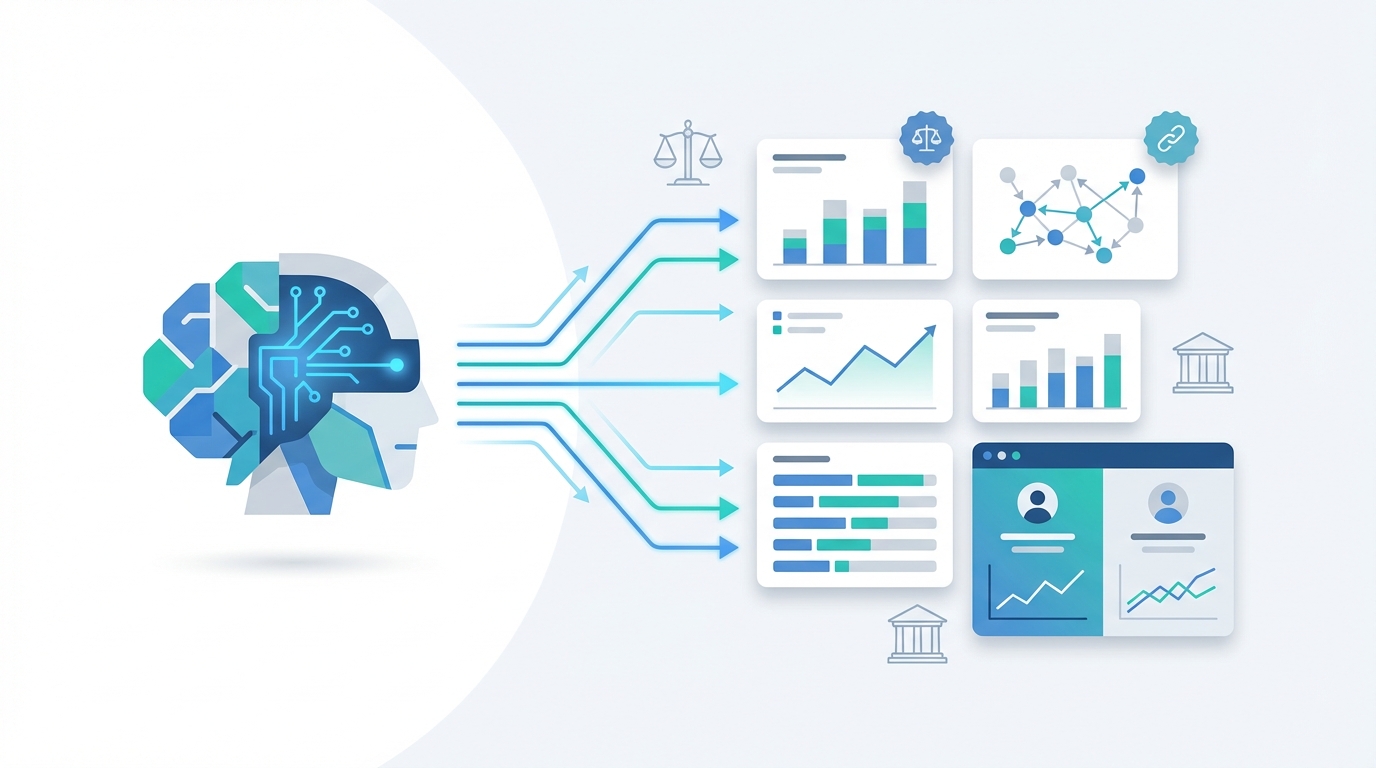
AI for SEO with real data uses two systems together. One system stores and serves SEO telemetry. The other interprets that data in natural language. At its core, Model Context Protocol or MCP provides the bridge. MCP stands for Model Context Protocol and it is an open standard. Therefore MCP lets compatible AI assistants access external data sources through a standardized connection. As a result, tools like ChatGPT and Claude can query SEO datasets quickly and accurately.
Traditional SEO dashboards are powerful yet slow and siloed. However, when you connect an AI assistant to a live dataset, you can ask deep natural language questions. For example, ask which competitor pages gained links last month. The assistant returns ranked opportunities and outreach targets. This method removes manual CSV work and speeds decision making.
Benefits for law firms
- Faster insight because AI summarizes complex datasets in plain language
- Better relevance because live data tracks local search trends
- Scalable analysis across practice areas and offices
- Data backed recommendations that reduce guesswork
Smaller firms gain a special advantage. Because they move fast, they can adopt MCP connected workflows early. As a result, local attorneys can compete with larger firms on specific queries. They can target niche injury claims or neighborhood specific landlord disputes. With focused content and smart link outreach, small teams win clients and visibility.
Actionable strategies to rank in 2026
- Connect an MCP Server to your SEO platform and AI assistant. This integration centralizes live keyword and backlink data. Then prompt the assistant for market gaps and content clusters. Use tools like Ahrefs for raw link data, because comprehensive backlink profiles matter.
- Run competitor backlink analysis and prioritize low effort wins. For example, find broken links on competitor resources. Then create superior local content and outreach. The assistant can generate outreach templates tailored to legal editors.
- Use keyword opportunity discovery for local intent. Ask the AI to list low difficulty queries with clear conversion intent. Then craft short pages and FAQs aimed at those queries. This approach reduces content waste and improves ROI.
- Automate local citation and schema audits. Request a prioritized task list from the AI. Then assign fixes to your webmaster or agency.
- Monitor SERP feature gains and optimize. Have the assistant track featured snippets, local pack shifts, and People Also Ask. Because these features shift fast, live data ensures you act before competitors.
Real examples and evidence
“AI on its own can write and suggest ideas, but without reliable data to anchor those suggestions, it can miss the mark.” Use this as a guiding principle. For example, a small personal injury firm asked an AI linked to live backlink data to find competitor pages gaining traffic. The AI returned five easy outreach targets. After targeted outreach, the firm secured two backlinks and moved into the local pack within eight weeks.
For broader reading, industry resources help. See Search Engine Journal and Anthropic for details on Claude and related assistants.
Adopt these MCP connected tactics now. As a result, your firm will capture local legal queries and scale SEO faster than firms that wait.
Top 10 SEO Prompts for a Law Firm AI Assistant
Use these prompts with AI assistants (ChatGPT, Claude) connected to live SEO data. They help extract keyword opportunities, backlink targets, competitive insights, and content ideas. Start simple, then progress to advanced analysis. Each prompt includes a quick tip for faster wins.
-
“List five local keywords with high intent and low difficulty for [practice area] in [city].”
Quick tip: Ask for search volume, difficulty score, and estimated monthly traffic. Because you want fast wins, prioritize keywords with clear intent.
-
“Show pages in my city that rank for ‘injury lawyer near me’ and the top three competitors for each page.”
Quick tip: Request domain authority and backlink count. Then use that list to map competitors to specific queries.
-
“Find broken backlinks pointing to my top competitor articles about [topic]. Provide source URLs and contact pages.”
Quick tip: Use this for outreach. Then craft a replacement page and a short outreach email the assistant writes.
-
“Generate a content brief for a 900 word page targeting [keyword]. Include headings, internal links, schema suggestions, and suggested outbound citations.”
Quick tip: Ask the AI to pull top ranking page examples from live data. This anchors the brief in evidence rather than opinion.
-
“Compare our backlink profile to competitor X and list 10 domains we should target for outreach. Prioritize by traffic and topical relevance.”
Quick tip: Have the assistant rank prospects by ease of acquisition and potential organic traffic uplift. This saves outreach time.
-
“Identify long tail FAQ queries people ask around [practice area] in [city], then write 10 short answers optimized for featured snippets.”
Quick tip: Use People Also Ask and query growth as filters. Then format answers for snippet eligibility.
-
“Audit our local citations and schema. Report missing fields, inconsistent NAPs, and priority fixes in a task list format.”
Quick tip: Export the tasks as CSV. Then assign ownership to staff or an agency for quick fixes.
-
“Show me content clusters where competitor Y ranks but we do not. Recommend three pillar topics and five supporting pages per pillar.”
Quick tip: Ask for keyword difficulty banding and estimated traffic per cluster. This keeps planning realistic.
-
“Analyze last 90 days of ranking movements across our top 50 keywords. Highlight pages that lost visibility and suggest on page changes.”
Quick tip: Request correlation with backlink gains or losses. As a result, you can target fixes with the highest impact.
-
“Run a multi domain backlink profile analysis for our region. Identify sites with legal relevance and outreach contact details. Provide a step by step outreach sequence.”
Quick tip: Use this advanced prompt for scalable link building. Then ask the assistant to draft personalized outreach templates.
These prompts leverage AI plus real data to boost productivity and precision. Remember: “AI on its own can write and suggest ideas, but without reliable data to anchor those suggestions, it can miss the mark.” Therefore always connect an MCP Server or similar bridge to feed live metrics into your AI assistant. For tool references, see Ahrefs and Search Engine Journal for methods and examples.
SEO Data Tools versus AI Assistants: A Quick Comparison
This table compares popular SEO data platforms and AI assistants linked via MCP. It clarifies strengths, limits, and practical uses for law firms. Use it to plan a combined workflow that pairs raw metrics with fast interpretation.
| Tool Name | Primary Function | Strengths | Weaknesses | Use Cases for Law Firms |
|---|---|---|---|---|
| Ahrefs | Backlink analysis and keyword research | Deep backlink database; reliable keyword metrics; clear UI | Costly for large teams; requires training to use advanced features | Find competitor backlinks; discover keyword opportunities; audit link losses Ahrefs |
| Traditional SEO Dashboards | Aggregate SEO metrics across sites | Centralized reporting; historic tracking; team dashboards | Often siloed and slow; manual exports required | Track long term performance; report to partners; measure cross-office trends |
| ChatGPT (with MCP) | Natural language analysis and synthesis | Fast interpretation; generates briefs and outreach templates; scales workflows | Needs live data to avoid hallucination; limited by connected sources | Turn Ahrefs data into outreach emails, content briefs, and action lists |
| Claude (with MCP) | Conversational assistant for deep analysis | Strong safety and prompt handling; good for iterative workflows | Requires integration work; may need specialized prompts | Complex competitor comparisons and step by step playbooks |
| MCP Server | Integration bridge between models and data | Standardized data access; removes CSV exports; enables live queries | Requires technical setup and access controls | Connect AI assistants to backlink and keyword datasets for live queries |
These tools work best when combined. For example, use Ahrefs to locate broken backlinks. Then ask ChatGPT or Claude, via an MCP Server, to draft outreach and content briefs. As a result, you avoid manual CSV merges and speed outreach.
Remember the article note: “AI on its own can write and suggest ideas, but without reliable data to anchor those suggestions, it can miss the mark.” Therefore always feed trusted SEO data into your assistant. Also monitor results inside traditional dashboards to prove ROI.
For more methods and examples, check industry coverage at Search Engine Journal.
Conclusion: Turn AI for SEO with real data into market dominance by 2026
AI for SEO with real data offers law firms a clear path to outpace rivals. By combining advanced AI assistants, Model Context Protocol, and live SEO metrics, firms can turn raw signals into winning actions. As a result, teams get faster insights, clearer priorities, and better ROI on content and outreach.
Start by connecting an MCP Server to your trusted SEO dataset. Then let an AI assistant analyze backlinks, keyword opportunity sets, and competitor gaps in plain language. Because AI summarizes complex telemetry, your marketing and leadership teams make smarter decisions faster. Moreover, you avoid the common trap where “AI on its own can write and suggest ideas, but without reliable data to anchor those suggestions, it can miss the mark.”
Smaller and mid sized firms gain the biggest advantage. They can deploy MCP connected workflows quickly and compete for local queries that drive cases. For example, targeted backlink outreach and niche keyword pages often beat broad, unfocused content from larger firms. Therefore speed, focus, and data backed choices matter more than bulk budgets.
Adopt the 15 practical use cases and the prompts in this article. Use them to automate audits, discover low effort keyword wins, and scale outreach. Then measure results inside traditional dashboards to prove value and refine tactics. Over time, this combined approach creates compounding gains in rankings and leads.
If you want agency support that applies Big Law strategies to smaller teams, consider Case Quota. They specialize in legal marketing and help firms implement AI powered SEO strategies at scale. See their site for services and contact details.
In short, the future favors firms that connect AI to live SEO data. Therefore build the bridge now, act on evidence, and scale your visibility to dominate local legal search by 2026.
Frequently Asked Questions
What is AI for SEO with real data?
AI for SEO with real data pairs AI assistants with live SEO datasets. It lets you ask natural language questions about keywords, backlinks, and rankings. As a result you get evidence based recommendations, not guesses.
How can law firms use AI assistants for SEO?
Law firms connect AI assistants like ChatGPT or Claude to their SEO data. Then they ask for keyword opportunities, content briefs, and outreach lists. This speeds audits and improves targeting for local queries.
What is Model Context Protocol (MCP)?
MCP is an open standard that links models to external data. It lets an AI query live datasets securely and consistently. Therefore MCP removes manual CSV exports and speeds analysis.
How does backlink analysis help law firms?
Backlink analysis reveals who links to competitors and why. Use it to find broken links, partnership prospects, and citation gaps. Then target outreach to earn relevant local links and boost rankings.
What are the benefits of integrating AI with SEO dashboards?
Integration combines raw metrics with fast human readable insights. As a result teams make decisions faster and test ideas with data. Moreover smaller firms gain an edge because they can act quickly and precisely.