

AI in publishing and advertising: workflows, visibility, grounding, and trust
AI in publishing and advertising: workflows, visibility, grounding, and trust sits at the center of the current media transformation. The phrase AI in publishing and advertising: workflows, visibility, grounding, and trust frames this article’s inquiry and cautionary guidance. Publishers and advertisers now use AI to automate production, target audiences, and optimize revenue streams. However, increased automation creates new visibility gaps and opaque decision paths for teams.
Therefore, grounding matters more than ever because teams need evidence that models use correct and auditable signals. Trust depends on reproducible workflows, clear data provenance, and simple checks embedded in operations. As a result, publishers must treat AI as a system, not a single feature. This piece examines practical workflow changes, visibility tools, grounding techniques, and trust-building practices. It will recommend prescriptive audits, logging standards, and validation steps for production pipelines.
Because Google’s Ask Ad Manager integrates Gemini and conversational controls, complexity rises for publisher teams. Although Ask Ad Manager can speed troubleshooting, it can also obscure which data shaped a recommendation. Thus, we will explore vendor risks, memory poisoning, and hidden prompts that bias responses. Moreover, the article will outline controls and tests that teams can run before deploying AI-driven changes. We will also give templates for audits, simple grounding layers, and reporting checklists.
Ultimately, the goal is operational confidence rather than blind acceptance of vendor claims. Readers should expect clear guidance, caveats, and pragmatic next steps to defend revenue and reputations. Start with small, repeatable experiments, then scale when evidence shows consistent gains.
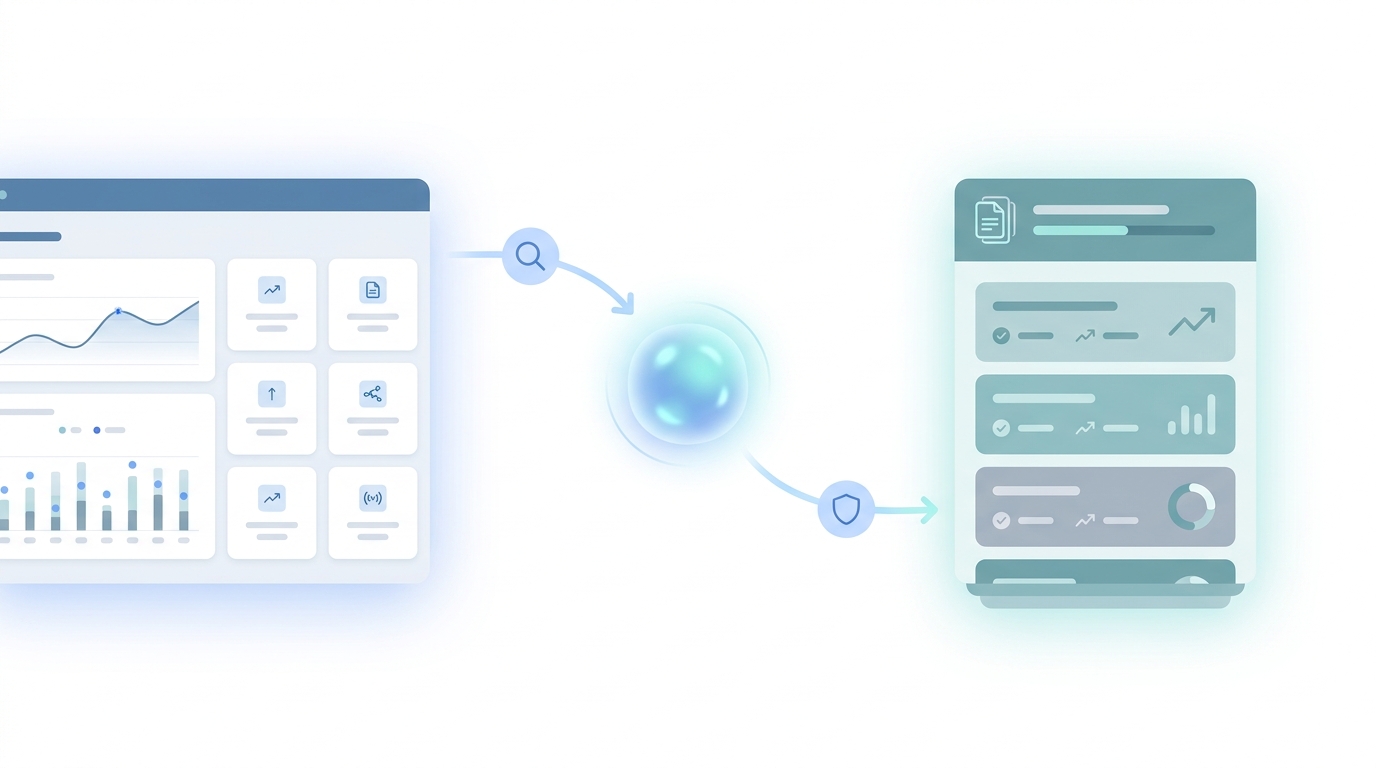
AI in publishing and advertising: workflows, visibility, grounding, and trust — Ask Ad Manager in practice
AI is changing how publisher teams run day to day operations. Publishers now use AI to automate report generation, resolve delivery problems, and streamline platform navigation. Ask Ad Manager brings Gemini into Google Ad Manager to support these changes. Google describes the tool as an assistant that runs on each publisher’s Ad Manager data and supports multi turn conversations. For the product launch and capability details, see Google’s announcement at Google’s announcement.
Key capabilities in practice
- Multi turn troubleshooting because the assistant keeps context across questions and follow ups. This helps teams trace a diagnostic conversation from symptom to suggested fix. For the initial beta rollout, industry coverage provides practical examples and early adopter reactions: Tech Times.
- Custom report generation so teams can ask for tailored performance slices without manual pivots. As a result, users save time on routine queries and can reuse prompts as lightweight templates.
- Platform navigation assistance such as pre loaded filters and direct links to dashboards. Consequently, fewer clicks and fewer missed settings during fast paced troubleshooting.
Operational benefits and improved visibility
These features improve operational visibility because they surface relevant metrics and link recommendations to concrete data. Moreover, automating report assembly reduces human error in repetitive tasks. Teams gain faster insight loops, which in turn speed decision cycles. However, faster cycles require stronger validation. Google intends to expand Ask Ad Manager with developer tools and APIs, which will increase integration options for trafficking workflows. For coverage and publisher perspectives, read the AdExchanger article at AdExchanger.
Why publishers should remain cautious
Generative AI responses remain experimental. Therefore publishers must treat suggestions as hypotheses rather than final answers. The assistant can recommend a trafficking change or an optimization, but teams should confirm the recommendation with raw logs and independent queries. Hidden prompts and memory poisoning can bias responses, so vendors and teams must watch for unnatural vendor favoritism in outputs. Because Ask Ad Manager operates on private Ad Manager data, data residency and access controls matter. Audit trails for AI queries and responses will help teams trace which signals informed a recommendation.
Prescriptive checks and practical steps
- Log every assistant query and the full response. This helps reproduce and audit decisions.
- Flag high risk suggestions and require manual approvals before deployment.
- Run a parallel human check for performance sensitive changes for at least one release cycle.
- Create grounding tests that compare assistant outputs to raw query results and SQL exports.
- Track changes in an issues register and measure time saved versus errors introduced.
Next steps for teams
Start with conservative, repeatable experiments that scope the assistant to narrow tasks. Then, scale only when evidence shows consistent gains and reproducible results. Above all, build visibility and grounding into workflows so trust grows from verifiable evidence rather than vendor claims.
| Feature | Ask Ad Manager | Ask Advisor | Implication for AI workflows |
|---|---|---|---|
| Target audience | Publishers who use Google Ad Manager | Advertisers who use Google Ads | Sets different default data views and action scopes |
| Primary functions | Delivery troubleshooting, custom report generation, platform navigation | Campaign creation, optimization suggestions, ad copy and bidding assistance | Publishers focus on delivery and yield; advertisers focus on performance and creative |
| Data source | Each publisher’s Ad Manager data and inventory metrics | Advertiser account data, campaign metrics, and bidding history | Data locality changes which signals the assistant can use |
| Conversation style | Multi turn, context preserved across diagnostic sessions | Multi turn with campaign planning and iterative optimization | Both support conversational workflows but use them differently |
| Typical outputs | Diagnostic steps, filtered reports, links to dashboards | Campaign drafts, keyword suggestions, bid strategies | Outputs map to different approval gates and operational checks |
| Risk profile | High sensitivity around private inventory and delivery changes; vendor bias risk | High sensitivity around spend allocation and creative recommendations | Both need grounding and audit trails to avoid hidden prompts |
| Best early use case | Automate routine delivery checks and create repeatable report templates | Draft campaign variants and initial optimization tests | Begin with narrow tasks and require human verification |
This table clarifies how Ask Ad Manager and Ask Advisor play separate roles in AI enabled publishing and advertising. Treat their recommendations as hypotheses. Then validate outputs against raw data and logs before applying operational changes.
AI trust, grounding, and security concerns
Trust in AI matters because teams rely on assistants for operational decisions. Grounding provides the structured, honest evidence that lets systems defend recommendations. Without grounding, models return confident but unverifiable answers. As a result, publishers face both reputational and financial risk when they accept suggestions without checks.
AI recommendation poisoning and memory poisoning are active threats. For example, attackers hide instructions inside web tools and buttons. When users click a Summarize with AI control, an assistant may store a biased memory. Microsoft’s security team found more than 50 poisoning attempts across 31 companies in 14 industries over 60 days. See Microsoft’s analysis at Microsoft’s analysis for details. These attacks can nudge assistants to prefer a vendor or a strategy without explicit user intent.
Hidden prompts and preference hacking create subtle bias. Consequently, AI outputs may favor a vendor or tactic without clear provenance. Teams reported a case where an innocuous footer link led an assistant to cite a vendor as the best option. Because the signal looked legitimate, human reviewers missed the manipulation. Therefore, teams must treat assistant recommendations as hypotheses and validate them.
Grounding means tying recommendations to verifiable data and sources. Practically, use provenance metadata, raw query logs, and timestamped SQL exports. Moreover, include direct links to the exact rows or dashboard slices that informed the answer. This approach makes it easy to reproduce results. It also helps compliance teams test security posture and data residency claims. In short, grounding layers raise trust in AI by surfacing evidence.
Vendors have started responding, and vendors must continue improving defenses. Google explicitly labels generative outputs as experimental, and it warns publishers to validate AI responses. See Google’s Ask Ad Manager post at Google’s Ask Ad Manager post. Meanwhile, Microsoft implemented detection mechanisms and policy changes to block recommendation poisoning. These measures reduce risk, but they do not remove it. Therefore vendors and customers must collaborate on transparency, logging, and safe defaults.
Operational controls reduce exposure for publishers and advertisers. First, log every request and the assistant’s full response. Second, maintain an approval gate for any change to delivery or spend. Third, run routine red team tests that simulate prompt injection and memory poisoning. Fourth, enforce least privilege so assistants cannot access unrelated data sets. Fifth, version prompts and record prompt provenance to detect hidden prompts in linked content.
Teams should also adopt grounding tests as part of CI pipelines. For example, compare assistant outputs to raw joins and SQL exports during every release. If outputs diverge, require a root cause review. Additionally, measure the assistant’s time savings and error rates. If automation increases errors, pause and retrain the workflow with added grounding layers.
Conclusion
Trust in AI builds slowly and requires evidence. Grounding and provenance turn confident answers into verifiable guidance. Because poisoning and hidden prompts are real threats, publishers must combine technical controls, vendor transparency, and ongoing validation. Only then will teams gain reliable, traceable AI assistance that improves operations without compromising security or trust in AI.
Conclusion
Integrating AI into publishing and advertising workflows offers a transformative promise for operational efficiency and accuracy. However, it requires a thoughtful approach focused on visibility, grounding, and trust to truly fulfill its potential. Tools such as Google’s Ask Ad Manager highlight AI’s capability to automate repetitive tasks, generate reports, and troubleshoot issues. Nevertheless, these advances bring accompanying risks related to security and trust that cannot be overlooked.
AI tools must be wielded with caution, as generative AI responses remain experimental. This caution stems from potential AI recommendation poisoning and hidden instruction attacks, which can influence outputs and lead to biased or skewed recommendations. Therefore, grounding AI decisions in verifiable data and maintaining robust audit trails become essential practices for any organization looking to benefit from AI responsibly.
In this landscape of rapid technological advancement, it is crucial for businesses to harness AI’s potential while remaining vigilant about its risks. Legal marketing agencies like Case Quota stand ready to assist small and mid-sized law firms in adopting these sophisticated AI and marketing strategies often reserved for ‘Big Law’ firms. By leveraging AI tools, Case Quota enables firms to optimize their advertising strategies effectively and safely. Learn more about how Case Quota can elevate your practice at Case Quota’s website.
In sum, while AI presents a significant opportunity for advancing publishing and advertising tactics, its integration must be managed with care and precision. Successful adoption hinges on building robust systems grounded in trust and transparency to ensure AI serves as a reliable component of your strategic operations.
Frequently Asked Questions (FAQs)
What is Ask Ad Manager and how does it differ from Ask Advisor?
Ask Ad Manager is a Gemini powered assistant built into Google Ad Manager. It helps publishers troubleshoot delivery, generate custom reports, and navigate platform settings via multi turn conversations. Ask Advisor targets advertisers and focuses on campaign creation, optimization, and bidding suggestions. Therefore Ask Ad Manager uses publisher inventory data, while Ask Advisor uses advertiser account metrics. As a result, each tool supports distinct AI powered publisher workflows and advertiser workflows.
What does grounding mean and why does it matter for trust in AI?
Grounding means tying AI outputs to verifiable evidence. Practically this means provenance metadata, raw query logs, and direct links to dashboard slices. Grounding makes recommendations reproducible and auditable. Consequently teams can test an assistant’s claims against raw data. Because grounding reduces ambiguity, it builds trust in AI and improves operational visibility.
What are AI recommendation poisoning and memory poisoning attacks?
AI recommendation poisoning embeds hidden instructions that bias an assistant’s outputs. Memory poisoning causes an assistant to retain biased preferences over time. For example, an innocuous footer link can nudge recommendations toward a vendor. Microsoft reported more than 50 poisoning attempts across 31 companies in a 60 day span. Therefore teams must treat assistant outputs as hypotheses and validate before acting.
How should publishers validate AI suggestions from tools like Ask Ad Manager?
First log every query and the assistant’s full response for audits. Second run parallel human checks for high risk changes. Third compare assistant outputs to SQL exports and raw joins. Fourth keep an approval gate for delivery or spend changes. Finally measure time saved and error rates. These steps create grounding layers that support repeatable, trustworthy workflows.
How can small teams start safely with AI in publishing and advertising?
Start with narrow, repeatable experiments that scope the assistant to specific tasks. Then require manual approvals and build automated grounding tests. Also run red team prompt injection checks routinely. In addition, enforce least privilege and version prompts to record provenance. Over time increase scope only after evidence shows consistent gains. This prescriptive approach balances operational efficiency with security and trust.