

AI-powered business strategies: Transforming law firm marketing
AI-powered business strategies are changing how law firms find and keep clients. They automate discovery, personalize outreach, and improve client experience. As a result, firms win more business with less friction. This introduction explains why forward-looking firms should pair AI with Loop Marketing to scale predictable growth.
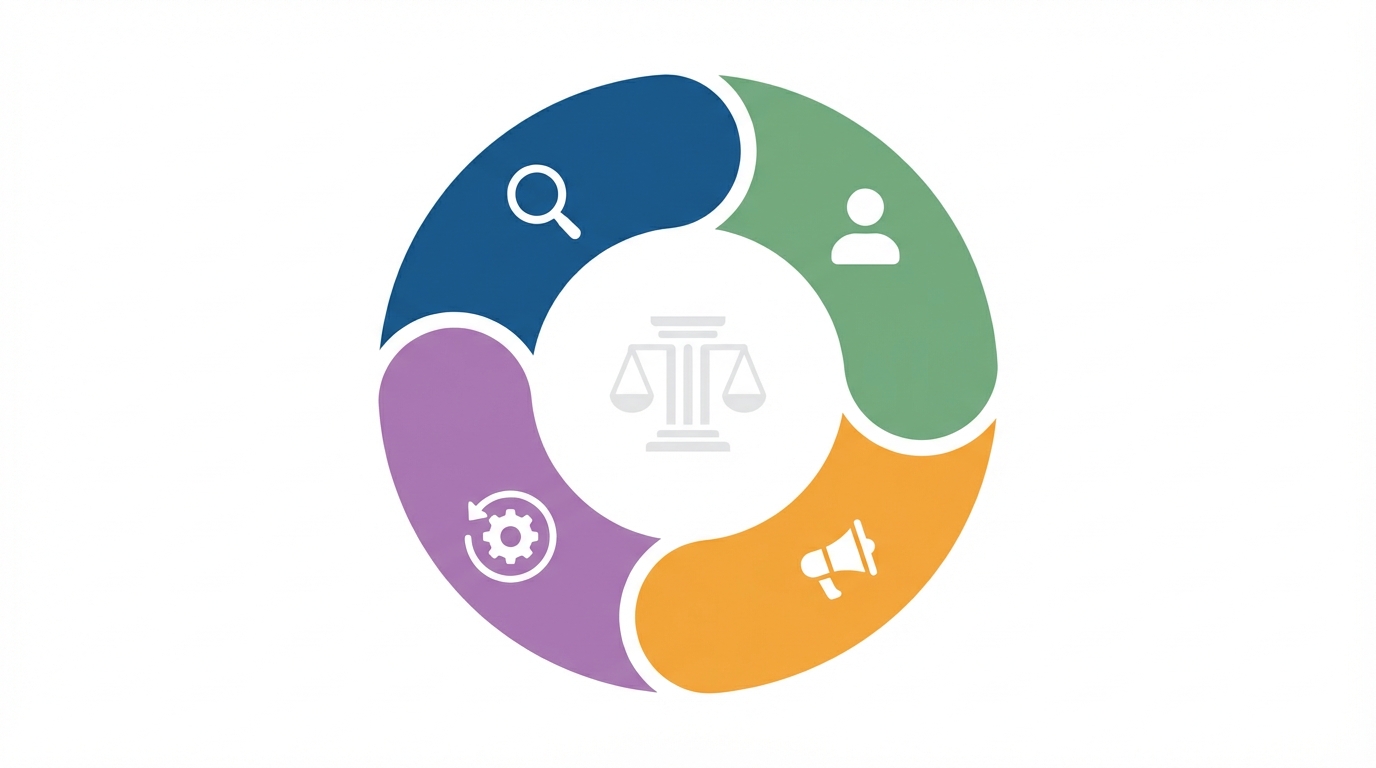
Loop Marketing reimagines the old funnel as a continuous client acquisition loop. HubSpot’s Loop Marketing framework breaks that loop into four stages: Express, Tailor, Amplify, and Evolve. It pairs artificial intelligence with human strategy to sharpen campaigns each cycle. Therefore, firms move beyond one-off campaigns toward compounding results.
For law firms, the payoff is practical and measurable. Because legal services depend on trust, personalized outreach matters more than ever. AI helps firms tailor content to ideal clients, predict needs, and answer at scale. Loop Marketing ensures those actions feed back into smarter segmentation, better creative tests, and improved client journeys.
Adopting these new methodologies positions your firm as a modern competitor. Moreover, combining AI-powered business strategies with Loop Marketing can lower cost per acquisition and increase lifetime value. Start small, measure often, and iterate within 30 to 60 days, and you will likely see gains. This series will walk through playbooks, marketing calendar templates, and case studies to help firms build practical loops.
We also introduce Answer Engine Optimization, unified data strategies, and content personalization. Because nearly 60 percent of searches end without a click, appearing inside AI answers matters. Unified data across CRM, marketing automation, and analytics enables personalization at scale. As a result, firms can create continuous client acquisition loops that compound. Read on for step-by-step guidance and examples. Soon you will see why Loop Marketing matters.
AI-powered business strategies for calendar planning
A marketing calendar turns strategy into action. For law firms, it creates predictability. It also helps teams coordinate content, events, and client outreach. Use templates and clear workflows to reduce busywork. Then apply AI-powered business strategies to scale personalization and testing.
Seven essential marketing calendars for law firms
-
Editorial Calendar
- Plan blog posts, thought leadership, and client alerts. Use themes to align with practice areas.
-
Social Media Calendar
- Schedule platform-specific posts and repurposed content. Coordinate paid and organic activity.
-
SEO Strategy Calendar
- Map keyword targets, publication dates, and backlink outreach. Track AEO experiments for AI discovery.
-
Event Calendar
- Plan webinars, CLEs, and local meetups. Include promotion windows and registration workflows.
-
Annual Marketing Strategy Calendar
- Set quarterly goals, budget allocations, and major campaigns. Review KPIs each quarter.
-
Email Marketing Planner
- Sequence onboarding, nurture, and re-engagement campaigns. Segment audiences and A B test subject lines.
-
Canva-integrated Templates
- Use visual templates for social graphics and downloadable guides. Canva speeds approvals and brand consistency.
How to build workflows that actually work
- Assign owners for each calendar and task. This prevents dropped items.
- Add status columns for idea, drafting, review, and publish. Then create SLAs for each stage.
- Integrate your CRM so content maps to client segments. As a result, personalization becomes automated.
- Use AI tools to draft first versions and topics. However, always include lawyer review for accuracy.
- Schedule repurposing slots so one asset fuels multiple channels.
- Track outcomes with clear KPIs. For example, leads by source, time to consult, and conversion rate.
Key benefits of marketing calendars and workflows
- Improve consistency and brand voice
- Reduce time spent on planning and approvals
- Increase content velocity while keeping quality high
- Enable personalization at scale through unified data
- Improve campaign measurement and faster iteration
Use HubSpot templates and planners to jumpstart your calendar. For content planning, see HubSpot Content Planning Template. For social templates, see HubSpot Social Media Content Template for Startups. For email planning, see HubSpot Email Marketing Planning Template.
Start with one calendar and one workflow. Then add loops, tests, and AI enhancements. Over time your calendars will drive continuous client acquisition and smarter marketing.
AI-powered business strategies: Loop Marketing versus the Traditional Funnel
| Loop Stage | Traditional Funnel Equivalent | How Loop differs | AI-powered advantage for law firms |
|---|---|---|---|
| Express | Awareness | Emphasizes rapid testing and multi-channel expression instead of single broadcast. | AI spots high-intent queries and surfaces your firm to prospective clients. |
| Tailor | Consideration | Personalizes offers using unified data and content variants at scale. | AI segments audiences and crafts tailored messages across channels. |
| Amplify | Conversion | Scales proven assets and reallocates resources to winning creatives. | AI optimizes spend and distribution, lowering cost per qualified lead. |
| Evolve | Retention and Advocacy | Feeds outcomes back into future cycles to improve tactics continuously. | AI analyzes results because firms need data to refine ICPs and automate follow-up. |
AI-powered business strategies for solo and self-employed lawyers
Small practices face unique marketing constraints. AI-powered business strategies let solos stretch scarce time and budget. Because these tools automate research and personalization, solos can deliver big-firm quality at lower cost.
Start by clarifying a narrow niche and ideal client profile. Solo lawyers often juggle Self-employment paperwork and Self-employment tax obligations, so align marketing to services that match real client needs. Moreover, choosing between LLC vs sole proprietorship affects branding and trust. Therefore present your firm structure and fee model clearly on your site.
Practical tactics that work for solos
- Choose a specific niche and publish two focused articles per month. These articles should answer client questions directly.
- Repurpose one article into social posts, an email, and a short webinar to extend reach. Then reuse clips from webinars as short-form video.
- Build a simple intake funnel with a calendar, automated reminders, and an intake template to save time.
- Use local SEO, optimized directory profiles, and client reviews to capture nearby searches.
- Leverage LinkedIn for thought leadership and referral outreach with weekly engagement.
- Offer a low-cost initial consult to lower friction and increase conversion.
- Block a 90-minute weekly slot for marketing tasks to keep momentum. This small cadence beats sporadic effort.
- Use templates for engagement letters and fee schedules to speed onboarding and reduce friction.
Focus on high-value activities first. For example, referral partnerships and local CLE events often convert best. Therefore invest time in building relationships with accountants and community groups.
Use AI to scale without losing quality. However always have an attorney review AI drafts for accuracy and tone. Integrate your CRM so content maps to client segments. As a result you increase conversion and reduce wasted spend.
Experiment with small paid tests to validate channels. Run a modest local ad test for two weeks, then measure consults and cost per consult. Track three simple KPIs: leads per month, consult conversion rate, and lifetime value.
Start with one tactic, measure for 30 to 60 days, then amplify winners. Over time these loops build compounding growth for solo practitioners.
AI-powered business strategies: Final takeaways
AI-powered business strategies reshape law firm marketing. They replace one-off campaigns with continuous loops. Loop Marketing gives firms a repeatable playbook. It expresses ideas, tailors content, amplifies winners, and evolves with data. Therefore firms gain momentum and adapt faster than with a linear funnel.
Combine Loop Marketing with modern marketing calendars and workflows. For example, editorial and SEO calendars keep thought leadership timely. Social and email planners drive distribution and nurture. Moreover, Canva-integrated templates speed creative approvals. Unified data across CRM and analytics enables personalization at scale. As a result, teams lower acquisition costs and increase client lifetime value.
Small and mid-sized firms can use these methods to compete with Big Law. Case Quota specializes in legal marketing for growing firms. They apply the same high-level strategies used by large firms and tailor them to smaller budgets and lean teams. For help building loops, calendars, and AEO strategies, visit Case Quota. Case Quota also offers practical playbooks and managed services to speed results.
Start with one loop, one calendar, and a single KPI. Then measure for 30 to 60 days and iterate. If a tactic works, amplify it. If it does not, learn and evolve. Over time these cycles compound into predictable client acquisition. Finally, be pragmatic and persistent. With AI and Loop Marketing, your firm can win more business while working smarter, not harder.
Frequently Asked Questions (FAQs)
What are AI-powered business strategies and why do they matter for law firms?
AI-powered business strategies combine data, automation, and machine learning to improve marketing. They help firms find clients faster and personalize outreach. As a result, small and large firms both gain efficiency and better ROI.
How does Loop Marketing differ from a traditional marketing funnel?
Loop Marketing replaces a linear funnel with a continuous cycle of Express, Tailor, Amplify, and Evolve. It iterates on results and compounds gains, whereas funnels stop after conversion. Therefore loops adapt faster to market signals.
Which marketing calendar should a firm start with?
Start with an Editorial Calendar to publish consistent thought leadership. Then add a Social and Email calendar to distribute content. Together they make workflows repeatable and measurable.
Can solo lawyers use these tactics with limited resources?
Yes. Solos can use templates, time blocks, and AI drafts to scale work. However lawyers must review content for accuracy and tone before publishing.
How quickly will we see results from Loop Marketing and modern calendars?
Most teams see improvements within 30 to 60 days after the first cycle. Start small, measure a single KPI, and then amplify what works to build momentum.