
Introduction
An AI-generated content influencer network at scale promises to reshape how law firms attract clients and build authority online. In the near term, this model combines automated creative engines with creator distribution to produce consistent, localized content across platforms. As a result, firms can reach niche audiences on YouTube, TikTok, Instagram, and industry channels faster than before.
The trend matters because creators now pair human judgment with AI tools to increase output and engagement. For example, many creators use AI to speed editing and test formats rapidly. Therefore, marketing teams can iterate faster and measure what actually moves the needle. However, creative scale without control creates risk. Law firms must balance automation with ethical review and compliance to avoid reputational damage.
For small and mid-sized law firms, the strategic advantage is clear. First, they can compete with larger firms without matching budgets. Second, micro-influencers and AI-driven content lower production costs while improving topical coverage and SEO. Third, firms gain geographic reach and targeted messaging with less manual effort. Additionally, this approach supports a test-and-learn framework so teams can refine messages by practice area and audience segment.
Still, cautious optimism is warranted. Governance, measurement, and brand safety remain essential. Therefore, firms should design guardrails, invest in creative effectiveness models, and embed legal review into the content loop. In the sections that follow, we will analyze the technology, the creator ecosystem, and the practical steps law firms should take to pilot an AI-enabled influencer network responsibly. Ultimately, this approach can scale visibility and client acquisition when managed with discipline and clear metrics.
AI-Generated Content Influencer Network at Scale: What It Is
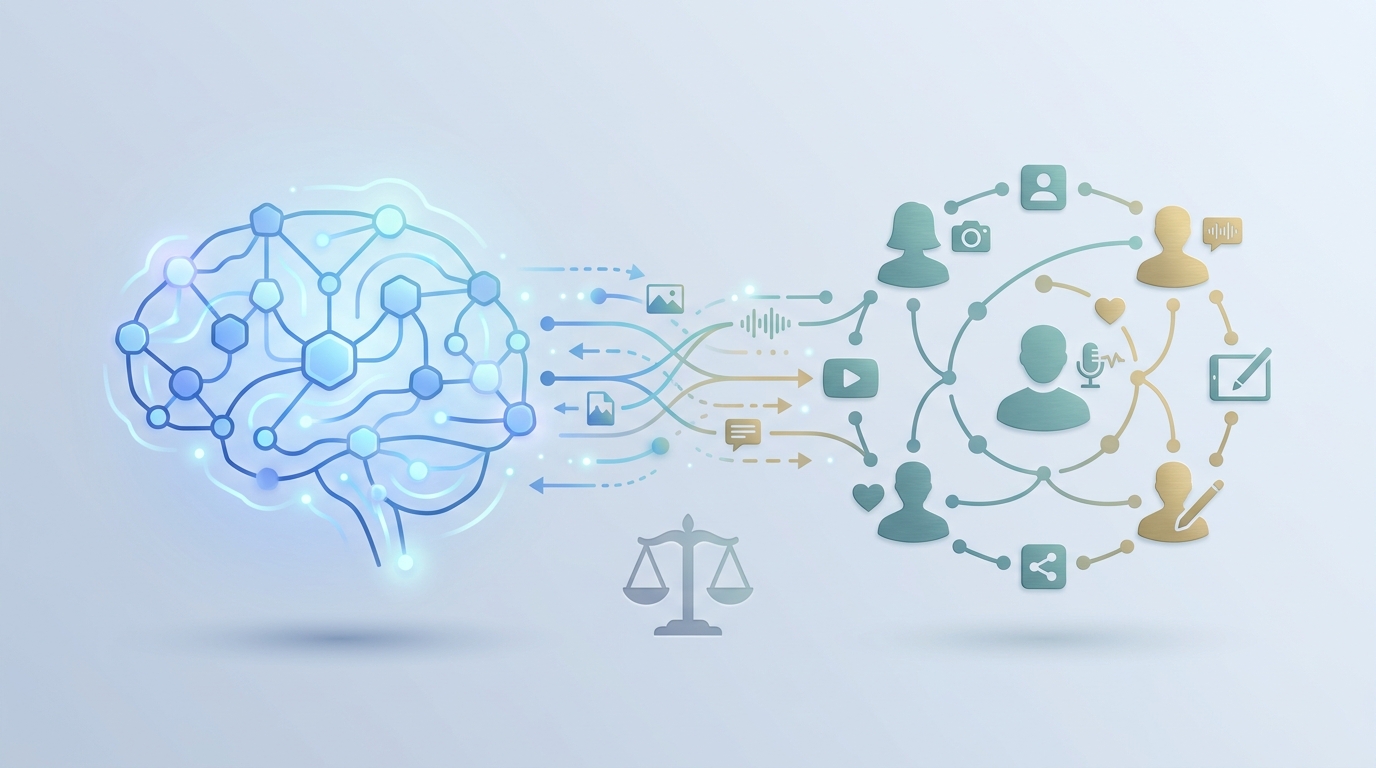
An AI-generated content influencer network at scale blends automated creative systems with creator distribution. AI tools in content creation produce drafts, edit video clips, and adapt messages for platforms. Influencer marketing then amplifies that output through human creators. As a result, brands can publish more content across YouTube, TikTok, Instagram, and industry channels with consistent voice and faster iteration.
How Small and Mid-Sized Law Firms Can Leverage an AI-Generated Content Influencer Network at Scale
Small and mid-sized law firms can use this model to compete with larger firms. First, micro-influencers offer targeted credibility in niche practice areas. Second, AI reduces production time and cost, so firms can test more topics. For example, creators report saving over 30 minutes per video and gaining 19 percent more watch time after using AI tools, which also boost engagement by 17 percent. See the Adobe Express findings for details.
Operationally, firms should pair legal subject-matter experts with creator partners. Then, firms can use AI to generate outlines, captions, and short-form videos. Next, creators add context and authenticity. This workflow keeps compliance in the loop while scaling output. Therefore, teams can run test-and-learn experiments across markets and formats.
Evidence and industry signals
Major brands are already proving the model at scale. Unilever shifted toward a social-first influencer strategy and scaled a creator army, which validates influencer marketing as a growth channel (source). Also, enterprise platforms now embed creative effectiveness models into media systems to close the creative-to-media loop. See the DAIVID and ADIN.AI partnership announced April 27, 2026.
In sum, an AI-generated content influencer network at scale gives smaller firms a measurable advantage. However, success requires governance, brand safety, and clear metrics to ensure compliance and business outcomes.
Core capabilities
- Creative intelligence and effectiveness models from DAIVID provide creative scoring and analytics to predict outcomes and measure creative performance.
- ADIN.AI acts as an AI native operating system to orchestrate campaigns, automate workflows, and optimize media allocation in real time.
- Automated asset tagging and metadata generation speed content operations and improve discoverability across platforms.
- Performance scoring and campaign orchestration create clearer signals about what creative works so teams can iterate faster.
- Supports programmatic creative, content personalization, and cross platform distribution to boost SEO and topical authority.
- Related keywords and semantic terms include creative analytics, creative to media feedback, marketing automation, content operations.
Live feedback loop
- DAIVID evaluates creative against outcome metrics using creative effectiveness models and returns actionable scores.
- ADIN.AI ingests DAIVID signals and adjusts media plans and budget allocation in real time to favor top performing creative.
- Creative and media inform each other continuously so creative quality is judged by business outcomes rather than aesthetics alone.
- Real time budget allocation shifts spend toward better performing creators and content variants reducing wasted spend and improving ROI.
- Faster AI driven production enables more experiments and faster optimization which can lift watch time and engagement as shown in the Adobe Express study: Adobe Express study.
- Partnership example: DAIVID and ADIN.AI announced a collaboration on April 27 2026 with Ajinomoto as the first live client see the ExchangeWire announcement for details: ExchangeWire announcement.
For law firms start with a small pilot, embed subject matter experts and legal review into the loop, and iterate using these real time signals.
| Benefit | Statistic | Impact on Marketing Efficiency |
|---|---|---|
| Faster video production | 56% of creators save over 30 minutes per video using AI tools (Adobe Express) | Quicker content cadence leads to more test-and-learn cycles and faster SEO gains |
| Increased audience engagement | 17% boost in community engagement for creators using AI tools | Higher engagement improves organic reach and referral traffic |
| Longer watch time | 19% average increase in audience watch time with AI-assisted content | Better watch time signals aid platform algorithms and ad performance |
| More frequent deployment | 41% of creators deploy AI-assisted content weekly | Regular publishing improves topical authority and search visibility |
| Large-scale creator armies | Unilever plans over 300,000 creators including micro-influencers | Micro-influencers provide local credibility without high agency costs |
| Cross-platform distribution | AI-assisted content is distributed across dozens of platforms and markets | Broader reach with targeted messaging reduces reliance on paid reach |
| Creative-to-media feedback loop | DAIVID and ADIN.AI partnership embeds creative effectiveness into media decisions (Ajinomoto live client) | Real-time budget allocation toward top-performing creative improves ROI |
Conclusion: Strategic Edge for Law Firms with AI and Influencer Networks
Leveraging an AI-generated content influencer network at scale offers law firms a substantial strategic edge in the increasingly competitive legal market. By harnessing AI-driven tools and platforms, such as DAIVID and ADIN.AI, firms can automate and optimize content creation and distribution. These technologies bridge the gap between creative quality and media execution, enabling real-time adjustments and budget allocations based on performance data, which significantly boosts marketing efficiency.
The evidence of success is clear. Creators using AI tools report enhanced engagement and efficiencies, with improved audience watch time and community interaction. Major brands like Unilever have effectively transitioned to influencer-driven models, proving the scalability and effectiveness of these strategies. Law firms, especially small and mid-sized ones, stand to benefit from these insights and technologies by reducing content production costs, improving SEO, and reaching wider audiences through micro-influencers.
While the potential gains are considerable, they come with the need for cautious optimism. Governance and compliance frameworks must be established to ensure brand safety and adhere to legal standards. As law firms venture into these innovative approaches, measuring creative performance at scale remains pivotal to continued success.
For small and mid-sized law firms looking to harness these advanced strategies and achieve market dominance, partnering with specialized legal marketing agencies becomes crucial. Case Quota stands out as a key player, offering expertise and tailored solutions to navigate this evolving landscape. To explore how Case Quota can empower your law firm’s marketing efforts, visit their website at Case Quota. Here, law firms can find the guidance needed to effectively leverage AI and influencer networks, ultimately paving the way for sustained growth and client acquisition.
Frequently Asked Questions (FAQs)
What is an AI-generated content influencer network at scale and why does it matter for law firms?
An AI-generated content influencer network at scale combines automated creative engines with creator distribution. In practice, AI drafts copy, edits video, and personalizes content for platforms. Then micro-influencers and creators amplify that content to niche audiences. As a result, law firms can publish more targeted content faster, and improve SEO and lead generation.
Is influencer marketing with AI safe and compliant for legal practices?
Compliance matters more in legal marketing than in many industries. Therefore, firms must embed legal review into the content workflow. Also, set governance rules and brand-safety guardrails before scaling. Finally, use human oversight on claims, client examples, and ethical boundaries to reduce risk.
How do small and mid-sized law firms start using AI tools and creator networks?
Start with a pilot focused on one practice area and one platform. Then recruit trusted micro-influencers or niche creators to add authenticity. Use AI tools to speed production and test formats quickly. For proof points, consult studies like Adobe Express showing efficiency gains at Adobe Express.
What metrics show that AI-driven creator networks are working?
Track audience watch time, engagement rates, and conversion metrics. Creators using AI often see higher watch time and engagement, which improves algorithmic reach. In addition, monitor lead quality and cost per acquisition to measure business impact. For platform-level integration examples, see the DAIVID and ADIN.AI partnership announcement at Exchangewire.
What resources and governance should firms allocate before scaling?
Allocate a small cross-functional team that includes legal, marketing, and a creator manager. Also, define content approval workflows and clear metrics for success. Start with modest budgets and apply real-time budget allocation rules as you gather performance data. Finally, keep testing, and refine messaging based on audience feedback and compliance checks.