

AI-first search and the portability gap in LLM guidance: What law firms must do after Google’s May 2026 core update
AI-first search and the portability gap in LLM guidance have arrived at a pivotal moment for law firm SEO. As a result, search now rewards different signals than traditional ranking systems. The May 2026 core update began rolling out on May 21, 2026 and may take up to two weeks to complete. This update is the second broad core change of 2026 and the fourth confirmed ranking adjustment this year. Meanwhile, Google has pushed AI Mode and Gemini 3.5 Flash into the center of product behavior, and that shift changes how queries are answered, cited, and surfaced.
For law firms this matters because intent and visibility now extend beyond clicks. AI Mode already shows longer, multimodal queries and more follow up questions. Therefore, firms face a new set of optimization constraints and opportunities. Content must perform both for traditional organic listings and for AI driven summaries. In addition, the lack of a universal guidance substrate across LLM providers creates a portability gap. In practice that means advice that works for one model may not transfer to another. Consequently, legal marketers must rethink signals such as authoritative citations, structured data, topical depth, and briefing style.
This introduction outlines the stakes and frames the practical steps ahead. Because law firm reputations depend on precise guidance, we adopt an analytical and cautious tone. Next we will examine concrete technical tactics, measurement changes, and content formats law firms should prioritize now.
May 2026 core update impact on law firm SEO
Significance and rollout timeframe
Google began rolling out the May 2026 core update on May 21, 2026. The rollout may take up to two weeks to complete, and this marks the second broad core change of 2026. Because Google paired the update with AI Mode and Gemini 3.5 Flash, effects can surface faster in AI Overviews and AI Mode. As a result, some ranking changes may appear in hours rather than weeks. For an early summary and timeline, see Search Engine Journal for coverage of the rollout: Search Engine Journal. For context on the update alongside Google I/O announcements, see the SEO Pulse analysis: SEO Pulse analysis.
What the update means specifically for law firm SEO
This update amplifies the divergence between traditional organic results and AI driven surfaces. Therefore law firms must adjust both technical SEO and content strategy. Key implications include:
- Visibility over clicks becomes more important because AI summaries reduce direct site visits. Monitor impression and visibility metrics accordingly.
- Platform specific optimization matters more than ever. Optimize for AI Mode, AI Overviews, and classic SERPs because guidance is not portable across LLMs.
- Authoritative citations gain weight. Content that appears on or cites high authority domains benefits across AI surfaces.
- Multimodal relevance matters because queries are increasingly multimodal. Ensure content supports images, transcripts, and schematic summaries.
- Measurement must evolve. Because AI Mode metrics lag in public tools, invest in proprietary tracking and visibility APIs.
Actionable technical and content steps for law firms
- Audit and prioritize pages that match high intent queries. Focus on practice areas that generate consultative planning queries.
- Expand structured data usage. Use legal schema, FAQ schema, and clear authorship metadata to strengthen signals.
- Produce briefs that serve as both canonical answers and citations. Because LLM guidance varies, create multiple output formats and summaries.
- Strengthen third party signals. Publish on or get cited by high authority outlets to increase cross platform citation overlap.
Voices from the field
Marie Haynes noted the model change influence, saying “Makes sense seeing as Gemini 3.5 Flash is now powering the AI features of Search.” Harpreet Singh Chatha warned: “Calling it now. If you’ve been doing dumb [things] to show up in AI citations this one’s coming for you.” Jake Ward reminded practitioners that visibility now trumps clicks, saying the decline in click through rates does not mean search is dead.
Collectively, these signals demand urgent, platform specific optimization and measurement for law firm SEO.
AI-first search and the portability gap in LLM guidance
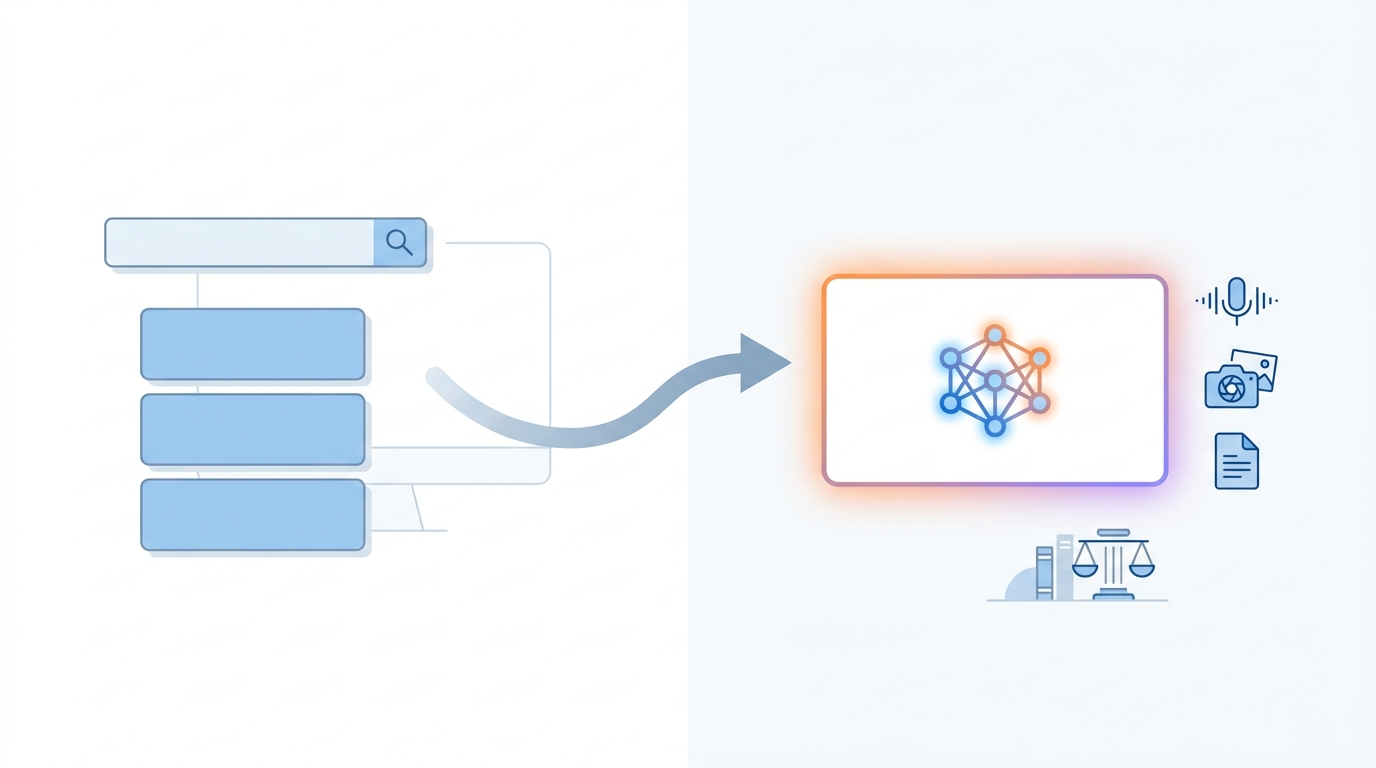
The transition to AI-first search changes how engines evaluate and surface legal content. AI Mode and Gemini 3.5 Flash now power a significant portion of AI-driven responses. As a result, law firms must understand both new ranking signals and the limits of transferring guidance between models.
How AI Mode and Gemini 3.5 Flash reshape search
Google named Gemini 3.5 Flash as the default model in AI Mode, and usage is already massive. AI Mode reports over one billion monthly users, while queries double each quarter and searches run roughly three times longer. Moreover, follow-up queries increase around 40 percent monthly, and more than 16 percent of searches are multimodal. Because planning queries grow at 80 percent the overall usage rate, firms that serve consultative legal needs face shifting demand. For background on Gemini and Google’s AI direction, see the official announcement: Google’s Official Announcement on Gemini. For perspective on the redesign and its implications, see coverage of Google I/O: TechCrunch Coverage of Google I/O.
These figures matter because AI Mode often returns synthesized answers. Therefore, visibility can come from being cited rather than clicked. As Jake Ward put it, visibility now often outweighs clicks. In practice, that means law firms must optimize for citation and summary quality as well as click-through value.
The portability of guidance across LLMs and the role of llms.txt
Portability of guidance across LLMs remains limited. Mid-2026 data indicate only about 11 percent of cited domains overlap across platforms. In addition, AI Overviews citations align with top ten results only 38 percent of the time. Because different LLMs cite different sources, a single optimization playbook will not reliably transfer.
The proposed llms.txt file attempted to establish a universal guidance layer. However, adoption stalled. Major LLM providers do not consume llms.txt as of mid-2026, and tools like GoogleGuidance and Lighthouse show conflicting signals. Chris Long noted changing views on llms.txt after agentic browsing audits. Consequently, law firms cannot rely on llms.txt as a universal fix.
Challenges and practical impacts for law firm SEO
- Nonportable signals: Advice that works for one model may fail on another. Thus diversify optimization tactics.
- Citation optimization: Aim for authoritative placements on high trust domains. Cross-platform citation overlap favors authoritative sources.
- Format variety: Produce text, image captions, transcripts, and brief summaries to support multimodal queries.
- Measurement gaps: Because AI Mode metrics lag in public tools, build proprietary tracking and test visibility in AI surfaces.
As Marie Haynes observed, model changes explain many shifts in search. Meanwhile Harpreet Singh Chatha warned against short term gimmicks to game AI citations. Therefore law firms should adopt cautious, well instrumented strategies that prioritize authoritative content, structured outputs, and cross-format readiness.
| Aspect | Traditional SEO Strategies | AI-first Search Strategies for Law Firms |
|---|---|---|
| Content Creation | Focus on keywords, density, and backlinking. | Focus on authoritative content and structured data. |
| Keyword Targeting | Short-tail keywords; focus on high search volume terms. | Emphasize user intent-based long-tail and multimodal queries. |
| Citation Tracking | Often overlooked; traditional SEO metrics lead. | Prioritize citation visibility and cross-platform overlaps. |
| Visibility Metrics | Click-through rates (CTR) and organic rankings dominate. | Emphasize impression metrics and cross-format visibility. |
| User Intent Understanding | Based on query taxonomy and simple queries. | Predict intricate queries, focusing on follow-ups and planning needs. |
| Adjustment to Ranking Signals | React to changes over months. | Rapid and continuous adaptation; real-time visibility tracking. |
Conclusion
Google’s May 2026 core update and the rapid rise of AI Mode create an inflection point for law firm SEO. Firms must adapt or cede visibility to AI-driven summaries. The update accelerated AI-first behaviors and widened the portability gap in LLM guidance, making single-platform playbooks brittle.
Because AI-first search and the portability gap in LLM guidance redefine how content is cited, law firms need diversified strategies. Prioritize authoritative citations, structured outputs, and multimodal readiness. Moreover, measure visibility not only clicks, because AI summaries can cite without driving visits.
Practically, adopt platform specific optimization and invest in proprietary visibility tracking. Also produce concise briefs, transcripts, and image-ready assets to serve multimodal and planning queries. Above all, avoid short-term tricks that target AI citations. As Harpreet Singh Chatha warned, such tactics have short lives and high risk.
Case Quota helps small and mid-sized law firms convert Big Law playbooks into practical, measurable SEO programs. They focus on visibility in AI Mode, high-authority citation strategies, and structured content engineering. For firm leaders who want tactical support, visit Case Quota and explore how to build resilient, AI-aware SEO programs. Start with audits that map practice area briefs to AI Mode intents and measure changes weekly. Act now to secure visibility before agentic agents reduce site traffic further.
Frequently Asked Questions (FAQs)
What did the May 2026 core update change for law firm SEO?
The May 2026 core update accelerated AI-first behaviors in Search, and it coincided with AI Mode changes. As a result, models like Gemini 3.5 Flash influence which sources get cited. Therefore traditional ranking signals matter less for some queries. Law firms must track visibility in AI surfaces and not only clicks. Monitor impression trends, AI citations, and page-level authority. Also, invest in structured data and authoritative summaries to improve cross-platform presence.
What is the portability gap in LLM guidance and why does it matter?
The portability gap describes how guidance fails to transfer across LLM providers. Mid-2026 data show low citation overlap across platforms. Consequently optimization that succeeds on one model may not work on another. Because llms.txt adoption is limited, firms cannot rely on a universal control file. Instead diversify formats, host content on high-authority domains, and design outputs that serve multiple models.
How should law firms adjust content and technical SEO?
Focus on authoritative briefs, structured outputs, and multimodal readiness. Use legal schema, FAQ schema, and clear authorship metadata. Produce short summaries, long-form briefs, images with descriptive alt text, and transcripts. Moreover, prioritize third-party citations on trusted sites. Finally, avoid quick hacks aimed at gaming AI citations.
How do we measure success in an AI-first search world?
Shift measurement from clicks to visibility and citations. Track impressions, AI-overview citations, and cross-platform presence. Because public AI Mode metrics lag, build proprietary tracking or use platform APIs. Also run controlled tests to link content changes to citation outcomes.
What immediate steps should small and mid-sized law firms take?
Start with a practice-area audit that maps briefs to AI intents. Then add structured data and export concise canonical summaries. Strengthen outreach to high-authority publishers. Finally, implement weekly visibility reporting and iterate quickly.