

AI-driven SEO and web discovery
AI-driven SEO and web discovery demands technical rigor and new measurement tactics. Because AI systems parse content differently, sites can appear offline to bots. Therefore diagnosing JavaScript content delivery issues is critical. This introduction outlines four pillars we cover in the article.
First, diagnose JavaScript delivery failures that hide content from parsers. Many frameworks render content on the client side, so crawlers may not see critical text. As a result, missing base HTML can lead AI bots to treat pages as empty. The safer approach is to serve meaningful content in the initial HTML.
Next, Bing’s AI citation tracking changes visibility metrics. Bing Webmaster Tools now reports total citations and grounding queries, which helps quantify AI impact. Conversely, Google surfaces AI Overviews inside Search Console but lacks a dedicated citation dashboard. These differences affect how you measure AI-driven search performance.
Third, serve AI crawlers efficiently with Cloudflare Markdown for Agents. This feature converts HTML to lightweight Markdown at the edge for requests that accept text slash markdown. Because Markdown reduces token counts substantially, it lowers cost and latency for AI systems. Also, Cloudflare returns Content-Signal headers to indicate training permissions.
Finally, consider whether law firms still need websites in 2026. Some firms may find apps and social platforms sufficient for discovery, particularly where trust builds on curated profiles. However websites offer control, compliance, and richer grounding signals for AI, so trade-offs remain complex.
Throughout this piece we use related terms such as AI-driven search and AI citations. We also cover content negotiation, Cloudflare edge conversion, and grounding queries. As you read, expect practical diagnostics, measurement tactics, and architectural guidance to improve AI visibility.
JavaScript Content Delivery Issues Affecting AI-driven SEO and web discovery
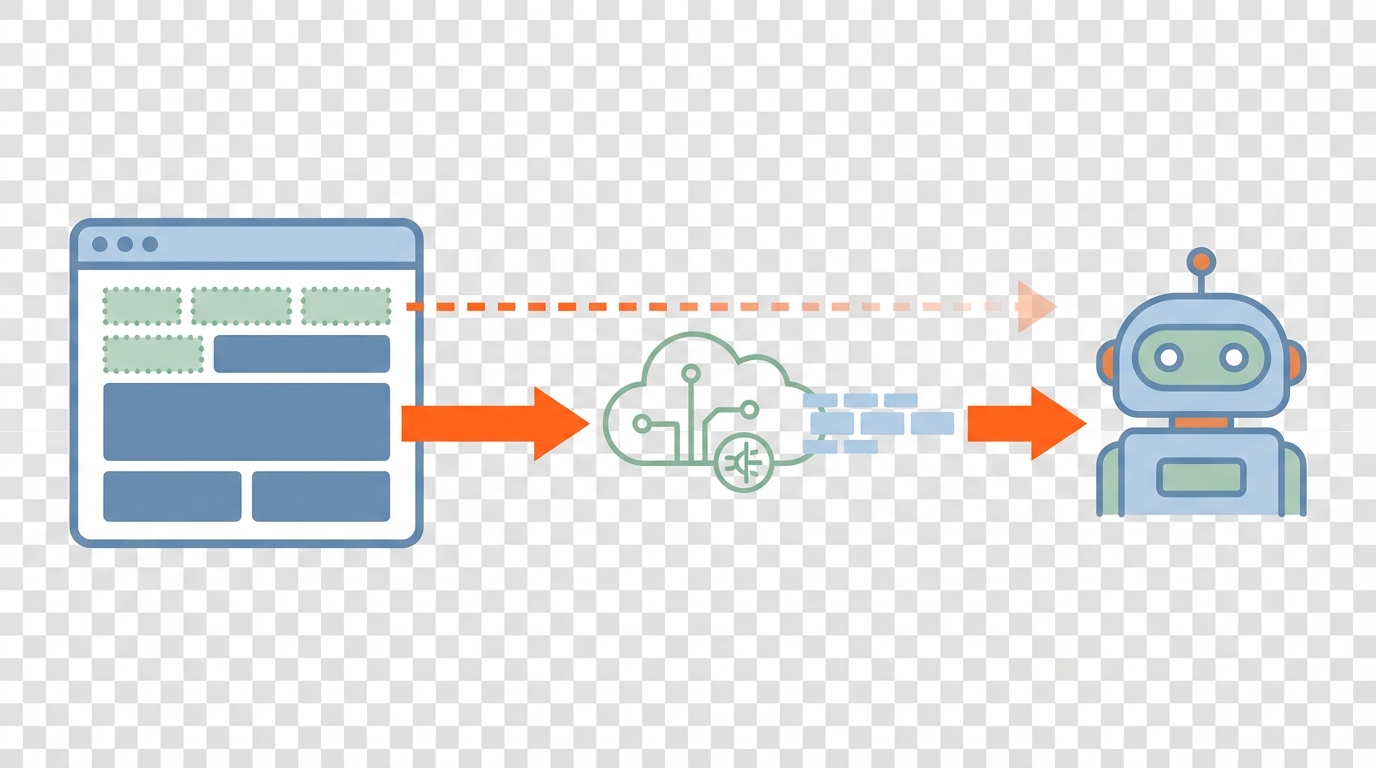
Client side rendering can make a page appear offline to AI systems. Because many modern frameworks inject critical text after load, crawlers may only see a shell. As a result, AI-driven search agents and bots may return empty or misleading results.
John Mueller cautions against using JavaScript to flip visible text from not available to available. Instead, he recommends loading the actual content chunk via JavaScript if necessary. However, the safer path is to include the correct information in the base HTML so users and search engines receive the same content. See the commentary at Search Engine Journal.
Google explicitly limits the initial HTML fetch to 2 MB for Googlebot. Therefore large HTML payloads risk truncation. Consequently the first 2 MB must contain the essential content. Google documents this at Google Developers.
Key technical failure modes
- Client side rendering without server rendered fallback. Bots fetch the initial HTML only and miss injected content. As a result, pages look empty.
- Delayed or conditional JS that depends on user interaction. If JS never runs, content never appears.
- Token heavy HTML that exceeds the Googlebot HTML fetch limit. Thus important text may be discarded.
- Serving different content to bots and users, which resembles cloaking and risks penalties. For context see iloveseo.
Practical diagnostics
- View source and compare the raw HTML to the rendered DOM. If critical text exists only in the DOM, bots likely miss it.
- Test with curl to fetch the raw HTML. Use Live Test in Search Console for rendered results.
- Use server side rendering, pre rendering, or edge rendering where feasible. These methods ensure base HTML contains needed content.
- Keep HTML compact. Since median mobile HTML sizes sit well below limits, reducing bloat improves reliability.
Action checklist
- Ensure essential content exists in base HTML. This avoids misleading states for bots.
- Avoid client side toggles that change availability text without server support.
- Validate pages with curl and Search Console Live Test. Then monitor AI-driven visibility metrics.
Following these steps reduces the chance your site appears offline to AI crawlers. Consequently your AI-driven SEO and web discovery outcomes improve.
Bing AI citation tracking and AI-driven SEO and web discovery: what changed
Microsoft’s Bing Webmaster Tools now includes an AI Performance dashboard in public preview. This dashboard gives publishers direct visibility into how and when their pages are cited in AI-generated answers across Copilot, Bing AI summaries, and select partner integrations. For marketers and law firms, this is a seismic measurement change that shifts the focus from traditional clicks to citation attribution.
Why this matters for AI-driven SEO and web discovery
- Citations are the new signal of authority for AI answers. Because many AI systems surface snippets or summaries instead of links, knowing when your content is used matters as much as traditional rankings.
- Grounding queries explain the phrases an AI used to retrieve and cite your content. Therefore they surface keyword contexts you may not have measured before.
- Law firms and professional services depend on accurate grounding and attribution to maintain trust and compliance when AI references their content.
What the dashboard tracks
- Total citations: the cumulative count of times an item from your site appeared in an AI answer.
- Average cited pages per day: rolling average showing daily citation velocity.
- Page-level citation activity: which pages are being cited and how frequently.
- Grounding queries: the actual search phrases the AI used when grounding its answer to your content.
How Bing compares to Google
- Bing provides a dedicated AI citation view with page and query level data. See Microsoft’s announcement: Bing AI Performance Announcement.
- Google surfaces AI Overviews and AI Mode activity in Search Console performance reports, but it does not yet offer a separate AI citation dashboard. This gap leaves publishers with less direct insight into when Google’s AI systems ground answers to their pages.
- As a result, Bing’s model offers clearer attribution for publishers aiming to optimize AI-driven visibility.
Quote snapshots
- Roger Montti observed the practical value: “Bing is now giving you grounding queries in Bing Webmaster tools!! Just confirmed, now I gotta understand what we’re getting from them, what it means and how to use it.” See coverage at Search Engine Journal: Search Engine Journal Coverage.
- Microsoft’s announcement frames the change as transparency for publishers: Bing AI Performance Announcement.
Table of citation metrics
| Metric | What it shows | Why it matters |
|---|---|---|
| Total citations | Cumulative cites across AI answers | Measures overall AI footprint |
| Avg cited pages per day | Rolling daily average | Tracks momentum and trends |
| Page-level citation activity | Frequency by URL | Pinpoints best performing pages |
| Grounding queries | Phrases used to find your content | Reveals new keyword contexts |
Practical implications for law firms and marketers
- Shift KPIs to include citation counts and grounding query coverage. Because citations are often the final step before user engagement, they can predict lead flow.
- Optimize content for grounding contexts by ensuring concise, factual passages that AI systems can easily extract.
- Monitor Bing’s dashboard alongside Search Console to triangulate AI visibility. Conversely, rely on Bing for direct citation attribution while using Google for broader search performance signals.
Bing’s AI citation tracking reframes measurement for the AI era. Consequently, teams that adapt their KPIs and content architecture will capture more visibility in AI-driven SEO and web discovery.
HTML vs Markdown for Agents: Efficient content delivery for AI-driven SEO and web discovery
| Method | Token count | Data size | Speed of delivery | Content fidelity | SEO implications |
|---|---|---|---|---|---|
| Traditional HTML | 16,180 tokens (example) | Higher payload; includes full markup and assets | Slower; larger payloads raise latency | Full fidelity; preserves HTML structure, microdata, and scripts | Best for human users and classic crawlers; higher token cost for AI |
| Cloudflare Markdown for Agents | 3,150 tokens (example) | Much lower payload; trimmed formatting and no scripts | Faster; edge conversion reduces transfer and parsing time | High for plain text and headings; loses some HTML-only semantics and interactive bits | Lowers AI token costs and speeds responses; includes Content-Signal headers (ai-train=yes, search=yes, ai-input=yes) |
Advantages and trade-offs
- Efficiency advantage: Markdown reduces token count dramatically, so AI systems consume fewer tokens and respond faster. Therefore you save cost and latency when serving AI crawlers.
- Fidelity trade-off: Markdown preserves text and headings. However it strips scripts, inline event handlers, and some microformat nuances. As a result, some structured signals may be weaker.
- SEO implications: Use Markdown for Agents to improve AI discovery speed. Yet ensure the canonical base HTML still contains authoritative information. Otherwise you risk inconsistent signals or perceived cloaking.
- Implementation notes: The feature runs at Cloudflare edge and is opt-in for paid plans. Also Cloudflare returns x-markdown-tokens headers to help you measure conversion impact.
Recommendation
Serve clear, factual text in base HTML first. Then enable Markdown for Agents to reduce AI token cost while keeping content consistent for users and search engines.
Do law firms still need a website in 2026 for AI-driven SEO and web discovery
The question of whether law firms must maintain a traditional website in 2026 sits at the intersection of trust, compliance, user experience, and AI discoverability. Because AI-driven platforms increasingly surface answers instead of links, firms must balance platform-first strategies with owning a canonical content source.
Why the debate matters
- Trust and professional credibility: A well designed website signals legitimacy. For law firms trust matters more than for many other verticals because clients often seek regulated advice and verified credentials.
- Control and compliance: Websites let firms present disclaimers, terms, attorney bios, and jurisdictional constraints in a controlled environment. As a result, they reduce regulatory and malpractice risk compared with ad hoc social posts.
- Discoverability via AI: AI-driven search often displays concise answers and grounded citations. Consequently, the presence and quality of canonical web pages influence whether AIs ground answers to a firm’s content.
Lessons from real world behavior
- Studies and region specific behavior show businesses sometimes operate primarily on social platforms. For example, mid 2010s research and reporting on Indonesia highlighted how many merchants used social networks and messaging platforms instead of dedicated websites to reach customers. See a representative study: here and reporting that documents this trend: here.
- SEO experts caution against replacing websites wholesale with platform presences. As Wil Reynolds and others note, branded owned assets reduce the risk of deplatforming and enable richer data capture.
Trade offs: websites versus apps and social
- Websites
- Pros: ownership, richer structured data, compliance controls, canonical grounding for AI, and better long term asset value.
- Cons: cost to maintain, technical SEO complexity, and potential JS rendering issues that affect AI-driven visibility.
- Apps and social platforms
- Pros: faster audience engagement, built in discovery channels, and potentially better conversion for some user segments.
- Cons: limited control, weaker grounding signals for AI unless content is syndicated to canonical pages, and platform dependence.
How AI-driven SEO and web discovery changes the calculus
- Grounding matters more: Bing’s AI citation tools show which pages get cited. Therefore firms that own clear, factual pages increase their chances of being grounded in AI answers.
- Content parity is essential: John Mueller’s guidance to avoid dynamic JS toggles that change availability highlights the need for consistent base HTML. Consequently, firms should ensure critical facts are present in server rendered HTML.
- Efficiency tactics: Cloudflare’s Markdown for Agents can reduce token costs for AI crawlers, but it is opt in and should be used only if the base HTML remains authoritative. See Cloudflare documentation: here and here.
Practical recommendations for firms
- Maintain a well engineered canonical website for biographies, fee structures, disclaimers, and practice area pages. This preserves control and grounding signals for AI.
- Use social and apps to amplify and engage, but avoid hosting exclusive authoritative content only on ephemeral platforms.
- Audit technical delivery: ensure server rendered base HTML contains key facts so AI-driven crawlers do not see an empty shell.
- Track AI citations: monitor Bing’s AI Performance dashboard and correlate grounding queries with lead sources.
Conclusion
Websites are not dead for law firms in 2026. Instead they are a strategic asset for trust, compliance, and AI grounding. However firms that pair owned websites with active platform strategies and robust technical SEO will win more visibility in AI-driven SEO and web discovery.
Conclusion: Practical steps for AI-driven SEO and web discovery
Diagnosing JavaScript delivery failures remains foundational. If bots cannot see your content, AI systems treat pages as offline. Therefore fix client side rendering gaps and keep key facts in base HTML.
Leverage Bing’s AI citation tracking to measure AI visibility. It provides page level citations and grounding queries. As a result, teams gain actionable signals that traditional search metrics miss.
Serve AI crawlers efficiently with edge techniques such as Cloudflare Markdown for Agents. This reduces token costs and speeds AI responses. However ensure the canonical HTML remains authoritative to avoid inconsistent signals.
For law firms the choice between websites, apps, and social is strategic. A well engineered website preserves control, compliance, and grounding for AI. Conversely, platforms and apps offer fast engagement but increase platform risk. Therefore combine owned content with platform amplification for the best outcomes.
Operational checklist
- Audit pages with curl and Search Console Live Test to confirm base HTML content.
- Monitor Bing’s AI Performance dashboard for citation trends and grounding queries.
- Use edge conversion wisely, and verify x-markdown-tokens and Content-Signal headers.
- Maintain canonical pages for bios, disclaimers, and jurisdictional details.
Case Quota helps law firms convert these technical practices into market advantage. With Big Law playbooks tailored to AI discovery, Case Quota builds profiles and content strategies that maximize citation coverage. Visit Case Quota for profiles and services designed for legal practices.
In short, act deliberately. Diagnose and fix delivery issues, adopt measurement systems, and serve AI crawlers efficiently. Then pair owned web assets with platform channels. By doing so, firms position themselves to dominate discovery in AI-driven SEO and web discovery.
Bing AI citation tracking and AI-driven SEO and web discovery: what changed
Microsoft’s Bing Webmaster Tools now includes an AI Performance dashboard in public preview. This dashboard gives publishers direct visibility into how and when their pages are cited in AI-generated answers across Copilot, Bing AI summaries, and select partner integrations. For marketers and law firms this is a seismic measurement change that shifts the focus from traditional clicks to citation attribution.
Why this matters for AI-driven SEO and web discovery
- Citations are the new signal of authority for AI answers. Because many AI systems surface snippets or summaries instead of links, knowing when your content is used matters as much as traditional rankings.
- Grounding queries explain the phrases an AI used to retrieve and cite your content. Therefore they surface keyword contexts you may not have measured before, helping teams discover new intent signals and content gaps.
- Law firms and professional services depend on accurate grounding and attribution to maintain trust and compliance when AI references their content.
Impact highlights
- Shift KPIs to include citation counts and grounding coverage so teams measure AI attribution not just clicks.
- Audit and simplify factual passages so AIs can extract concise grounding snippets reliably.
- Use page level citation data to prioritize content updates and legal disclaimers where citations concentrate.
What the dashboard tracks
- Total citations: the cumulative count of times an item from your site appeared in an AI answer.
- Average cited pages per day: rolling average showing daily citation velocity.
- Page-level citation activity: which pages are being cited and how frequently.
- Grounding queries: the actual search phrases the AI used when grounding its answer to your content.
How Bing compares to Google
Bing provides a dedicated AI citation view with page and query level data, offering clearer attribution for publishers aiming to optimize AI-driven visibility. Google surfaces AI Overviews and AI Mode activity in Search Console performance reports but does not yet offer a separate AI citation dashboard, leaving publishers with less direct insight into when Google’s AI systems ground answers to their pages. See Microsoft’s announcement: Microsoft’s announcement.
Quote snapshots
- Roger Montti observed the practical value: “Bing is now giving you grounding queries in Bing Webmaster tools!! Just confirmed, now I gotta understand what we’re getting from them, what it means and how to use it.” See coverage at Search Engine Journal.
- Microsoft’s announcement frames the change as transparency for publishers: Microsoft’s announcement.
Table of citation metrics
| Metric | What it shows | Why it matters |
|---|---|---|
| Total citations | Cumulative cites across AI answers | Measures overall AI footprint |
| Avg cited pages per day | Rolling daily average | Tracks momentum and trends |
| Page-level citation activity | Frequency by URL | Pinpoints best performing pages |
| Grounding queries | Phrases used to find your content | Reveals new keyword contexts |
Practical implications for law firms and marketers
- Shift KPIs to include citation counts and grounding query coverage. Because citations are often the final step before user engagement, they can predict lead flow.
- Optimize content for grounding contexts by ensuring concise, factual passages that AI systems can easily extract.
- Monitor Bing’s dashboard alongside Search Console to triangulate AI visibility. Conversely, rely on Bing for direct citation attribution while using Google for broader search performance signals.
Bing’s AI citation tracking reframes measurement for the AI era. Consequently, teams that adapt their KPIs and content architecture will capture more visibility in AI-driven SEO and web discovery.