

Agentic AI shopping: The future of client acquisition for law firms
Agentic AI shopping arrives fast, promising to do the finding for us. Yet its implications for law firm client acquisition feel unsettling. Because these agents can act autonomously, they may bypass traditional search and referrals. As a result, lead sources could shift in unpredictable ways. The headline technology champions Google, OpenAI, and Shopify are already betting on this trend. However, for law practices the change may feel less like opportunity and more like risk. Client relationships could become filtered through opaque agent rules, not human judgment. Therefore firms must ask who benefits, and who loses, when agents do the shopping.
I have watched AI cycles for decades, yet this moment raises new doubts. For example, taking the pleasure of discovery from clients could erode trust. Moreover, consumer neuroscience warns that shopping triggers reward chemistry like dopamine. So substituting agents may strip away the serendipity that leads to referrals. Yet agentic AI could also streamline intake and reduce friction for simple matters. However, streamlining does not guarantee better client fit or higher lifetime value. Therefore law firms should watch closely, experiment cautiously, and insist on transparency.
In this article we explore why agentic AI shopping matters to firm strategy. We will question assumptions, dig into risks, and propose pragmatic steps. We also consider SEO impacts and how firms might adapt web presence. Because traditional traffic models rely on human clicks, search dynamics may change. Moreover, paid channels and referrals could shift toward agent-friendly formats. Lawyers should weigh short-term gains against long-term brand and referral health. Finally, skepticism keeps firms from rushing into unproven automation. Yet cautious pilots can reveal whether agentic shopping helps client quality. Therefore read on to see what practical steps firms can take next.
How Agentic AI shopping Works and Why It Changes SEO
Agentic AI shopping describes autonomous AI agents that search, evaluate, and transact for users. Because these agents act without real-time human input, they change where and how clients discover law firms. Google and other platform leaders frame this shift as a new commerce era. For example, Google writes about tools to help retailers “succeed in an agentic shopping era.” Read more.
At its core, agentic AI replaces a human clickstream with machine requests. As a result, traditional signals such as organic clicks and pageviews may decline. Therefore law firms face three fundamental shifts:
- Discovery becomes machine mediated because agents use structured data, APIs, and protocols.
- Relevance is calculated for agents, not people; thus content must answer agent queries directly.
- Transactions may occur off your site when an agent completes intake or a purchase through a marketplace.
How the mechanics work
- Agents receive intent, constraints, and user preferences.
- They query multiple services and rank outcomes.
- They prefer concise, machine-readable results such as schemas, APIs, and storefront protocols.
- They take actions like booking calls or initiating payments when allowed.
Therefore agentic systems favor sites optimized for agent consumption. For example, Shopify and others are building agent-friendly protocols and storefronts. See Shopify’s coverage on agentic commerce for merchant guidance.
SEO implications for law firms
- Organic traffic may shift because agents bypass search results pages.
- Longtail, discovery, and serendipity traffic may collapse unless agents reproduce exploration.
- Local and niche firms risk losing visibility unless they expose structured intake endpoints.
Because the SEO model depends on human attention, you must rethink priorities. However, adaptation does not only mean technical changes. Firms should preserve brand signals and friction that help quality intake.
A tech perspective and an evolutionary lens
Richard Dawkins argued in The Selfish Gene that human behavior stems from evolutionary drives. For context, see Oxford University Press on The Selfish Gene. This view helps explain why people value discovery and reward in shopping. Thus removing discovery may reduce referral triggers and lifetime client value.
For further discussion about agentic agents and SEO strategy, read the Search Engine Journal analysis on Google-Agent and SEO shifts.
SEO skepticism callout
Agentic AI could hollow out organic search for firms unless sites expose machine-friendly endpoints. Therefore be skeptical about relying on legacy SEO alone.
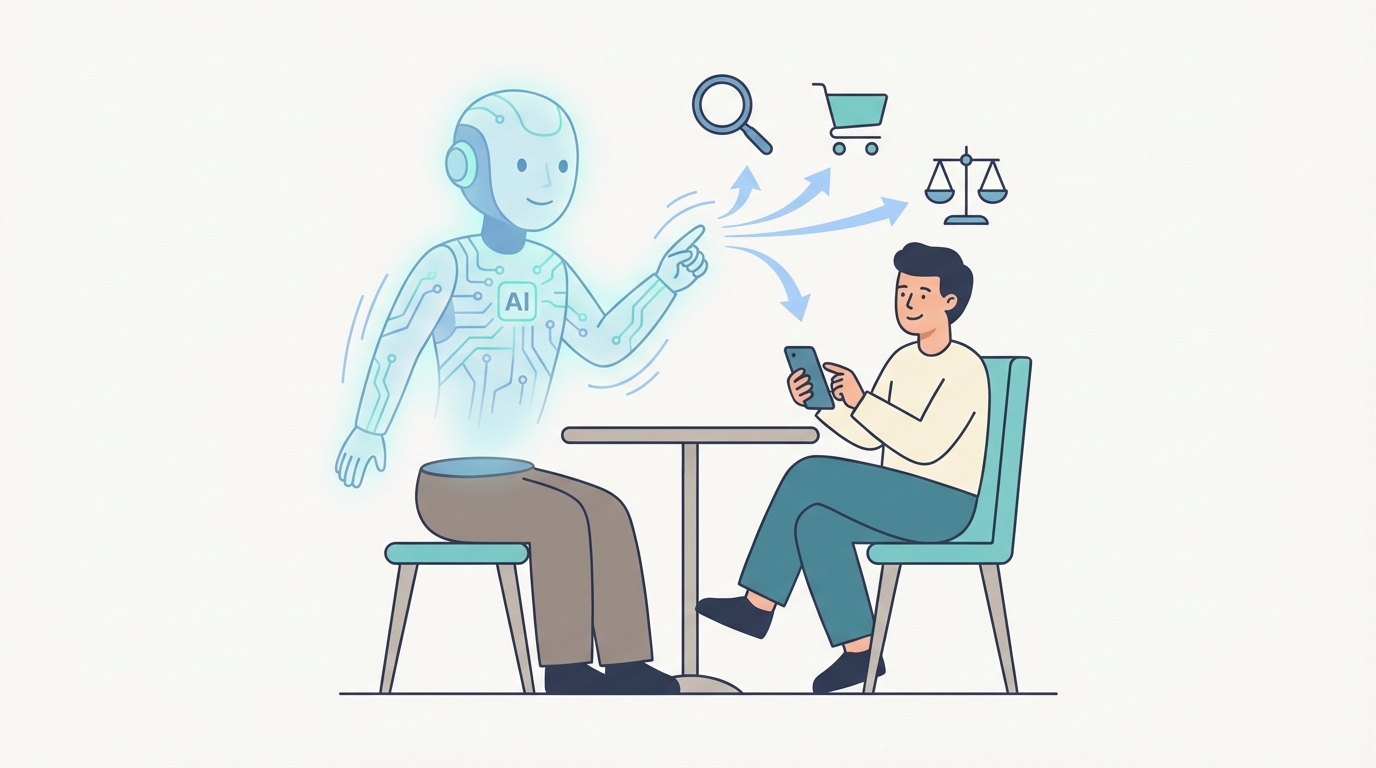
Exploring the Evolutionary and Biological Roots of Shopping Behavior
Richard Dawkins, in his influential work The Selfish Gene https://global.oup.com/academic/product/the-selfish-gene-9780198575191, explains that much of what humans do is deeply rooted in evolutionary survival mechanisms. This includes shopping behaviors that once ensured access to essential resources necessary for survival.
As Dawkins aptly puts it, “… everything that people do relates to thriving in their environment above competition,” which includes consumer habits. In the competitive environment of the marketplace, consumption not merely fulfills basic needs but also serves social status roles—evoking his concept of “conspicuous consumption” where tangible status symbols, like luxury cars, signify wealth and power.
The Biological Reward System
Human shopping behavior is intricately linked with our neurological reward systems. When we shop, especially when finding deals or unexpected delights, our brains release neurotransmitters like dopamine, serotonin, and endorphins. These chemicals create joy and satisfaction, reinforcing the act of purchasing.
- Dopamine is often associated with pleasure and reward motivation, a key player in compulsive shopping.
- Endorphins provide the euphoric high associated with a successful hunt, akin to achieving discounted prices.
- Serotonin stabilizes mood and contributes to feelings of well-being, critical for long-term consumer loyalty.
Studies show that external cues like sale signs can act as reward stimuli, signaling potential gains and prompting purchase behavior https://www.kellogg.northwestern.edu/faculty/anderson_e/htm/PersonalPage_Files/Papers/Are_Sale_Signs_Less_Effective_When_More_Products_Have_Them.pdf?utm_source=openai.
Agentic AI Shopping and the Disruption of Natural Behaviors
Agentic AI shopping alters these ingrained behavioral patterns. By removing humans from the search and decision-making process, it challenges the way traditional shopping experiences trigger evolutionary and biological rewards.
- Serendipity loss: The delightful surprise of discovering a great deal or useful product might fade away.
- Reduced dopamine spikes: AIs predict user preferences and make decisions, potentially dulling the excitement of “the hunt.”
- Mediated satisfaction: Endorphin and serotonin levels could diminish as personal involvement in decision-making decreases.
Moreover, Richard Dawkins’ insights suggest that disrupting these natural pathways might make AI-driven consumption feel “unnatural”—it’s “like machines that are programmed in our genes to shop.” If agentic AI does not replicate the joy of serendipity, it could, as Dawkins fears, “go against our biology.”
Conclusion
For agentic AI shopping to truly resonate, it should mimic the rewarding experiences of traditional shopping. This means integrating elements of surprise and delight into the process. Otherwise, the disruption of these fundamental human drives could lead to a more skeptical consumer, wary of fully surrendering to AI-driven interactions.
Further exploration in neuroscientific studies, such as those found in journals like Neuropsychiatric Disease and Treatment https://www.dovepress.com/temptation-in-economic-decision-making-effects-of-immediate-reward-and-peer-reviewed-fulltext-article-NAN?utm_source=openai, might help AI designers unveil deeper insights into how best to align AI behaviors with human reward systems.
Comparing Traditional SEO Shopping Methods vs Agentic AI Shopping Impact
This table contrasts user experience, SEO effects, and business outcomes.
| Aspect | Traditional SEO-based Shopping | Agentic AI Shopping Agents |
|---|---|---|
| User experience | Human-led browsing and discovery; rich content, stories, and choices | Agent acts autonomously; outcomes delivered with minimal human browsing or exploration |
| Discovery path | Users find firms via queries, links, and organic listings | Agents query APIs and schemas and return curated options directly |
| Role of human | Active decision maker who explores options and compares firms | Passive approver or delegator to the agent |
| SEO signals | Clicks, impressions, backlinks, and user engagement drive rankings | These signals may diminish because agents rely on machine-readable endpoints |
| Content needs | Longform content, FAQs, and trust signals help conversions | Concise structured data, schemas, and intake endpoints are critical |
| Traffic behavior | Predictable organic and referral flows; measurable analytics | Traffic may bypass analytics and occur offsite or via agent-managed channels |
| Conversion flow | Human fills forms, calls, or schedules consultations directly | Agent may complete intake, book appointments, or pass leads via APIs |
| Serendipity and discovery | High potential for surprise finds and emotional reward spikes | Low by default unless agents intentionally surface novelty |
| Trust and transparency | Brand reputation, testimonials, and visible attorneys build trust | Trust depends on agent design, provenance, and explainability |
| Technical requirements | Standard SEO, content marketing, and local signals | Structured data, APIs, secure intake endpoints, and agent integration |
| Business implications for law firms | Sustains brand equity and referral pipelines; measurable ROI | Could reduce direct visibility; however it may lower friction for simple cases |
Use this table to weigh short-term gains against long-term brand health. Therefore plan experiments that protect referral value while exploring agentic channels.
Conclusion: Act with Caution and Strategy
Agentic AI shopping presents both disruption and opportunity for law firm client acquisition. On one hand, autonomous agents can reduce friction and handle routine intake. However, they also threaten traditional discovery paths and the human moments that create referrals and loyalty. Therefore firms should not rush to abandon tried-and-true channels.
Because agentic agents favor machine-readable endpoints, technical shifts are required. Firms must publish structured data, secure APIs, and clear intake endpoints. Yet technical work alone will not preserve client value. Also preserve brand signals, visible trust markers, and opportunities for serendipity. These human elements produce emotional engagement and higher lifetime value.
Moreover, think about experiment design. Start with controlled pilots that test agentic channels for low-complexity matters. Measure lead quality, conversion rates, and client satisfaction. If agents deliver better outcomes for simple cases, scale slowly. If not, retreat and refine. Transparency matters because clients trust firms that explain how leads were found and vetted.
For strategy and execution, small and mid-sized firms need playbooks like Big Law. Case Quota helps firms compete with higher-level strategies and tactical execution. Visit Case Quota to learn how specialized legal marketing can protect referrals, optimize intake, and pilot agentic channels without jeopardizing brand equity. Case Quota focuses on practical, measurable steps so smaller firms do not get left behind.
In short, Agentic AI shopping will change the terrain of client acquisition. Yet change does not mandate surrender. Be skeptical and experimental. Preserve the human moments that drive referrals, while building the machine-friendly infrastructure you may need. Finally, act thoughtfully, measure everything, and keep client trust at the center of every decision.
Frequently Asked Questions (FAQs)
What is Agentic AI shopping and how does it differ from regular search?
Agentic AI shopping uses autonomous AI agents to search, compare, and act on behalf of users. Unlike regular search, these agents make decisions and can complete actions without constant human input. As a result, the interaction moves from human clicks to machine-to-machine requests. Therefore sites must expose structured data, APIs, and clear intake points for agents to find them.
Will Agentic AI shopping kill traditional SEO for law firms?
Not immediately. However, agentic agents can reduce human-driven clicks and impressions. Consequently classic SEO metrics may decline unless firms adapt. For example, firms should add schema markup, publish machine-readable intake endpoints, and measure lead quality. In short, update SEO strategy to include agent-friendly formats and preserve brand signals.
How will consumer behavior and the reward system change with AI shopping?
Agentic AI shopping may dull the hunt that triggers dopamine and endorphins. Thus users might lose serendipity and surprise. However, agents can be designed to surface novelty. Therefore designers should intentionally program small discovery moments to keep reward system responses intact.
What practical steps should law firms take now?
Start small. First, audit your site for structured data and intake APIs. Second, pilot agentic channels for low-risk matters. Third, track lead quality, conversion, and client satisfaction. Finally, preserve visible trust markers like attorney bios and testimonials.
How should firms balance agentic opportunities with client trust and referrals?
Treat agentic AI as a channel, not a replacement for relationships. Use agents to lower friction for simple tasks. However continue nurturing human touchpoints to retain referral value and long-term loyalty. As a result, firms can safely experiment while protecting brand equity and client experience.