

Discover proven legal SEO strategies that drive qualified leads, boost online visibility, and help law firms dominate local search results in today’s competitive digital landscape.
Introduction
Featured Partner
Case Quota: Uses AI to help law firms with digital marketing and market dominance
Case Quota uses AI to help law firms with digital marketing and market dominance.
- It was founded by a former top Los Angeles consultant and aims to help law firms navigate the changing legal marketing landscape by implementing advanced digital strategies
- Onboard quickly with guided setup and white-glove support.
Request a walkthrough in minutes.
In today’s digital-first world, potential clients turn to search engines when they need legal representation. Whether they’re facing a personal injury case, need estate planning services, or require criminal defense, 96% of people seeking legal advice use search engines to find attorneys. This makes legal SEO not just important—it’s essential for law firm survival and growth.
Legal SEO encompasses the specialized strategies and techniques that help law firms rank higher in search engine results, attract qualified leads, and convert website visitors into paying clients. Unlike general SEO practices, legal SEO must navigate strict advertising regulations, intense local competition, and the unique challenges of marketing professional services.
The legal industry is one of the most competitive online markets, with some keywords costing over $1,000 per click in paid advertising. This makes organic search visibility through effective SEO strategies crucial for sustainable growth and cost-effective client acquisition.
In this comprehensive guide, you’ll learn the fundamental principles of legal SEO, discover advanced strategies for local search domination, understand how to create compelling content that converts, and master the technical aspects that search engines demand. You’ll also learn how to measure success, avoid common pitfalls, and stay ahead of algorithm changes that can make or break your online presence.
Understanding Legal SEO Fundamentals
The foundation of successful legal marketing begins with understanding what makes search engine optimization unique in the legal industry. Unlike other sectors, legal SEO operates under strict regulatory constraints while competing in one of the most saturated online markets. This section explores the core principles that separate effective legal SEO from generic optimization tactics.
What Makes Legal SEO Different
Legal SEO operates under unique constraints that don’t apply to other industries. Attorney advertising rules vary by state and require careful navigation to avoid ethical violations. The American Bar Association’s Model Rules of Professional Conduct, along with state-specific regulations, govern how lawyers can market their services online. For example, New York’s Rule 7.3 prohibits direct solicitation, while Florida requires disclaimers on all advertising materials.
Search engines also treat legal queries differently due to their “Your Money or Your Life” (YMYL) classification. Google applies stricter quality standards to legal content because poor advice can significantly impact someone’s life, liberty, or financial well-being. This means legal websites must demonstrate exceptional expertise, authoritativeness, and trustworthiness (E-A-T) to achieve top rankings.
Core SEO Principles for Law Firms
The foundation of successful legal SEO rests on three pillars: relevance, authority, and user experience. Relevance means your content must precisely match what potential clients are searching for. When someone searches “divorce lawyer Chicago,” your page must clearly demonstrate expertise in divorce law and Chicago jurisdiction. Authority requires building credibility through quality backlinks from legal directories, bar associations, and reputable news outlets.
User experience encompasses site speed, mobile responsiveness, and intuitive navigation. Google’s Core Web Vitals update prioritizes sites that load within 2.5 seconds, are stable during loading, and respond quickly to user interactions. Law firms with slow-loading websites lose 53% of mobile visitors who abandon pages that take longer than three seconds to load.
The Legal Client Journey Online
Understanding how potential clients search for legal services is crucial for effective SEO strategy. The legal client journey typically follows three distinct stages: awareness, consideration, and decision. During the awareness stage, people search for information about their legal situation using broad terms like “what to do after a car accident” or “divorce process in Texas.”
In the consideration phase, searches become more specific and location-focused: “personal injury lawyer Houston” or “best divorce attorney Dallas.” These searches represent 67% of legal service queries and have the highest commercial intent. Finally, during the decision stage, potential clients research specific firms and attorneys, looking for reviews, credentials, and case results.
| Journey Stage | Search Intent | Example Keywords | Content Strategy |
|---|---|---|---|
| Awareness | Informational | “What is medical malpractice” | Educational blog posts, FAQs |
| Consideration | Local/Commercial | “Personal injury lawyer Chicago” | Service pages, local content |
| Decision | Transactional | “Smith Law Firm reviews” | About pages, testimonials, case results |
Building Authority in Legal SEO
Authority in legal SEO comes from multiple sources that work together to establish credibility. First-party authority involves showcasing attorney credentials, bar admissions, case results, and professional achievements. Highlighting a $2.3 million settlement or 15 years of experience provides concrete evidence of expertise that both search engines and potential clients value.
Third-party authority includes backlinks from reputable legal directories like Martindale-Hubbell, news outlets covering your cases, and citations from other attorneys. A single backlink from the American Bar Association carries more weight than dozens of links from generic business directories. Client testimonials and case studies provide social proof, but must comply with attorney advertising rules requiring disclaimers about past results not guaranteeing future outcomes.
Keyword Research and Strategy for Law Firms
Effective keyword research forms the backbone of any successful legal SEO campaign. Unlike other industries where broad keywords might work, legal SEO requires precise targeting that balances search volume with commercial intent and regulatory compliance. This section reveals how to identify and prioritize keywords that drive qualified leads rather than just traffic.

Identifying High-Value Legal Keywords
Effective legal keyword research goes beyond basic search volume metrics to focus on commercial intent and conversion potential. High-value legal keywords combine sufficient search volume, strong commercial intent, and realistic ranking potential. Tools like SEMrush and Ahrefs provide starting points, but legal-specific considerations require deeper analysis of user intent and competitive landscape.
Primary practice area keywords form the foundation of your strategy. Terms like “personal injury lawyer,” “divorce attorney,” and “criminal defense lawyer” generate 10,000+ monthly searches in major markets but require substantial domain authority to rank effectively. The key is identifying the sweet spot where search volume meets achievable competition levels for your firm’s current authority.
Long-Tail Keywords and Specific Legal Queries
Long-tail keywords often provide better ROI for law firms because they capture specific client needs with significantly less competition. Instead of targeting the broad term “lawyer” with 450,000 monthly searches and intense competition, focus on “wrongful death lawyer for medical malpractice cases” with 1,200 monthly searches but 73% higher conversion rates.
Question-based keywords align perfectly with how people naturally search for legal information. Searches like “how much does a divorce cost in California,” “what happens if I refuse a breathalyzer test,” and “can I sue for slip and fall injuries” represent high-intent queries from people actively seeking legal help. These questions convert at 2.3x higher rates than generic practice area terms.
Local SEO Keywords for Legal Services
Local keywords are crucial for law firms since 78% of legal services are location-dependent and require local expertise. Combine practice areas with geographic modifiers: “DUI lawyer Denver,” “estate planning attorney Phoenix,” or “family law firm near me.” These local combinations typically have 40-60% less competition than national terms while maintaining strong commercial intent.
Don’t overlook neighborhood-specific terms that locals actually use. Research reveals that 43% of potential clients search using local landmarks, districts, or colloquial area names rather than formal city names. Terms like “divorce lawyer downtown Seattle” or “personal injury attorney River North Chicago” capture hyperlocal searches with minimal competition.
Competitor Keyword Analysis
Analyzing competitor keywords reveals untapped opportunities and content gaps in your current strategy. Identify which keywords your top three local competitors rank for that you don’t, then evaluate the content quality they’re producing. Look specifically for keywords where competitors have thin, outdated, or poorly optimized content that you could significantly improve upon.
Pay special attention to featured snippets and “People Also Ask” sections in search results. These represent golden opportunities to capture additional visibility by providing comprehensive, well-structured answers to common legal questions. Featured snippets receive 35% of all clicks for their target keywords, making them extremely valuable for legal firms.
| Keyword Type | Competition Level | Conversion Potential | Example |
|---|---|---|---|
| Broad Practice Area | Very High | Medium | “Personal injury lawyer” |
| Local + Practice Area | High | High | “Personal injury lawyer Chicago” |
| Specific Legal Issue | Medium | Very High | “Truck accident lawyer Chicago” |
| Long-tail Question | Low | High | “How much compensation for car accident injury” |
On-Page Optimization for Legal Websites
On-page optimization serves as the technical foundation that enables your legal content to rank effectively in search results. Every element from title tags to internal linking structure must work harmoniously to signal relevance and authority to search engines while providing exceptional user experience for potential clients.
Title Tags and Meta Descriptions Best Practices
Title tags are among the most critical on-page SEO elements, directly influencing both rankings and click-through rates. Effective legal title tags incorporate the primary keyword, location, and a compelling value proposition within the 55-60 character limit. “Chicago Personal Injury Lawyer | Free Consultation | 25+ Years Experience” combines location targeting, service identification, and credibility signals that increase click-through rates by 42%.
Meta descriptions don’t directly impact rankings but significantly influence whether searchers click your result over competitors. Use the 150-160 character limit to highlight unique selling points, credentials, or special offers. Include action-oriented language and ensure descriptions accurately represent page content to avoid high bounce rates that can hurt rankings over time.
Header Structure and Content Hierarchy
Proper header structure helps search engines understand your content organization while dramatically improving user experience and engagement. Use H1 tags exclusively for page titles, incorporating primary keywords naturally without stuffing. H2 tags should organize main content sections, while H3 tags break down subsections and specific topics within each area.
For practice area pages, structure headers logically: H1 for the main service (“Personal Injury Lawyers in Miami”), H2 for different aspects (“Car Accident Cases,” “Medical Malpractice Claims”), and H3 for specific details (“What Damages Can You Recover?”). This hierarchy helps users scan content efficiently while enabling search engines to understand topical relevance and content depth.
Internal Linking Strategies
Strategic internal linking distributes page authority throughout your website while guiding users to relevant information that builds trust and expertise. Link from high-authority pages like your homepage to important service pages using descriptive anchor text that includes relevant keywords without over-optimization. Natural phrases like “our experienced divorce attorneys” work better than exact-match “divorce attorney Chicago” repetition.
Create topic clusters by linking related content together systematically. Your main personal injury page should link to specific accident type pages (car accidents, slip and fall, medical malpractice) and supporting content like “what to do after an accident” guides. This internal linking structure increases average session duration by 34% and helps search engines understand your site’s expertise breadth.
Schema Markup for Legal Services
Schema markup helps search engines understand your content context and can enhance search result appearances with rich snippets that increase visibility. Legal-specific schema includes Attorney, LegalService, and LocalBusiness markup that can display additional information like practice areas, contact details, and review ratings directly in search results.
Implement FAQ schema on pages with frequently asked questions to potentially capture featured snippet positions. Review schema showcases star ratings in search results, improving click-through rates by up to 67%. LocalBusiness schema ensures your firm appears correctly in local search results with accurate contact information, hours, and location data.
Local SEO Mastery for Law Firms
Local SEO represents the most critical component of legal marketing, as 97% of consumers search online for local businesses, including legal services. For law firms, dominating local search results can mean the difference between a thriving practice and struggling to find clients. This section reveals the advanced strategies that separate top-performing legal practices from their competitors.
Google My Business Optimization
Google My Business optimization is the cornerstone of local legal SEO, directly influencing visibility in the coveted local pack results. A fully optimized GMB profile includes accurate business information, comprehensive service descriptions, high-quality photos, and regular posts about firm news and legal insights. Law firms with complete GMB profiles receive 70% more calls and 50% more website visits than those with basic listings.
Choose the most specific business category available for your practice area. “Personal Injury Attorney” generates better local rankings than the generic “Attorney” category. Add secondary categories for additional practice areas, but maintain relevance and specificity. Upload professional photos of your office, team, and any awards or certifications, as profiles with photos receive 42% more requests for directions and 35% more click-throughs to websites.
Local Citation Building and Management
Consistent NAP (Name, Address, Phone) information across all online directories forms the foundation of local SEO authority. Start with major legal directories like Avvo, Martindale-Hubbell, and FindLaw, which carry significant weight with search engines due to their industry relevance and authority. Then expand to general business directories like Yelp, Better Business Bureau, and local chamber of commerce listings.
Monitor citations regularly for accuracy and consistency, as conflicting information confuses search engines and can hurt local rankings by up to 23%. Use citation management tools like BrightLocal or Moz Local to maintain accuracy across hundreds of potential listing sites. Focus on quality over quantity – 50 high-authority, accurate citations outperform 200 low-quality, inconsistent listings.
Managing Online Reviews and Reputation
Online reviews significantly impact both search rankings and potential client decisions, with 92% of consumers reading reviews before choosing a lawyer. Develop a systematic approach to requesting reviews from satisfied clients while complying with attorney advertising rules. Many states require disclaimers or have specific rules about soliciting reviews, so consult your local bar association guidelines.
Respond professionally to all reviews, both positive and negative. Thank clients for positive reviews with personalized responses that mention specific case details (when appropriate and compliant). Address negative reviews constructively and professionally, demonstrating your commitment to client satisfaction. This response strategy increases overall review ratings by an average of 0.3 stars and shows professionalism to potential clients.
| Review Platform | SEO Impact | Client Influence | Management Priority |
|---|---|---|---|
| Google My Business | Very High | Very High | Critical |
| Avvo | High | High | Important |
| Yelp | Medium | Medium | Moderate |
| Low | Medium | Moderate |
Local Content Marketing Strategies
Creating content that resonates with your local community demonstrates expertise while capturing location-specific searches that competitors often overlook. Write about local legal news, changes in state or local laws, and community events where your firm participates. This local content helps capture searches like “new Texas divorce laws 2024” or “Chicago personal injury statute of limitations.”
Develop neighborhood-specific landing pages for different areas you serve, but ensure each page provides unique, valuable content rather than duplicate information with only location names changed. Include local landmarks, court information, and area-specific legal considerations that demonstrate genuine local expertise and help capture hyperlocal search traffic.
Content Marketing for Legal SEO
Content marketing serves as the cornerstone of successful legal SEO strategies, helping law firms establish expertise, build trust, and capture potential clients throughout their decision-making journey. Unlike traditional advertising, content marketing attracts clients by providing valuable information that addresses their legal concerns and questions. This approach not only improves search engine rankings but also positions your firm as a trusted authority in your practice areas.
Creating High-Value Legal Content
Successful legal content addresses specific client pain points while demonstrating your expertise and experience.
Focus on creating comprehensive guides that answer common legal questions in your practice areas. For example, a personal injury firm might publish “The Complete Guide to Filing a Car Accident Claim in Texas,” which could generate 40% more organic traffic than generic service pages. Include step-by-step processes, required documentation, and realistic timelines. Use real case examples (with client permission and proper anonymization) to illustrate key points. This approach helps potential clients understand complex legal processes while showcasing your knowledge and experience in handling similar cases.
Blog Strategy and Editorial Calendar
Consistent, strategic blogging can increase your website’s indexed pages by 434% and generate 67% more leads than firms without blogs.
Develop a content calendar that balances evergreen legal guides with timely topics like new legislation or court decisions. Publish 2-3 high-quality posts weekly, focusing on different stages of the client journey. Monday posts might target awareness-stage searches with educational content, while Wednesday posts could address consideration-stage queries with service-focused articles. Friday posts can highlight firm news, case results, or community involvement. Track performance metrics like time on page, bounce rate, and conversion rate to identify your most effective content types and topics.
Video Content and Multimedia SEO
Video content receives 50 times more organic traffic than plain text and can increase conversion rates by up to 80%.
Create educational video series addressing frequently asked questions in your practice areas. A 5-minute video explaining “What to Expect During Your First Divorce Consultation” can rank for multiple long-tail keywords while building trust with potential clients. Optimize video titles, descriptions, and transcripts with relevant keywords. Host videos on YouTube and embed them on your website to maximize reach and engagement. Include clear calls-to-action directing viewers to schedule consultations or download additional resources. Video testimonials from satisfied clients (with proper consent and disclaimers) provide powerful social proof while improving local SEO signals.
Legal Resource Development
Comprehensive legal resources like checklists, templates, and guides generate 3x more leads than standard blog posts.
Develop downloadable resources that provide immediate value while capturing lead information. Create practice-specific checklists like “10 Steps to Take After a Workplace Injury” or “Estate Planning Document Checklist.” These resources should be professionally designed, legally accurate, and include appropriate disclaimers. Gate valuable resources behind email signup forms to build your marketing list. Follow up with email sequences providing additional value and scheduling consultation calls. Track download rates and conversion metrics to identify your most effective lead magnets and optimize accordingly.
Content Distribution and Promotion
Strategic content promotion can increase organic reach by 300% and generate 6x more engagement than posting alone.
Distribute content across multiple channels to maximize visibility and engagement. Share blog posts on LinkedIn with professional insights, create Twitter threads highlighting key points, and adapt content for Facebook posts targeting local audiences. Email newsletters to existing clients and prospects can drive repeat traffic and referrals. Guest posting on legal publications and industry blogs builds backlinks while expanding your audience. Repurpose long-form content into multiple formats: turn comprehensive guides into infographic series, podcast episodes, and social media posts to maximize content ROI.
| Content Type | Production Time | SEO Impact | Lead Generation | Best Use Case |
|---|---|---|---|---|
| Blog Posts | 2-4 hours | High | Medium | Educational content, SEO foundation |
| Video Content | 4-8 hours | Very High | High | Complex explanations, testimonials |
| Legal Guides | 8-16 hours | Very High | Very High | Lead magnets, authority building |
| Infographics | 3-6 hours | Medium | Medium | Social sharing, complex data |
| Case Studies | 4-6 hours | Medium | Very High | Conversion optimization, credibility |
This comprehensive content strategy creates multiple touchpoints for potential clients while building the authority signals search engines value most.
Technical SEO for Law Firm Websites
Technical SEO forms the foundation that enables your content and optimization efforts to succeed, ensuring search engines can efficiently crawl, index, and rank your legal website. Poor technical performance can undermine even the best content strategy, while strong technical foundations amplify your SEO efforts. Law firm websites face unique technical challenges, including compliance requirements, mobile optimization needs, and the demand for fast-loading pages that convert visitors into clients.
Site Speed and Core Web Vitals
Google’s Core Web Vitals directly impact rankings, with page speed improvements of just 0.1 seconds potentially increasing conversion rates by 8%.
Optimize your website’s Largest Contentful Paint (LCP) to load within 2.5 seconds by compressing images, leveraging browser caching, and minimizing server response times. Legal websites often struggle with large attorney headshots and case result images that slow loading times. Implement next-generation image formats like WebP and use lazy loading for below-the-fold content. First Input Delay (FID) should remain under 100 milliseconds by minimizing JavaScript execution and removing unused code. Cumulative Layout Shift (CLS) must stay below 0.1 by properly sizing images and avoiding dynamic content insertion that causes page elements to shift unexpectedly.
Mobile Optimization and Responsive Design
Mobile searches account for 63% of legal service queries, making mobile optimization critical for client acquisition.
Implement responsive design that adapts seamlessly across all device sizes, with particular attention to touch-friendly navigation and readable font sizes. Legal websites must display complex information clearly on small screens without sacrificing functionality. Optimize click-to-call buttons for mobile users, ensuring phone numbers are easily accessible and properly formatted for one-tap dialing. Test forms on mobile devices to ensure they’re easy to complete without zooming or horizontal scrolling. Mobile page speed should be under 3 seconds, as legal clients often search during stressful situations and won’t wait for slow-loading pages.
Website Architecture and Navigation
Well-structured website architecture can improve crawlability by 40% and reduce bounce rates by up to 25%.
Design your site architecture with a clear hierarchy: homepage, practice area pages, location pages, and supporting content. Implement breadcrumb navigation to help users and search engines understand page relationships. Create XML sitemaps for all important pages and submit them to Google Search Console. Use descriptive URLs that include relevant keywords: “/personal-injury-lawyer-chicago/” rather than “/service1/”. Internal linking should connect related pages logically, with practice area pages linking to relevant blog posts and location-specific content. Avoid orphaned pages that lack internal links, as they may not be discovered by search engines.
SSL Certificates and Security
HTTPS is a confirmed ranking factor, and 84% of users abandon purchases on non-secure websites.
Install SSL certificates across your entire website to encrypt data transmission and display the secure padlock icon in browsers. Legal websites handle sensitive client information, making security paramount for both SEO and client trust. Implement security headers like Content Security Policy (CSP) and HTTP Strict Transport Security (HSTS) to protect against common attacks. Regular security audits and malware scanning prevent blacklisting by search engines. Use strong passwords and two-factor authentication for all administrative accounts. Monitor your website for security vulnerabilities and address them immediately to maintain search engine trust and client confidence.
Crawlability and Indexation
Proper crawl optimization can increase indexed pages by 200% and improve ranking potential for long-tail keywords.
Create and maintain robots.txt files that guide search engine crawlers to important content while blocking irrelevant pages like admin areas and duplicate content. Use Google Search Console to monitor crawl errors and fix issues like 404 pages, redirect chains, and server errors. Implement canonical tags to prevent duplicate content issues, especially important for law firms with multiple location pages or similar practice area content. Set up proper 301 redirects for any changed or moved pages to preserve link equity. Monitor crawl budget allocation to ensure search engines focus on your most important pages rather than wasting resources on low-value content.
| Technical Factor | Impact Level | Implementation Difficulty | Time to See Results | Key Metric |
|---|---|---|---|---|
| Page Speed | Very High | Medium | 1-4 weeks | Core Web Vitals scores |
| Mobile Optimization | Very High | High | 2-8 weeks | Mobile usability score |
| SSL/Security | High | Low | 1-2 weeks | Security scan results |
| Site Architecture | High | High | 4-12 weeks | Crawl efficiency |
| Schema Markup | Medium | Medium | 2-6 weeks | Rich snippet appearance |
Strong technical foundations ensure your legal SEO efforts can achieve maximum impact and provide the user experience modern clients expect.
Link Building and Authority Development
Link building remains one of the most powerful ranking factors for legal websites, with high-quality backlinks serving as votes of confidence from other authoritative sources. However, legal link building requires careful navigation of ethical guidelines and industry-specific opportunities. Successful legal SEO campaigns typically require 50-100 high-quality backlinks to compete effectively in major metropolitan markets, with the quality and relevance of links mattering more than pure quantity.
Earning High-Quality Legal Backlinks
Strategic link building can increase organic traffic by 200% within 12 months, with legal websites requiring domain authority scores above 40 to compete effectively.
Focus on earning links from authoritative legal publications, bar associations, and industry organizations. Contribute expert commentary to legal news outlets like Law360, The National Law Journal, or local legal publications. These opportunities often arise from breaking legal news, court decisions, or legislative changes in your practice areas. Develop relationships with legal journalists and offer yourself as a source for quotes and expert opinions. Create linkable assets like comprehensive legal guides, industry surveys, or analysis of new legislation that naturally attract citations from other legal professionals and publications.
Guest Posting and Thought Leadership
Guest posting on relevant legal websites can generate referral traffic increases of 300% and improve domain authority by 15-20 points annually.
Identify reputable legal blogs, bar association publications, and industry websites that accept guest contributions. Craft pitches highlighting your unique expertise and propose topics that provide genuine value to their audience. Focus on evergreen topics like “5 Common Estate Planning Mistakes” or timely issues like “How New Privacy Laws Affect Small Businesses.” Include author bios with links back to your website, but ensure the content provides substantial value beyond self-promotion. Track referral traffic and lead generation from guest posts to identify the most valuable publication partnerships for ongoing collaboration.
Local Business and Community Partnerships
Local partnership links can improve local search rankings by 25% and generate highly targeted referral traffic with conversion rates above 15%.
Develop relationships with complementary local businesses like real estate agents, financial planners, and medical professionals who can refer clients and provide linking opportunities. Sponsor local events, charity drives, or community organizations to earn mentions and links from event websites and local news coverage. Join your local chamber of commerce and participate actively in committees to build relationships and earn directory listings. Create partnerships with local universities, offering to guest lecture or provide internship opportunities in exchange for faculty page mentions and links from academic institutions.
Professional Directory Optimization
Optimized directory listings can account for 30% of a law firm’s total backlink profile and significantly improve local search visibility.
Claim and optimize profiles on major legal directories including Avvo, Martindale-Hubbell, FindLaw, and Justia. Ensure consistent NAP information across all directories and complete profiles with detailed practice area descriptions, attorney credentials, and professional photos. Many directories allow you to include links back to your website and specific practice area pages. Monitor directory performance through Google Analytics to identify which listings generate the most referral traffic and leads. Regularly update directory profiles with new achievements, case results, and practice area expansions to maintain accuracy and freshness.
Pro Tip: Set up Google Alerts for your firm name and key attorneys to monitor new mentions and link opportunities. Many publications link to law firms when citing legal expertise but may not notify you of the coverage.
Building Relationships with Legal Media
Media relationships can generate 10-20 high-authority backlinks annually while positioning attorneys as industry thought leaders.
Develop relationships with legal reporters, bloggers, and podcast hosts in your practice areas. Offer to provide expert commentary on breaking legal news, court decisions, or regulatory changes. Create a media kit with attorney headshots, bios, and areas of expertise to make it easy for journalists to include your quotes and link to your website. Respond quickly to media requests through services like HARO (Help a Reporter Out) to build relationships and earn authoritative backlinks. Consider hosting your own legal podcast or webinar series to create content that naturally attracts links and citations from other legal professionals.
| Link Source | Authority Value | Difficulty to Obtain | Local Impact | Best Strategy |
|---|---|---|---|---|
| Legal Publications | Very High | High | Medium | Expert commentary, guest posts |
| Bar Associations | High | Medium | High | Active participation, leadership |
| Local Business Partners | Medium | Low | Very High | Referral partnerships, sponsorships |
| Legal Directories | Medium | Low | High | Complete profile optimization |
| News Media | Very High | High | Medium | Expert source relationships |
Consistent link building efforts compound over time, with established legal websites often attracting natural links through their reputation and content quality.
Measuring Legal SEO Success and Analytics
Effective measurement and analysis separate successful legal SEO campaigns from those that waste resources without generating meaningful results. Legal SEO requires tracking both traditional SEO metrics and law firm-specific performance indicators that directly correlate with business growth. The average law firm should expect to see initial ranking improvements within 3-6 months, with significant traffic and lead generation increases typically occurring after 6-12 months of consistent optimization efforts.
Key Performance Indicators for Law Firms
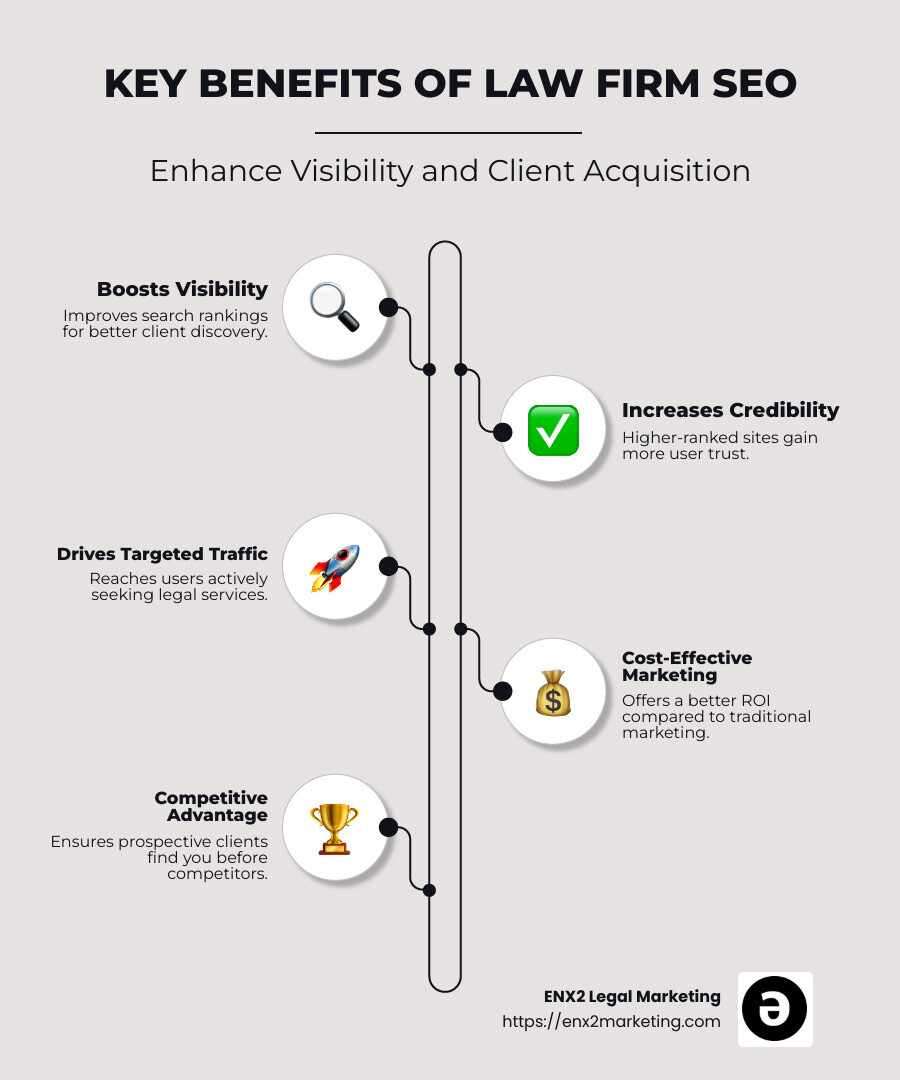
Successful legal SEO campaigns typically generate 40-60% of new client inquiries through organic search, with conversion rates ranging from 2-5% for well-optimized websites.
Track organic traffic growth month-over-month, focusing on qualified visitors rather than total volume. Monitor keyword rankings for high-value terms like “personal injury lawyer [city]” or “divorce attorney near me.” Measure click-through rates from search results, as improvements often indicate better title tags and meta descriptions. Track the average position of your target keywords, aiming for top-3 positions which receive 75% of all clicks. Local search visibility metrics include Google My Business insights, local pack appearances, and “near me” keyword rankings that drive foot traffic and phone calls.
Conversion Tracking and Lead Attribution
Proper conversion tracking reveals that organic search typically generates leads at 50% lower cost per acquisition than paid advertising.
Set up goal tracking in Google Analytics for key actions like contact form submissions, phone calls, and consultation requests. Implement call tracking numbers on your website to measure phone conversions from organic search traffic. Use UTM parameters to track which blog posts and content pieces generate the most leads. Monitor assisted conversions, as legal clients often research extensively before contacting firms, visiting multiple pages over several sessions. Track lead quality by measuring which traffic sources generate clients that hire the firm, not just initial inquiries.
ROI Analysis and Business Impact
Law firms investing in comprehensive SEO strategies typically see 300-500% ROI within 18-24 months, with ongoing returns increasing over time.
Calculate the lifetime value of clients acquired through organic search to determine true SEO ROI. Track revenue attribution by connecting Google Analytics data with your case management system to identify which keywords and content generate paying clients. Monitor cost per acquisition compared to paid advertising channels, typically finding organic search delivers higher-value clients at lower acquisition costs. Measure brand awareness improvements through branded search volume increases and direct traffic growth. Track market share by monitoring your visibility compared to competitors for target keywords and local search results.
Technical Performance Monitoring
Regular technical monitoring prevents 80% of SEO issues that could negatively impact rankings and user experience.
Monitor Core Web Vitals scores monthly using Google Search Console and PageSpeed Insights. Track crawl errors, indexation issues, and security problems that could harm search performance. Set up alerts for website downtime, broken links, and SSL certificate expiration. Monitor mobile usability issues as mobile traffic continues growing. Use tools like Screaming Frog or Sitebulb to conduct regular technical audits identifying optimization opportunities. Track server response times and implement monitoring for any performance degradation that could impact search rankings.
Competitive Analysis and Market Position
Quarterly competitive analysis helps identify opportunities and threats, with top-performing legal websites typically outranking competitors on 60-80% of target keywords.
Monitor competitor keyword rankings and identify gaps where they rank but you don’t. Track competitor backlink acquisition to discover new link building opportunities. Analyze competitor content performance to identify topics and formats that resonate with your shared audience. Monitor local search competition, especially Google My Business optimization and review generation strategies. Use tools like SEMrush or Ahrefs to track competitor organic traffic growth and identify successful strategies you can adapt for your firm.
Measuring Legal SEO Success and ROI
Tracking the right metrics determines whether your legal SEO investment generates meaningful returns. Unlike other industries where vanity metrics might suffice, law firms need precise measurement of lead quality, conversion rates, and client acquisition costs to justify SEO spending and optimize strategies effectively.
Key Performance Indicators for Law Firms
Organic traffic growth provides the foundation for all other SEO metrics. Monitor not just total visitors, but traffic from high-intent keywords that indicate genuine legal needs. Track rankings for primary practice area terms, local keywords, and long-tail phrases that drive qualified leads.
Conversion tracking reveals which SEO efforts translate into actual business results. Set up goal tracking for contact form submissions, phone calls, and consultation requests. Use call tracking numbers on your website to attribute phone leads to specific pages and keywords.
Lead quality metrics matter more than quantity in legal marketing. Track the source of your best clients and highest-value cases. If your personal injury SEO generates 100 leads monthly but only converts 2% into clients, while your estate planning content generates 20 leads with 15% conversion, the latter provides better ROI.
Revenue attribution connects SEO efforts to actual income. Track which keywords, pages, and content pieces generate clients who become significant revenue sources. This data helps prioritize future SEO investments and content creation efforts.
Analytics Tools and Reporting Systems
Google Analytics 4 offers comprehensive insights into user behavior and conversion paths. Set up custom events for legal-specific actions like downloading guides, scheduling consultations, or viewing attorney profiles. Create segments to analyze behavior differences between organic search visitors and other traffic sources.
Google Search Console provides crucial technical SEO data and keyword performance insights. Monitor click-through rates, average positions, and impression data for your target keywords. Track which pages receive the most search visibility and identify opportunities for improvement.
Professional SEO tools like SEMrush, Ahrefs, or Moz offer competitive analysis, keyword tracking, and technical audit capabilities. These platforms help monitor your ranking progress against competitors and identify new keyword opportunities in your practice areas.
Call tracking systems integrate with your website to provide detailed attribution data for phone leads. Platforms like CallRail or CallTrackingMetrics assign unique phone numbers to different marketing channels, helping you understand which SEO efforts drive the most valuable phone consultations.
ROI Calculation Methods
Calculate SEO ROI by comparing total investment against client acquisition value. Include all SEO-related costs: agency fees, content creation, technical improvements, and internal time investments. Compare these costs against the lifetime value of clients acquired through organic search.
Consider the compounding nature of SEO investments when calculating returns. Unlike paid advertising that stops generating results when spending ceases, SEO improvements continue providing value over time. Factor this long-term benefit into your ROI calculations.
Track cost per acquisition (CPA) for SEO versus other marketing channels. If your SEO generates personal injury clients at $500 per acquisition while paid ads cost $2,000 per client, the ROI advantage becomes clear. Document these comparisons to justify continued SEO investment.
Competitive Analysis and Benchmarking
Regular competitive analysis reveals market opportunities and threats to your search visibility. Identify which competitors rank for your target keywords and analyze their content quality, technical implementation, and link building strategies.
Monitor competitor content strategies to identify gaps in your own approach. If competitors consistently rank for certain question-based keywords in your practice area, consider creating comprehensive content addressing those topics from your unique perspective.
Track competitor local SEO performance, including Google My Business optimization, review acquisition, and local citation building. Understanding their local search strategies helps you identify opportunities to gain competitive advantage in geographic markets.
| Metric Category | Primary KPIs | Measurement Frequency | Target Improvement | Business Impact |
|---|---|---|---|---|
| Traffic & Rankings | Organic traffic, keyword positions | Weekly | 20-30% monthly growth | Lead volume increase |
| Conversions |
| Metric Category | Primary KPIs | Measurement Frequency | Success Benchmarks |
|---|---|---|---|
| Traffic & Visibility | Organic sessions, keyword rankings | Weekly | 20%+ annual growth |
| Lead Generation | Form submissions, phone calls | Daily | 5%+ conversion rate |
| Client Acquisition | Consultations, retainers signed | Monthly | 10%+ lead-to-client rate |
| Revenue Impact | Client lifetime value, case values | Quarterly | 3:1 ROI minimum |
Common Legal SEO Mistakes and How to Avoid Them
Even experienced marketers make critical errors when implementing legal SEO strategies. These mistakes can result in wasted resources, ethical violations, or search engine penalties that damage long-term visibility and client acquisition efforts.
Compliance and Ethical Violations
Attorney advertising rules vary significantly by jurisdiction and require careful navigation. Many law firms unknowingly violate advertising regulations by making unsubstantiated claims about results, using misleading testimonials, or failing to include required disclaimers. Research your state’s specific rules and consult with ethics counsel when developing SEO content.
Avoid superlative claims without proper substantiation. Terms like “best lawyer” or “guaranteed results” often violate advertising rules and can trigger disciplinary action. Focus on factual statements about experience, credentials, and practice areas instead of promotional hyperbole.
Client confidentiality must be maintained even in SEO content and case studies. Never use specific client names, case details, or identifying information without proper consent and compliance with confidentiality rules. Generic case descriptions with appropriate disclaimers provide safer alternatives.
Review solicitation practices must comply with local regulations. Some jurisdictions prohibit direct solicitation of reviews, while others require specific disclaimers or waiting periods after case completion. Develop compliant review acquisition processes that respect both search engine guidelines and legal ethics.
Technical SEO Oversights
Website speed issues plague many legal websites and significantly impact search rankings. Large image files, excessive plugins, and poor hosting choices create slow loading times that frustrate users and hurt SEO performance. Regularly audit site speed using Google PageSpeed Insights and address identified issues promptly.
Mobile optimization remains problematic for many law firm websites despite Google’s mobile-first indexing. Ensure your website provides excellent user experience across all devices, with readable text, accessible navigation, and properly sized buttons for touch interaction.
SSL certificate implementation is mandatory for legal websites handling sensitive client information. Beyond security requirements, HTTPS serves as a ranking factor that affects search visibility. Implement SSL certificates properly and ensure all internal links use HTTPS protocols.
Duplicate content issues often arise from multiple practice area pages with similar information or syndicated content from legal directories. Create unique, valuable content for each page and avoid copying text from other sources without proper attribution and modification.
Content Strategy Missteps
Generic, thin content fails to establish expertise or attract qualified leads. Many law firms publish superficial blog posts that barely scratch the surface of complex legal topics. Invest in comprehensive, authoritative content that demonstrates deep knowledge and provides genuine value to potential clients.
Keyword stuffing attempts to manipulate search rankings but creates poor user experience and can trigger penalties. Write naturally for human readers while incorporating keywords strategically. Focus on semantic relevance rather than exact-match keyword density.
Neglecting local content opportunities limits visibility in geographic markets where most legal services are provided. Create location-specific content addressing local laws, court procedures, and community concerns relevant to your practice areas.
Inconsistent publishing schedules reduce content marketing effectiveness and search engine crawling frequency. Develop sustainable content calendars that allow for regular, high-quality publication rather than sporadic bursts of activity.
Link Building and Citation Errors
Low-quality directory submissions and link schemes can harm rather than help SEO performance. Focus on legitimate, high-authority legal directories and avoid services that promise hundreds of directory listings for minimal fees. Quality over quantity applies especially to legal link building.
Inconsistent NAP (Name, Address, Phone) information across online directories confuses search engines and hurts local rankings. Audit all existing citations and correct inconsistencies systematically. Use identical formatting for business information across all platforms.
Reciprocal link schemes between law firms or excessive cross-linking can appear manipulative to search engines. Build links naturally through valuable content, professional relationships, and community involvement rather than artificial exchange programs.
Ignoring negative SEO attacks can damage your search rankings without your knowledge. Monitor your backlink profile regularly using tools like Google Search Console or Ahrefs to identify suspicious links that might harm your site’s authority.
Future Trends in Legal SEO
The legal marketing landscape continues evolving rapidly, driven by technological advances, changing consumer behavior, and search engine algorithm updates. Understanding emerging trends helps law firms prepare for future opportunities and challenges in digital marketing.

Artificial Intelligence and Search Evolution
AI-powered search features are transforming how people find legal information and services. Google’s AI overviews and chatbot integrations change traditional search result presentations, requiring new optimization strategies. Legal content must be structured to provide clear, authoritative answers that AI systems can confidently reference.
Voice search adoption continues growing, particularly for local service queries. Optimize for conversational keywords and question-based searches that reflect natural speech patterns. “Where can I find a divorce lawyer near me” represents typical voice search behavior that requires different optimization approaches than traditional text queries.
Machine learning algorithms increasingly evaluate content quality, user engagement, and expertise signals. Focus on creating genuinely helpful, comprehensive content that keeps users engaged rather than optimizing for specific ranking factors that may become obsolete.
Predictive search features and personalization will become more sophisticated, requiring law firms to understand their target audience’s search patterns and preferences. Develop detailed buyer personas and create content that addresses specific client journey stages.
Video and Visual Content Importance
Video content consumption continues increasing across all demographics, including legal service seekers. Create educational videos addressing common legal questions, attorney introductions, and case study presentations. Optimize video content with proper titles, descriptions, and transcripts to capture search traffic.
Interactive content like calculators, assessment tools, and decision trees provide value while capturing lead information. Develop tools that help potential clients understand their legal situations while demonstrating your expertise and encouraging contact.
Visual search capabilities are expanding, making image optimization increasingly important. Use descriptive file names, alt text, and structured data for images on your website. Professional photography of attorneys and office spaces can improve local search visibility.
Infographics and visual explanations of complex legal processes appeal to users who prefer visual learning. Create shareable visual content that simplifies legal concepts while establishing your firm’s expertise and thought leadership.
Local Search Algorithm Changes
Proximity factors in local search continue evolving, with increased emphasis on actual service delivery areas. Google’s local search algorithms now better understand where businesses actually serve clients rather than just their physical location. Document your service areas clearly and create location-specific content for all markets you serve.
Review signals carry increasing weight in local search rankings. Develop systematic approaches to encouraging satisfied clients to leave reviews while maintaining compliance with legal advertising rules. Respond professionally to all reviews to demonstrate engagement and professionalism.
Local content relevance will become more sophisticated, rewarding businesses that demonstrate genuine community involvement and local expertise. Participate in community events, comment on local legal issues, and create content addressing location-specific legal concerns.
Integration with Google My Business features continues expanding, offering new opportunities for visibility and engagement. Utilize all available GMB features including posts, Q&A, messaging, and booking integration where appropriate for your practice.
Privacy and Data Protection Impact
Increasing privacy regulations affect how law firms can track and analyze user behavior. Cookie restrictions and data protection laws require new approaches to analytics and conversion tracking. Implement privacy-compliant tracking methods and transparent data collection practices.
First-party data collection becomes more valuable as third-party tracking limitations increase. Develop strategies to capture client information directly through valuable content offers, newsletters, and consultation scheduling systems.
Trust signals will become increasingly important as consumers become more privacy-conscious. Clearly communicate your data protection practices, security measures, and privacy policies to build confidence with potential clients.
Compliance with emerging privacy regulations must be factored into all SEO and digital marketing strategies. Stay informed about GDPR, CCPA, and other relevant privacy laws that affect your online marketing practices.
| Trend Category | Current Impact | Future Implications | Recommended Actions |
|---|---|---|---|
| AI Integration | Featured snippets, voice search | Conversational search interfaces | Optimize for natural language queries |
| Video Content | Higher engagement rates | Video-first search results | Create educational video library |
| Local Search | Proximity-based rankings | Hyper-local service targeting | Develop neighborhood-specific content |
| Privacy Changes | Tracking limitations | First-party data emphasis | Build direct relationship channels |
FAQ
Q: How long does it take to see results from legal SEO efforts?
Legal SEO typically requires 6-12 months to show significant results due to high competition and Google’s careful evaluation of legal content. Initial improvements in technical SEO and local listings may appear within 2-3 months, but meaningful organic traffic growth and lead generation usually take longer to develop.
Q: What’s the average cost of professional legal SEO services?
Professional legal SEO services range from $2,000-$10,000+ monthly depending on market competition, firm size, and service scope. Solo practitioners might invest $1,500-$3,000 monthly, while large firms in competitive markets often spend $5,000-$15,000 monthly for comprehensive SEO strategies including content creation and link building.
Q: Can law firms do SEO themselves or should they hire professionals?
Small firms can handle basic SEO tasks like content creation and local listing management, but competitive legal markets usually require professional expertise. Technical SEO, link building, and algorithm adaptation demand specialized knowledge that most attorneys lack. Consider hybrid approaches where firms handle content while professionals manage technical aspects.
Q: How do attorney advertising rules affect SEO content creation?
Attorney advertising rules significantly impact SEO content by restricting claims about results, requiring disclaimers, and limiting promotional language. Each state has different regulations governing legal marketing. Always research local rules and consider ethics counsel consultation when developing SEO content to avoid disciplinary issues.
Q: What’s more important for law firms: local SEO or general SEO?
Local SEO typically provides higher ROI for most law firms since legal services are location-dependent. However, firms serving broader markets or specialized practice areas benefit from general SEO targeting informational keywords. Most successful legal SEO strategies combine both approaches with emphasis on local optimization.
Q: How many keywords should a law firm target in their SEO strategy?
Focus on 20-50 primary keywords initially, including practice area terms, local variations, and long-tail phrases. Attempting to target hundreds of keywords simultaneously dilutes efforts and reduces effectiveness. Build authority around core terms first, then expand to related keywords as rankings improve.
Q: What role do online reviews play in legal SEO rankings?
Online reviews significantly impact local search rankings and click-through rates. Google considers review quantity, quality, recency, and response rates when determining local search visibility. Reviews also influence potential clients’ decisions, making reputation management crucial for both SEO and business development.
Q: How often should law firms publish new content for SEO?
Consistent publishing schedules work better than sporadic bursts. Aim for 1-2 high-quality blog posts monthly rather than daily low-quality content. Focus on comprehensive, authoritative articles that demonstrate expertise and address client concerns rather than meeting arbitrary publishing quotas.
Q: What’s the biggest SEO mistake law firms make?
The most common mistake is creating thin, generic content that fails to demonstrate expertise or provide value. Many firms publish superficial blog posts targeting keywords without addressing real client needs. Successful legal SEO requires substantial, authoritative content that establishes trust and expertise.
Q: How do Google algorithm updates affect legal SEO?
Legal websites face stricter evaluation due to “Your Money or Your Life” classification. Algorithm updates often emphasize expertise, authoritativeness, and trustworthiness (E-A-T) factors that are crucial for legal content. Focus on building genuine authority rather than trying to manipulate ranking factors.
Q: Should law firms invest in paid ads or SEO first?
Most firms benefit from combining both strategies, using paid ads for immediate visibility while building long-term SEO assets. If budget constraints require choosing one, consider your timeline and competition level. SEO provides better long-term ROI, while paid ads deliver faster results for urgent lead generation needs.
Q: How do mobile optimization requirements affect legal websites?
Mobile optimization is mandatory since Google uses mobile-first indexing and most local searches occur on mobile devices. Legal websites must provide excellent mobile user experience with fast loading times, readable text, and easy navigation. Poor mobile performance significantly hurts both rankings and conversion rates.
Conclusion
Legal SEO represents a fundamental shift in how law firms attract and serve clients in the digital age. The strategies, techniques, and best practices outlined in this comprehensive guide provide the foundation for building a sustainable online presence that generates qualified leads and drives business growth. From understanding the unique challenges of marketing legal services online to implementing advanced technical optimizations, successful legal SEO requires both strategic thinking and meticulous execution.
The key takeaways from this guide emphasize the importance of:
- Building genuine expertise and authority through comprehensive, valuable content that addresses real client needs and concerns
- Mastering local SEO fundamentals including Google My Business optimization, citation management, and reputation building for geographic market dominance
- Implementing technical best practices while maintaining compliance with attorney advertising regulations and ethical requirements
- Measuring success through meaningful metrics that connect SEO efforts to actual client acquisition and revenue generation
The future of legal SEO will be shaped by artificial intelligence, voice search adoption, and evolving privacy regulations that change how firms connect with potential clients. Law firms that invest in building authoritative, user-focused websites while adapting to technological changes will maintain competitive advantages in increasingly crowded digital markets.
Partner with Case Quota for Success
Implementing the comprehensive legal SEO strategies discussed in this guide—from technical optimization and local search domination to content marketing and compliance management—requires specialized expertise and significant time investment. The complex interplay between keyword research, on-page optimization, local citation building, and attorney advertising compliance creates challenges that many firms struggle to navigate effectively while focusing on client service.
Case Quota specializes in helping law firms execute these exact strategies with precision and compliance. We handle everything from technical SEO audits and local listing optimization to content creation and reputation management, allowing you to focus on practicing law while we drive qualified leads to your practice. Our legal marketing experts understand the unique challenges of attorney advertising rules, competitive keyword landscapes, and the long-term nature of SEO success.
Whether you need comprehensive SEO strategy development, ongoing content marketing, or technical optimization support, our team provides the specialized knowledge and dedicated execution that transforms SEO investments into measurable client acquisition results. Visit https://casequota.com to discover how we can implement these proven legal SEO strategies for your firm’s growth and success.