
Improving Telecom Customer Engagement with AI Agents
AI agents for telecom customer experience and retention can stop churn before it starts. Customer churn rates reach as high as 40 percent in many markets, and they threaten margins. Therefore telecom leaders must adopt AI agents and data-driven outreach to keep customers. In practice, these agents work 24/7 to surface timely offers and resolve billing issues. Yet many teams lack the data and processes needed to act at scale.
AI-driven outreach personalizes offers, automates billing fixes, and speeds up first contact resolution. Moreover, tools like guided selling and billing resolution agents increase upsell and average revenue per user. As a result, teams reclaim time and improve productivity using Agentforce-style automation. Additionally real-time signals reduce friction and make proactive outreach possible. For telecom operators this translates into lower churn and higher CLTV.
This article shows how to improve telecom customer engagement with AI agents and real-time data. We cover key metrics such as NPS, CSAT, CES, FCR, churn rate, CLTV, and ARPU. Then we explain how to tie those experience metrics to advertising performance and campaign ROI. Along the way we share case examples and measurement approaches you can replicate. Finally, you will get action steps for deploying AI agents and measuring ad-driven lift.
AI agents for telecom customer experience and retention
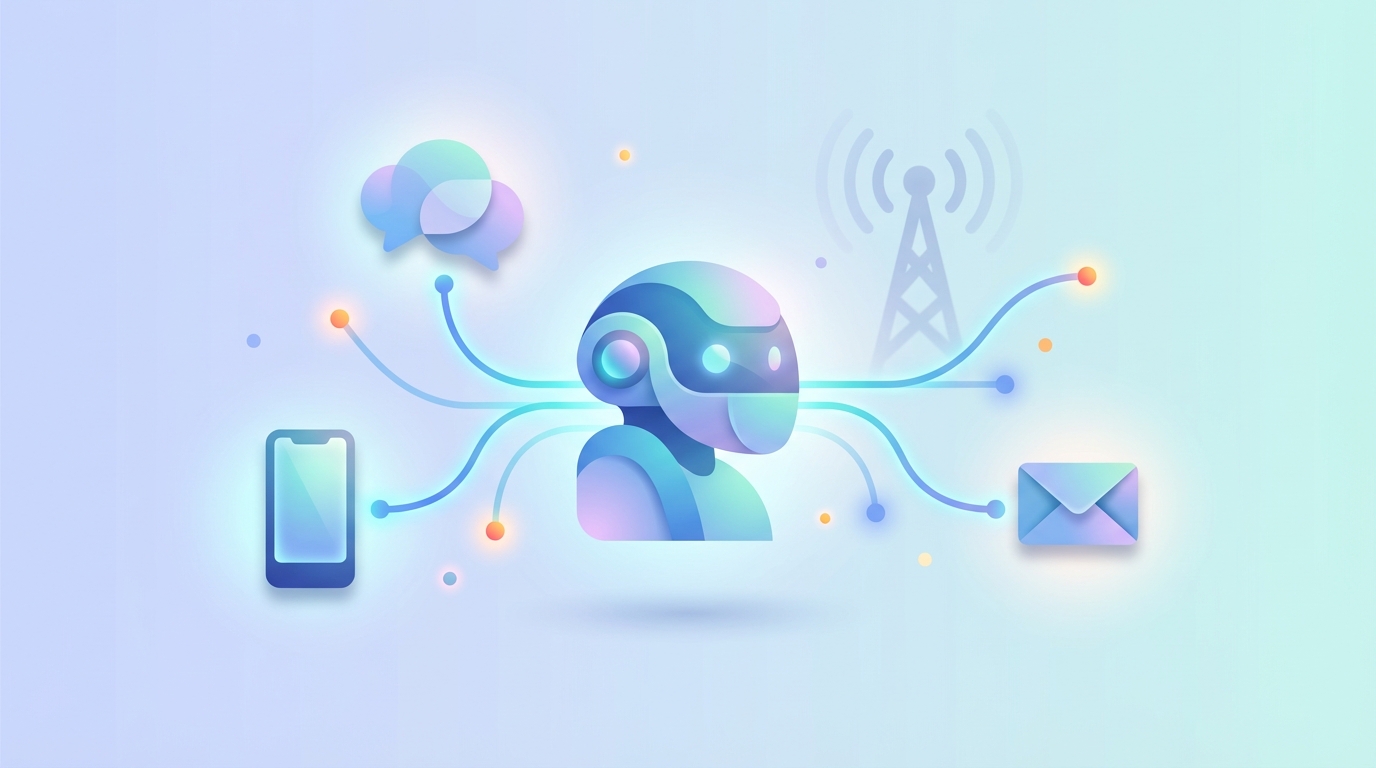
AI agents change how telcos engage customers and prevent churn. These systems automate outreach, resolve billing issues, and surface timely offers. As a result, teams can deliver more personalized service at scale. This section explains how they work and why they matter for retention.
Real time data fuels smarter interactions. For example Salesforce bundles prebuilt agents in Agentforce to connect systems and act on signals in the moment. Because agents run 24 hours a day, they reduce response time and increase first contact resolution. Moreover, integrating CRM and billing data makes guided selling and billing resolution more accurate. See Salesforce for details: Salesforce.
Operators face churn rates as high as 40 percent, which erodes margins. Therefore proactive, personalized outreach matters more than ever. One NZ reported a four times increase in engagement using its AI assistant, which illustrates the value of real time personalization. Also acquiring new customers costs five to seven times more than retaining existing ones, so reduction in churn improves CLTV and ARPU. Learn more from One NZ: One NZ.
Lumen Technologies measured operational gains after deploying Agentforce. As a result they reclaimed more than 300 hours of productivity weekly, which frees agents for complex work. AI also helps improve NPS, CSAT, CES, and FCR by routing issues to the right resolver. Use those metrics to tie experience to advertising outcomes and campaign ROI. See Lumen study: Lumen study.
Finally digital transformation and real time signals let teams shift from reactive to proactive service. Moreover AI agents enable targeted ad audiences based on recent service experiences. As a result marketing can show offers that convert better and lift ARPU. In short AI driven outreach improves engagement, lowers churn, and boosts return on ad spend. Start with small pilots to measure lift and iterate quickly.
| AI agent name | Primary function | Benefits for customer retention and engagement | Reported impact and evidence |
|---|---|---|---|
| Agentforce (Salesforce) | Orchestrates prebuilt AI agents to connect CRM, billing, and channels; runs 24/7 | Reduces response time; raises first contact resolution; enables proactive outreach and targeted offers | Salesforce notes Agentforce includes five prebuilt agents. Quote: “With Agentforce for Communications, we’re helping telecom companies work smarter by connecting every part of their business… with AI agents that work 24/7 alongside human teams.” — David Fan. More Info |
| Billing Resolution Agent | Automates dispute detection and billing fixes; routes complex cases to humans | Lowers friction, improves CSAT and CES, reduces churn from billing issues | Drives faster resolution and fewer repeat contacts; ties to higher FCR and lower churn rates (see Agentforce). More Info |
| Guided Selling Agent | Surfaces personalized offers and upsell opportunities using real time signals | Increases conversion, raises ARPU, and improves CLTV through timely recommendations | Boosts upsell and targeted campaign performance; supports marketing with better audience signals |
| AI customer assistant (One NZ style) | Omnichannel assistant for balance checks, plan changes, and simple service tasks | Delivers self service 24/7, increases engagement, reduces load on contact centers | One NZ reports a 4x increase in engagement using its AI assistant. More Info; Lumen reported Agentforce reclaimed more than 300 hours weekly. More Info |
Key supporting facts
- Telecom churn can reach 40 percent, making retention critical
- Acquiring new customers costs five to seven times more than retaining existing ones
- Use NPS, CSAT, CES, FCR, and CLTV to measure impact and tie experience gains to advertising ROI
Key metrics for AI agents for telecom customer experience and retention
Measuring AI-driven outreach requires a clear metric set. Below are the core KPIs telecom teams should track. Each metric links to customer experience, advertising performance, and revenue impact.
- NPS (Net Promoter Score)
- What it measures: overall willingness to recommend a brand.
- Why it matters: promoters cost less to retain and advocate for you.
- How AI helps: agents surface service issues and proactive offers, lifting NPS. For example, One NZ saw higher engagement after deploying its AI assistant, which helps move customers toward promoter status. See One NZ.
- CSAT (Customer Satisfaction)
- What it measures: satisfaction with a specific interaction, often on a 1 to 5 scale.
- Why it matters: higher CSAT improves conversion rates from ads because satisfied customers respond better to campaigns.
- How AI helps: Billing Resolution Agents cut friction and increase CSAT by resolving billing errors faster. See Salesforce.
- CES (Customer Effort Score)
- What it measures: ease of completing a task, from very easy to very difficult.
- Business link: lower effort reduces churn and raises CLTV.
- AI role: omnichannel assistants automate routine tasks, which lowers effort and contact volume.
- FCR (First Contact Resolution)
- What it measures: percent of issues fixed on the first interaction.
- Impact: higher FCR reduces repeat contacts and operational cost.
- Example: Lumen reported reclaiming over 300 hours weekly after Agentforce, which improves FCR and agent productivity. See Lumen.
- Churn rate and CLTV (Customer Lifetime Value)
- Churn formula: (Customers at Start – Customers at End) / Customers at Start * 100.
- Why it matters: acquiring customers costs five to seven times more than keeping them.
- How AI ties to ads: reduced churn raises CLTV, which lifts return on ad spend and improves audience targeting for upsell campaigns.
In practice start with a pilot. Then map AI signals to these KPIs and to ad conversions. As a result you can quantify lift and scale the agents that move the needle.
Conclusion
AI agents for telecom customer experience and retention deliver measurable gains in engagement and ad performance. They automate outreach, resolve billing issues, and surface timely offers to the right customers. As a result, companies lower churn, lift ARPU, and improve campaign ROI.
Law firms can apply the same customer-first tactics to client acquisition and retention. Therefore adopting AI-driven outreach boosts conversion and improves client lifetime value. Case Quota specializes in legal marketing for small and mid-sized firms. Moreover we craft high-level strategies that help firms dominate local markets. Visit Case Quota for tailored plans and guidance.
Start with a pilot, measure NPS, CSAT, FCR, and tie them to ad lift. Finally, iterate fast and scale the agents that move the needle. With the right data and partners, firms will win more clients and keep them longer. Begin by mapping service signals to marketing objectives and KPIs. Contact Case Quota to explore a pilot and a clear measurement plan.
Frequently Asked Questions (FAQs)
What are AI agents for telecom customer experience and retention and why do they matter?
AI agents are automated systems that handle customer tasks across channels. They resolve billing issues, recommend plans, and surface timely offers. Because they run continuously, they reduce response time and improve first contact resolution. As a result, telcos can lower churn and boost CLTV.
Which metrics should telecom teams track to measure agent success?
Track NPS, CSAT, CES, FCR, churn rate, and CLTV. Each metric captures a different business signal. For example, FCR shows whether agents fix problems on the first contact. Moreover NPS indicates long term loyalty. Therefore combine these KPIs to link experience to ad performance.
How do AI agents impact marketing and ad performance?
AI agents create cleaner audience signals and better timing for offers. Consequently marketing can target customers who recently had positive experiences. Additionally agents surface upsell opportunities and raise ARPU. As a result return on ad spend improves when ads align with recent service interactions.
What are common use cases for agents like Agentforce, Billing Resolution, and Guided Selling?
Common uses include resolving billing disputes, automating balance checks, and recommending upgrades. Guided selling agents increase conversions by matching offers to customer context. Billing Resolution Agents reduce repeat contacts and increase CSAT. In practice these agents free human teams for complex cases.
How should a telecom operator start a pilot project?
Begin with a narrow use case such as billing fixes or plan recommendations. Then measure baseline KPIs and run the pilot for 6 to 12 weeks. Use A/B testing to quantify lift and iterate quickly. Finally scale agents that drive measurable improvements in retention and ad-driven conversions.