

AI Search Optimization in the Legal Field
In an era where artificial intelligence is redefining how users search for and process information, the notion of AI Search Optimization becomes paramount, especially within specialized fields like law. AI-driven search trends have advanced considerably, demanding strategic approaches from law firms eager to maintain their standing in organic search results.
The significance of AI Search Optimization for law firms cannot be overstated. The rapid evolution in AI technology presents both opportunities and challenges. On one hand, these innovations offer the promise of improved visibility in nuanced, intent-driven searches. On the other, they introduce complexities that require law firms to stay vigilant and adaptive, ensuring they remain relevant in the ever-competitive legal landscape.
Today’s search engines, enhanced by AI, are shifting from conventional keyword-based searches to intricate, context-rich queries. For example, education and healthcare sectors have witnessed significant growth in AI-triggered search queries, with increases up to 83% and 88% respectively, as reported from 2025 data provided by Brookings Institution and BrightEdge. This shift indicates a pressing need for similar adaptation within the legal industry to avoid falling behind in this digitized race.
This article is designed to provide your law firm with essential insights and actionable strategies to optimize for AI-driven search, ensuring you preserve and potentially enhance your organic visibility. We will explore the intersection of AI and SEO, demystify AI Overviews (AIO), and deliver prescriptive advice tailored to the unique challenges faced by legal practitioners. Navigating this AI-centric landscape proactively will empower your firm to sustain a robust online presence in an age where AI search reigns supreme.
By understanding and implementing AI Search Optimization strategies, your law firm can capitalize on these technological shifts to bolster its online authority, effectively channeling AI’s transformative potential into sustainable growth.
AI Search Optimization explained for law firms
AI Search Optimization is the practice of shaping your website so AI systems can find, understand, and cite your content. For law firms, this means tuning content for answer engines and large language models. Because these engines synthesize across many sources, your site must be authoritative, structured, and secure.
What is AI Search Optimization and how it differs from SEO
Traditional SEO focuses on keywords, links, and ranking signals. However, AI Search Optimization emphasizes context, source trust, and concise answers. AI-driven features such as Google AI Overviews pull snippets and summaries. As a result, ranking number one on a search engine results page no longer guarantees that AI will cite you.
Key differences
- Traditional SEO optimizes for organic rankings and clickthroughs
- AI Search Optimization optimizes for citations, summaries, and attribution
- AI systems value explicit context, structured data, and source authority
Why law firms must adapt with AI Search Optimization
Law queries are high-stakes and trust matters. Therefore, if AI systems supply inaccurate legal summaries, your brand can suffer. Law firms must adapt to protect reputation, generate qualified leads, and remain visible in AI-enabled queries. BrightEdge research shows AI Overviews are growing rapidly, which affects how legal content gets surfaced and cited. For details, see BrightEdge findings here: BrightEdge findings.
Operational impacts on organic visibility
- Organic click volume may drop if AI answers users directly
- Only a minority of sources cited in AI Overviews currently rank in the organic top ten
- Therefore firms must be both findable and citable to preserve visibility
Named examples shaping the landscape
- Google AI Overviews gives summarized answers and can reshape SERP real estate. Link: Google AI Overviews
- ChatGPT influences conversational discovery and referral patterns, especially for education and healthcare queries
- BrightEdge provides empirical tracking of AIO growth and coverage trends
Practical signals to prioritize
- Structured data and clear author attribution
- Topic clusters and brief expert summaries for answer consumption
- Site security and crawl access for AI bots
Visuals ideas for clarity
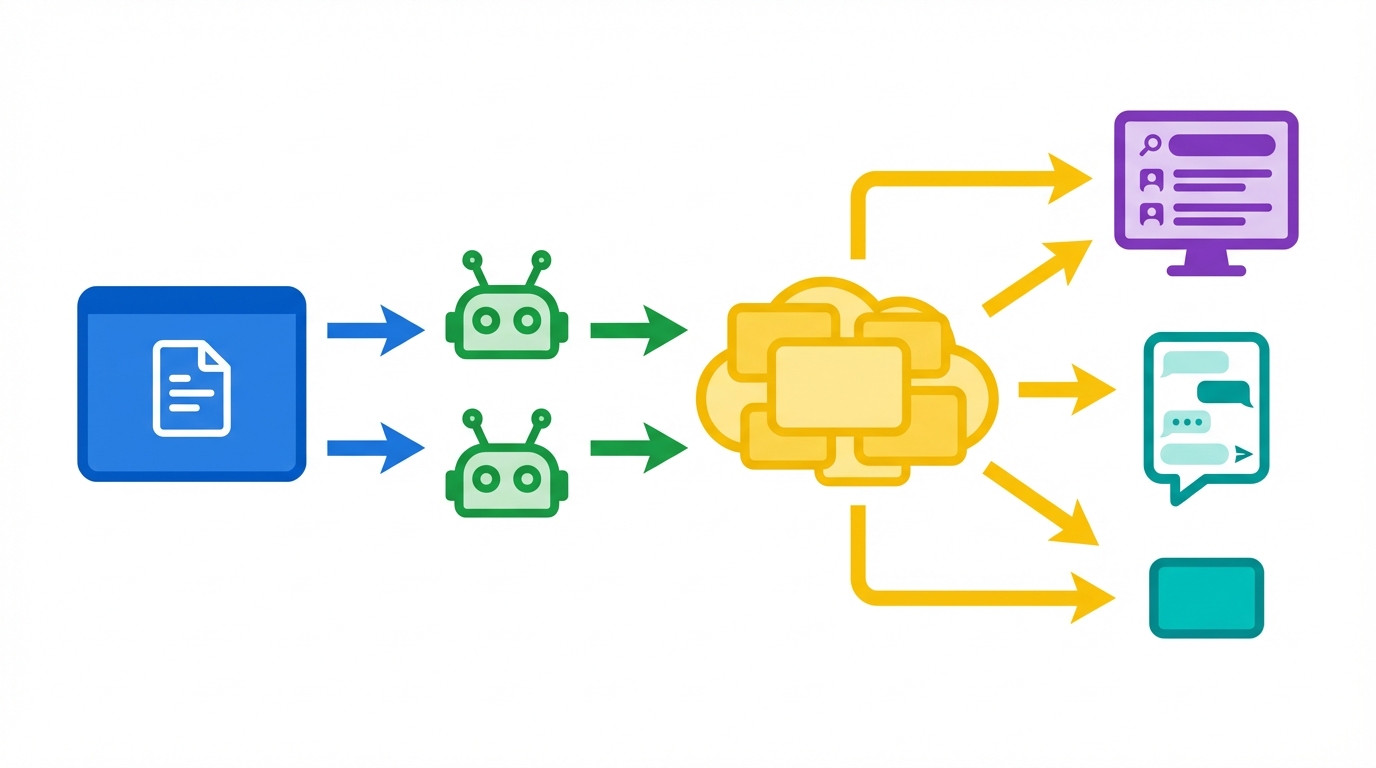
- Flowchart showing how user query becomes AI Overview and where citations appear
- Side-by-side mockup of a classic SERP versus an AI Overview result
- Table listing signals that increase chance of AI citation: schema, citations, E-A-T, freshness
Related keywords and synonyms
- AI Overviews, Answer Engine Optimization, AEO, AI-enabled search, Google-Extended, GPTBot, AI crawlers, AI search coverage
By treating AI Search Optimization as distinct from classic SEO, law firms can make tactical changes that protect visibility, reputation, and lead flow.
AI Search Optimization best practices for law firms
AI Search Optimization requires intentional, repeatable actions. Below are practical steps law firms can use to protect visibility and gain citation in AI-driven results.
Structured content and schema for AI Search Optimization
Use structured data to make your content machine-readable. For example, apply schema for articles, legal services, FAQs, and attorney profiles. Because AI systems parse structure first, schema increases the odds your firm appears in AI Overviews.
- Add JSON-LD for attorney names, credentials, and practice areas
- Use FAQ schema for common legal questions and short answers
- Mark up local business information with LocalBusiness schema
For context, BrightEdge tracks rising AI Overview coverage. Their findings show AI features occupy increasing SERP space. See BrightEdge research here: BrightEdge Research.
Write concise, authoritative answers
AI systems prefer direct, evidence-backed responses. Therefore, craft short expert summaries at the top of pages. Use bullet points and clear subheadings. Also, include citations to primary sources such as statutes or court opinions.
- Lead with a one to two sentence expert summary
- Follow with a slightly longer explanation and source links
- Keep paragraphs short and focused for snippet readability
Optimize for featured snippets and AI Overviews
Although different from classic SERP features, featured snippets and AI Overviews share signals. Optimize headings and answers to match common question queries. In addition, test content with tools that simulate answer engines.
- Use question-based H2s and H3s that match user intent
- Provide definitive short answers within the first 50 to 120 words
- Use lists and tables where appropriate to improve scanability
Maintain crawl access while enforcing security
AI crawlers such as GPTBot and PerplexityBot need access to index your content. However, do not compromise security.
- Allow reputable AI crawlers while blocking suspicious bots
- Monitor Cloudflare and similar policies; Cloudflare changed AI crawl defaults in 2025: Cloudflare Blog
- Harden WordPress and plugins; patch promptly to minimize exploit risk
As Roger Montti warns, “Ranking number one organically does not automatically get you cited in the AIO.” Therefore, balance discoverability with protection.
Use data to guide content cadence and updates
Regularly audit traffic, queries, and citations. Because AI search evolves quickly, rely on data to prioritize updates. Track which pages get AI citations and which do not.
- Run monthly audits for top landing pages and FAQ pages
- Update statutory references and case citations promptly
- Test variations of short-answer phrasing for better AI matches
Signals and technical checklist
- Schema: Article, FAQ, LocalBusiness, Person
- Authorship and bylines with credentials
- Clear canonical tags and hreflang if needed
- Fast page load and mobile-first design
- HTTPS and WAF protection
Visuals and monitoring ideas
- Dashboard showing pages cited by AI Overviews
- Heatmap of content depth where AI summaries pull from
- Weekly vulnerability report for CMS and plugins
In summary, AI Search Optimization for law firms blends quality content, structured markup, and robust security. By acting now, firms can stay citable, preserve organic visibility, and control the legal narrative AI presents to clients.
Traditional SEO versus AI Search Optimization
| Approach | Focus areas | Ranking signals | Content strategy | Technical requirements | Security considerations |
|---|---|---|---|---|---|
| Traditional SEO | Local visibility; keywords; backlinks; brand pages | Keyword relevance; backlinks; domain authority; CTR; page-level signals | Long-form articles; practice area pages; location pages; keyword targeting | XML sitemap; robots.txt; mobile-first design; page speed optimization | HTTPS; regular plugin updates; basic WAF; monitored access logs |
| AI Search Optimization | Contextual relevance; authoritative answers; structured snippets; citation quality | Source authority; schema markup; concise answers; citation frequency; freshness | Short expert summaries; FAQs; topic clusters; explicit citations; structured snippets | JSON-LD schema; allowlist for reputable AI crawlers; API-friendly endpoints; semantic headings | Rapid patching; granular crawler rules; WAF tuned for AI crawlers; vulnerability monitoring |
CONCLUSION
AI Search Optimization is now a core risk and opportunity for law firms. The rise of AI Overviews and answer engines means firms must deliver concise, authoritative answers. Because AI systems cite a narrow set of sources, you must be both discoverable and citable.
Data shows AI Overviews grew 58 percent year over year. Therefore, acting on structured data, short expert summaries, and robust security is urgent. Moreover, classic organic rankings no longer guarantee AI citations. As a result, firms that rely only on traditional SEO risk losing share of voice.
Practical steps preserve visibility. First, use JSON-LD, FAQ schema, and clear bylines to improve machine readability. Second, craft short, sourced answers at the top of pages to increase citation odds. Third, maintain tight security and patching practices so AI crawlers can index safely. Finally, monitor which pages AI cites and update them based on real data.
Case Quota specializes in helping small and mid-sized law firms dominate their markets with advanced strategies, including AI Search Optimization. Their team implements schema, content design, and security practices tailored to legal publishers. For expert assistance and a pragmatic roadmap, visit Case Quota and request a consultation.
In short, treat AI Search Optimization as a strategic discipline. Act now, because the AI-driven search landscape will only grow more influential. Firms that move deliberately will protect reputation, capture qualified leads, and shape the legal answers AI presents to potential clients.
Frequently Asked Questions (FAQs)
What exactly is AI Search Optimization and why does my law firm need it?
AI Search Optimization prepares your content for answer engines and large language models. It ensures AI systems can find, trust, and cite your pages. Law queries often require precise, reliable answers. Therefore, firms that optimize for AI reduce reputation risk and increase qualified leads.
How does AI Search Optimization differ from traditional SEO?
Traditional SEO targets organic rankings, backlinks, and clickthroughs. AI Search Optimization focuses on concise expert answers, schema markup, and source authority. As a result, you must be citable, not just visible. For example, AI Overviews may cite sources that do not appear on page one organically.
Should we allow AI crawlers like GPTBot to index our site?
In most cases, yes. Allowing reputable AI crawlers helps machines find and parse your content. However, do this selectively. In addition, maintain strict security and patch management. Block unknown or suspicious bots while allowlisting trusted agents.
What security steps must we take when optimizing for AI search?
Prioritize rapid patching and plugin hygiene. Because attackers exploit vulnerabilities quickly, monitor updates and apply fixes promptly. Also implement HTTPS, a tuned web application firewall, and regular vulnerability scans. Finally, restrict admin access and log crawler activity so you can detect anomalies.
How do we measure success in AI Search Optimization?
Track citations and referral signals from AI overviews and assistants. Use monthly audits to find pages the AI cites. Monitor changes in qualified lead volume, branded queries, and organic traffic. Also test short-answer variants and measure which versions receive AI attribution.