
Google cannibalizes publisher traffic: an urgent challenge for legal marketing
Google cannibalizes publisher traffic by surfacing repackaged content directly on the search results, and publishers lose referral visits as a result. This shift feels technical at first, but it changes the economics of the open web. As AI search technologies like answer engines and AI Overviews mature, search evolves from a gateway to a destination. Therefore publishers report fewer clicks, more zero click searches, and shrinking referral traffic.
The scope of the problem extends beyond newsrooms. Antitrust filings, industry analysis, and publisher complaints describe a pattern in which RAG grounding repurposes original reporting, which then appears on the search engine results page without sending readers to the source. As a result publishers face revenue declines in advertising, subscriptions, and affiliate links. Moreover this matters to any organization that depends on organic visibility. Law firms are no exception.
For law firms the stakes are practical and strategic. First organic search drives new client inquiries, thought leadership visibility, and reputation building. Second AI driven answers can surface legal guidance without linking back to firm content, which reduces leads and weakens lawyer branding. Therefore protecting a law firm’s organic visibility becomes a core marketing and business development priority. In this article we analyze how Google’s pivot toward answer oriented search affects publisher traffic and referral models. We examine the technology at play, summarize the legal and antitrust context, and outline practical steps law firms can take to preserve search presence and client acquisition capacity.
This introduction sets an analytical and critical frame. Next we will explore evidence, cite industry filings, and recommend specific actions for law firms to protect their organic channels.
How Google cannibalizes publisher traffic via AI search
Publishers and analysts point to specific mechanisms that shift attention from publisher sites to Google’s own results. As a result referral clicks fall, and publishers report more zero click searches. The Penske Media Corporation filing describes this shift in blunt terms. For example, the filing states: “Through RAG, or ‘grounding,’ Google uses, repackages, and republishes publisher content for display on Google’s SERP, cannibalizing the traffic on which PMC depends.”
Below are the main mechanisms and how they work
-
RAG grounding and grounding models
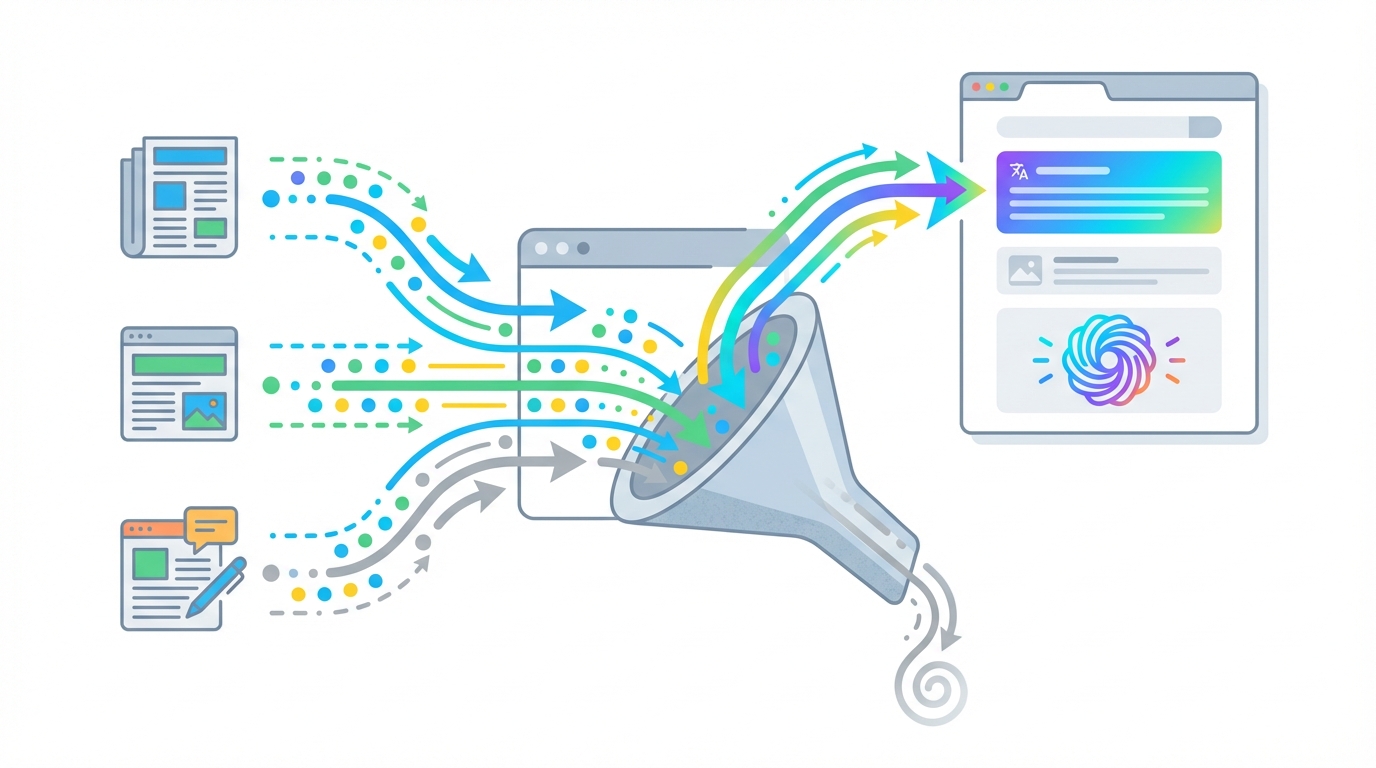
Google’s retrieval augmented generation, or RAG, pulls passages from indexed pages. Then the model uses those passages to create a compact summary. Therefore the summary can appear on the search engine results page without a click.
As the PMC filing says, this process effectively repackages publisher content for display on the SERP. Consequently publishers lose the referral visit that would otherwise monetize that attention.
-
AI Overviews and answer surfaces
Google displays AI generated Overviews and concise answers at the top of the results. These answers often include multiple sourced snippets. However they may not link through deeply or encourage users to read the original article.
In practice the purpose can be consumption on SERP rather than facilitating click‑throughs. The filing notes: “The purpose is not to facilitate click‑throughs but to have users consume PMC’s content, repackaged by Google, directly on the SERP.”
-
Featured snippets, knowledge panels, and zero click behavior
Classic features like featured snippets now sit alongside generative summaries. Therefore users get answers directly on Google.
As a result zero click searches increase and publisher pageviews decline. This outcome harms advertising, subscription, and affiliate revenue models.
-
Indexing, aggregation, and republishing at scale
Google crawls and indexes vast publisher feeds. Then the AI aggregates facts and sentences across sources. Consequently the engine can reproduce context without sending traffic back.
Scale matters because small reductions in click‑through rate multiply across millions of queries.
Evidence and executive statements
-
The Penske Media memorandum makes a strong claim about market dynamics. It warns: “Google’s search monopoly leaves publishers with no choice: acquiesce—even as Google cannibalizes the traffic publishers rely on—or perish.”
-
Meanwhile Sundar Pichai emphasized a commitment to the ecosystem, saying “I think news and journalism will play an important role, you know, in the future we’re pretty committed to it.” For full context see the Lex Fridman transcript.
-
For further reporting on the filing and the allegations, consult Search Engine Journal and TechCrunch.
Comparison table: Traditional publisher traffic vs AI-driven traffic cannibalization
| Feature | Traditional publisher traffic | AI-driven traffic cannibalization | Impact on publishers |
|---|---|---|---|
| Referral traffic | Relies on clicks from search and referring sites | Reduced by zero-click searches and on-SERP answers | Lower pageviews; fewer ad impressions |
| Crawl and index | Crawling leads to indexed pages that drive organic visits | RAG grounding uses indexed text to generate summaries on SERP | Content consumed without visit; attribution diluted |
| Click-through behavior | Users click through for full articles and context | Users receive answers on SERP; zero-click searches rise | Decreased CTR; subscription and lead loss |
| Monetization model | Ad, affiliate, and subscription revenue tied to visits | Revenues decline as consumption shifts to Google surfaces | Revenue erosion; harder to justify newsroom costs |
| Content attribution | Direct link and traffic to original publisher | Repackaged snippets may carry weak or no links | Loss of brand recognition and referral credit |
| Scale and speed | Publishers control publishing cadence and SEO signals | AI aggregates across sources instantly and at scale | Small CTR drops compound into large revenue loss |
| Search engine role | Gateway that directs users outward to sources | Answer engine that keeps users on the SERP | Fundamental fair exchange broken; bargaining power reduced |
| Publisher responses | SEO, paywalls, newsletters, direct outreach | Need for structured data, content differentiation, and legal remedies | Shift in strategy; increased investment in owned channels |
Antitrust Filing: Penske Media Corporation vs Google
Penske Media Corporation (PMC), the parent company of influential brands like Deadline, The Hollywood Reporter, and Rolling Stone, has taken bold legal action against Google. In February 2026, PMC filed an antitrust memorandum opposing Google’s motion to dismiss their lawsuit. This memorandum accuses Google of undermining the “fundamental fair exchange” between search engines and publishers. PMC argues that Google’s transition from a traditional search engine to an “answer engine” has dramatically devalued publishers’ economic models by reducing referral traffic and increasing zero-click searches.
Key Points from the Filing
- “Google’s search monopoly leaves publishers with no choice: acquiesce—even as Google cannibalizes the traffic publishers rely on—or perish.” (Search Engine Journal).
- This quote underscores Google’s influence over how much traffic publishers receive. By presenting content directly on the Search Engine Results Page (SERP), the need for users to click through diminishes.
- Through mechanisms like RAG grounding, Google repackages and republishes content directly on its platforms, consuming potential visits to publisher sites (TechCrunch).
Broader Industry Anxiety About AI Search
The implications of the PMC lawsuit extend far beyond one corporate entity. The industry faces mounting concerns over AI search surfaces and their capacity to alter digital content consumption.
- Rising Zero-Click Searches: Instances where users obtain answers directly on the SERP without visiting publisher pages are increasing. This shift is significant, with Search Engine Journal reporting growing uncertainty and reduced monetization opportunities.
- Economic Impacts: The broader deployment of technologies like AI Overviews poses risks. Digital publishing, heavily reliant on ad impressions and subscription models, finds itself grappling with new economic realities.
Potential Consequences for Small and Mid-Sized Firms
For smaller publishers and firms, Google’s “answer engine” could spell existential threats. Larger entities like PMC have resources to contest these measures legally, but smaller players may struggle to remain viable in the face of declining organic visibility and traffic.
- Challenges Faced:
- Reduced visibility and engagement as direct answers reduce the incentive to explore multiple sources.
- Limited leverage to negotiate fairer terms with search engine giants.
- Escalating investments in alternative channels like direct outreach and owned media channels.
Sundar Pichai’s acknowledgment of Google’s responsibility to the “ecosystem,” as stated in the Lex Fridman podcast, creates a contrasting narrative to the reality faced by many publishers today (Lex Fridman). Google’s stated commitment to supporting journalism and outstanding content showcases a complex dynamic between corporate responsibility and maintaining market dominance.
In conclusion, the ongoing legal and strategic battles reflect deeper uncertainties and transformations that legal and publishing industries must navigate in this evolving landscape.
CONCLUSION
When Google cannibalizes publisher traffic through AI Overviews and RAG grounding, law firms risk losing core organic channels. As a result, referral traffic falls, and potential clients find concise answers on the SERP instead of visiting firm pages. Therefore this shift threatens lead generation, thought leadership visibility, and long-term brand equity for small and mid-sized firms.
The practical risks are immediate and measurable
- Reduced incoming leads because search users do not click through.
- Declining engagement metrics that weaken future ranking signals.
- Lower conversion rates from organic channels and higher marketing cost per client.
- Eroded brand attribution when summaries replace original content.
Given these pressures, law firms must act strategically and quickly. First, they should invest in content designed for both people and AI search. Second, they should deploy structured data, clear attribution, and content formats that invite clicks. Moreover, firms should diversify acquisition with owned channels such as newsletters and direct outreach, which protect client pipelines when SERP answers reduce clicks.
Case Quota helps small and mid-sized law firms adopt Big Law level strategies that protect organic visibility. Our approach blends technical SEO, authoritative content, and paid amplification to offset AI-driven traffic changes. In addition, we provide analytics and audits that identify queries where zero-click searches most threaten referral traffic. Visit Case Quota to learn how to safeguard your firm’s online presence and convert search intent into clients.
Finally, although the landscape is changing rapidly, opportunity remains. With focused strategy and the right partner, firms can preserve visibility and grow. Therefore treat AI search as a strategic signal, not only as a threat. Act now to secure your firm’s organic future.
Frequently Asked Questions (FAQs)
What does it mean that Google cannibalizes publisher traffic?
When we say Google cannibalizes publisher traffic, we mean AI search features take user attention away from publisher sites. For example Google’s AI Overviews and RAG grounding summarize and surface publisher content directly on the SERP. As a result users often get the information they need without clicking through. This behavior reduces referral traffic and shrinks ad impressions and subscription opportunities. PMC and other publishers argue this breaks a “fundamental fair exchange” between search and publishers. Therefore publishers see fewer pageviews and lower monetization per article. In practice law firm content faces similar risks if answers appear on the SERP instead of on firm pages.
How can law firms protect their organic visibility?
Law firms should adopt technical and content strategies that respond to AI search changes. First, optimize for clickability with strong meta descriptions and clear value propositions. Second, use structured data, schema markup, and FAQ schema so search understands content intent. Third, publish deep, original resources that AI models cannot fully replace. Moreover, invest in owned channels like email newsletters and gated resources to build direct relationships. Finally, measure queries that trigger zero click searches and prioritize pages that still drive conversions. With these steps firms can reduce the impact when Google answers queries on the SERP.
What is RAG grounding?
RAG stands for retrieval augmented generation. In this process Google retrieves passages from indexed pages and uses them to ground generative answers. Then the model composes a concise summary for display on the SERP. The grounding step ties the AI answer to source material, but it can still repurpose content without driving clicks. Penske Media Corporation accused Google of using RAG to repackage articles for on-SERP consumption. Consequently RAG grounding can reduce referral traffic and complicate attribution for original reporting.
Why are zero-click searches problematic for publishers?
Zero-click searches happen when users receive answers on the SERP and do not visit publisher pages. This trend reduces pageviews and ad impressions. It also lowers the pool of users who subscribe or convert from organic traffic. As a result, publishers face declining advertising and affiliate revenue. Additionally, brands lose attribution when summaries replace original context. For smaller and mid-sized firms this dynamic is acute because they rely on organic search for leads. Therefore increasing zero-click rates raises acquisition costs and forces investment in alternative channels.
How does Case Quota help law firms with these challenges?
Case Quota provides specialized legal marketing that mirrors Big Law playbooks. We combine technical SEO, content engineering, and analytics to protect organic visibility. First, we audit queries to find where AI search reduces referral traffic. Then we implement structured data, content framing, and conversion paths that invite clicks. Moreover, we build owned channels, such as newsletters and client alerts, to reduce dependency on third party traffic. Finally, our approach includes ongoing measurement so firms can adapt quickly as AI search evolves. Visit Case Quota to learn practical steps for maintaining visibility and converting search intent into clients.