

AI engine optimization audit: A Practical Introduction for Law Firms
An AI engine optimization audit is the starting point for law firms that want to show up correctly in AI powered answers. Because AI search now synthesizes legal snippets, it can shape who prospects trust. Therefore brand facts, entity pages, and citations must be precise. Small and mid sized practices gain the most from this work because they can outpace larger competitors with better accuracy. This introduction explains why SEO and AEO both matter and how an audit can dramatically improve brand visibility and summary accuracy in AI powered search results.
Why traditional SEO and AEO both matter
Traditional SEO focuses on rankings, crawlability, and technical health. By contrast AEO, also called Answer Engine Optimization, focuses on entity correctness, citations, and the precision of AI summaries. Together they form a durable visibility strategy. For example, structured data and schema markup help search engines and AI systems understand your firm. As a result, you will get more accurate summaries, richer citations, and better brand control.
What an AI engine optimization audit looks like
An audit typically tests brand mentions across major models. First test ChatGPT, Gemini, Perplexity, and Bing Copilot for summaries. Next capture the outputs and score them for visibility and accuracy. Then fix gaps by publishing entity pages, adding semantic triples, and publishing schema. Finally re test and measure progress. Run the audit quarterly or after major content or positioning changes to keep results current.
Who this guide is for
This material targets small and mid sized law firms that want market dominance. It keeps recommendations practical and prescriptive. Follow the checklist that follows to secure accurate AI driven visibility.
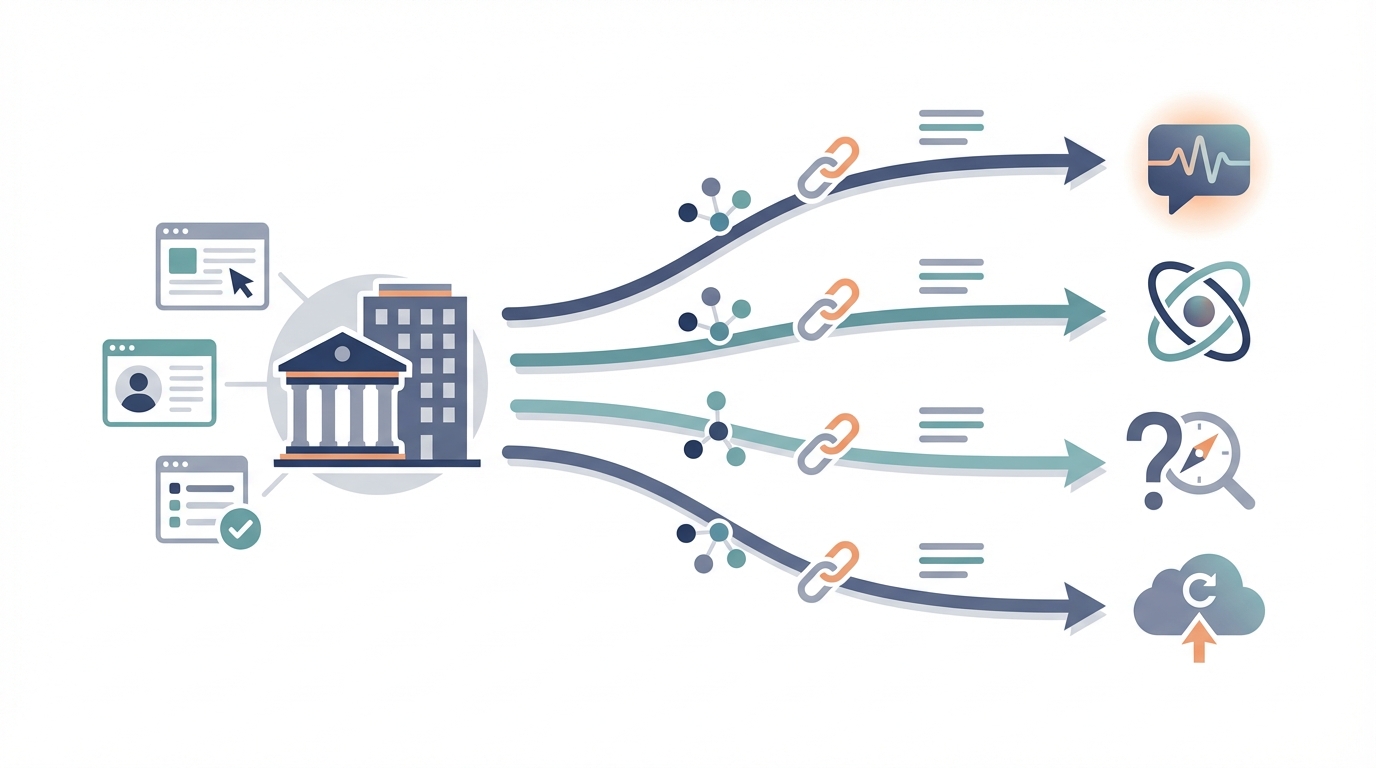
Essential Components of an AI engine optimization audit
An AI engine optimization audit breaks brand visibility into measurable parts so legal marketers can fix what matters most. Because AI systems synthesize answers differently than search engines, audits must focus on entities, mentions, citations, and summary accuracy. This section explains those components, shows how AEO differs from traditional SEO, and gives actionable steps for small and mid sized law firms.
Entity correctness in an AI engine optimization audit
Entity correctness checks whether AI platforms identify your firm and its services correctly. In practice, check full legal name, common short name, founding year, key practice areas, and named attorneys. Then verify that those facts appear consistently across your site and public profiles. Use semantic triples to state relationships clearly because AI systems parse triples like subject predicate object. For example, state that Firm X practices Employment Law, rather than listing keywords only.
Key actions
- Audit About pages and attorney bios to confirm consistent facts
- Add semantic triples to high value pages to clarify relationships
- Publish a canonical entity page that lists services, locations, and leadership
- Monitor outputs across ChatGPT, Gemini, Perplexity, and Bing Copilot to surface discrepancies
Brand mentions and citation frequency for AI engine optimization audit
AI engines weigh brand mentions and citations when assembling summaries, so frequency and source quality matter. Therefore, collect where your firm appears externally, and prioritize authoritative legal listings and publications. Citation diversity matters because AI models synthesize from multiple sources. In addition, consistent NAP citations help local relevance and trust.
Actionable checks
- Compile citations from legal directories, news sites, and public records
- Update public profiles such as LinkedIn and industry listings
- Track citation frequency by source and by AI platform
For quick baseline testing, use HubSpot’s AEO Grader to measure how AI engines currently represent your brand. Visit HubSpot’s AEO Grader to run an initial report and get recommended fixes.
Accuracy of AI generated summaries
Accuracy measures how well AI answers represent your firm, and whether it gives correct advice tone. Therefore, capture sample prompts and collect the AI responses. Then score each response for factual correctness, missing context, and harmful conjecture. Legal marketers must prioritize safety and clarity because incorrect AI summaries can mislead potential clients.
Scoring tips
- Create a 3 point scale for accuracy, context, and citation presence
- Flag responses that misattribute services or show incorrect attorney names
- Prioritize fixes that remove factual errors from site and public listings
How AI interprets content: headings, semantic triples, and structure
AI engines interpret pages more accurately when content uses clear headings and consistent formatting. Use short headings, structured lists, and schema markup to help models extract entity signals. For implementation guidance on schema markup, see HubSpot’s structured data guide at HubSpot’s structured data guide because it shows practical examples.
Quick audit checklist for legal marketers
- Define entity list, branded phrases, and priority pages
- Test summaries across ChatGPT, Gemini, Perplexity, and Bing Copilot
- Capture outputs and score for visibility, accuracy, and citations
- Fix entity facts, add semantic triples, and publish schema markup
- Re test quarterly or after major updates
These components form the foundation of a repeatable AI engine optimization audit. Follow them to improve brand accuracy in AI answers, and therefore increase qualified leads from AI driven research.
| Aspect | Traditional SEO audit | AI engine optimization audit |
|---|---|---|
| Audit focus | Rankings, crawlability, technical health, backlinks, on-page optimization | Entity correctness, brand mentions, citation frequency, AI summary accuracy, canonical entity pages |
| Key metrics | Organic rankings; impressions; CTR; crawl errors; page speed; backlink quality | Visibility in AI answers; accuracy score; citation count and diversity; entity signal strength; sample summary correctness |
| Tools used | Google Search Console; Screaming Frog; Ahrefs; Lighthouse | HubSpot AEO Grader; Bing Webmaster; manual tests across ChatGPT, Gemini, Perplexity, Bing Copilot |
| Actionable strategies | Fix technical errors; optimize meta tags and headings; speed and mobile improvements; earn authoritative backlinks | Publish canonical entity pages; add semantic triples and schema; update public listings and bios; expand high-intent content; capture and score AI summaries; earn authoritative citations using Big Law tactics |
Technical SEO essentials for law firms
Technical SEO remains a foundation for visibility, even as AEO grows. Because search engines and AI systems need reliable signals, you must keep site health strong. Focus on crawlability, site speed, secure hosting, and structured data. In practice, prioritize pages that matter for client intent, such as practice area pages and attorney bios. Use short clear headings and consistent formatting because AI engines read content better that way.
- Core tasks
- Audit crawlability with Google Search Console because it shows crawl errors and index status.
- Submit an XML sitemap and keep it current so bots find new content quickly.
- Improve page speed and mobile responsiveness because these factors affect user experience and indexing.
- Publish schema markup and structured data to expose entity signals to both search engines and AI models. For examples, see HubSpot’s structured data guide.
Googlebot crawl limits and crawl budget
Googlebot imposes practical crawl limits for every site. For most small and mid sized law firms, limits will not constrain growth. However if you manage a large multi location site, you may hit crawl budget limits. Therefore monitor crawl stats in Google Search Console and prioritize high value pages. If Googlebot cannot crawl important pages, then AI sources may miss updated facts.
- How to manage crawl budget
- Block low value pages with robots.txt or noindex tags to preserve crawl budget for high intent pages.
- Use canonical tags for duplicate content so crawlers focus on canonical pages.
- Keep sitemaps trimmed to important URLs and update them after major content changes.
Managing llms.txt versus robots.txt
llms.txt controls how AI crawlers access public content. However note that llms.txt does not influence Google rankings. It operates independently of traditional SEO signals. Therefore use llms.txt to manage model access when you want to allow or deny specific crawlers. Use robots.txt and meta directives for classic crawler control because search engines rely on those files.
- Practical guidance
- Add an llms.txt file if you need to control AI model crawling behavior.
- Maintain robots.txt for search engine crawlers and keep directives simple.
- Document your strategy so legal and compliance teams understand access policies.
Leveraging Bing Webmaster AI citation performance data
Bing Webmaster provides focused AI citation metrics that help law firms track where AI engines cite your firm. In addition, Bing shows which pages produce helpful excerpts and which sources AI models trust. Use those signals to improve citations and reputation.
- Steps to use Bing AI citation data
- Sign into Bing Webmaster and check the AI insights or citation reports.
- Identify pages that receive frequent AI citations and then reinforce them with semantic triples and schema markup.
- Find authoritative external citations that influence AI summaries and pursue similar placements on legal publications and news sites.
- Address pages with incorrect citations by correcting facts on your site and on external listings such as LinkedIn or legal directories.
Finally, combine technical SEO with AEO tasks. As a result, you will preserve crawl health while improving entity signals, citations, and AI summary accuracy. Re test audits quarterly or after major updates to keep visibility and credibility strong.
Conclusion: Why an AI engine optimization audit Matters
An AI engine optimization audit is essential for law firms that want to control how AI systems describe them. Because AI powered search now shapes first impressions, firms that verify entity facts and citations protect brand integrity. Therefore run the audit regularly to catch errors before they spread across AI summaries.
Quarterly audits deliver measurable benefits, and they are simple to schedule. First, you will capture baseline visibility and accuracy. Next, you can prioritize high impact fixes like semantic triples, schema markup, and corrected public listings. Finally, re testing shows progress and prevents regressions after major content or positioning updates.
Use practical tools and repeatable workflows to scale results. For example, run HubSpot’s AEO Grader to establish a baseline, then test summaries across ChatGPT, Gemini, Perplexity, and Bing Copilot. In addition, pair those checks with technical SEO controls like robots.txt, llms.txt, and Google Search Console monitoring. As a result, you will improve both AI summary accuracy and traditional search health.
Case Quota profile
Case Quota specializes in legal marketing for small and mid sized law firms. They apply Big Law strategies in a practical, affordable way to help clients win market share. In addition to audit services, Case Quota focuses on entity pages, citation acquisition, and content that converts. For more information, visit Case Quota to see services and case studies.
In short, an AI engine optimization audit protects visibility and converts more qualified leads. Therefore prioritize entity correctness, citation frequency, and summary accuracy. If you run the audit quarterly and after major updates, you will maintain authority in AI driven search results and protect your firm’s reputation.
Frequently Asked Questions (FAQs)
What is an AI engine optimization audit and why does my law firm need one?
An AI engine optimization audit examines how AI search engines represent your firm. It tests entity correctness, brand mentions, citation frequency, and AI summary accuracy. Because AI models now synthesize answers, the audit protects brand facts and referral quality. As a result, you reduce the risk of misinformation and improve qualified lead generation.
How does an AI engine optimization audit differ from a traditional SEO audit?
Traditional SEO focuses on rankings, crawlability, and technical health. By contrast AEO emphasizes entity signals and citation accuracy. Therefore the audit tests outputs from ChatGPT, Gemini, Perplexity, and Bing Copilot. In addition, it scores summaries for factual correctness. This approach complements SEO rather than replacing it.
How often should we run the audit and after which triggers?
Run the audit quarterly for most firms. Also run it after major updates to content, services, or leadership. For example, run an audit after a rebrand or adding new practice areas. Regular cadence helps catch drift and keeps AI summaries accurate over time.
What are the highest impact fixes discovered by an audit?
High impact fixes correct brand facts and add structured entity signals. Actionable steps include:
- Publish canonical entity and About pages with clear headings
- Add semantic triples to key pages to state relationships
- Implement schema markup and structured data across priority pages
- Update public listings and attorney bios on authoritative sites
- Earn citations on reputable legal publications
These fixes improve both AI summary accuracy and traditional SEO health.
What tools and workflows should legal marketers use?
Use a mix of automated and manual testing. For a baseline, run HubSpot’s AEO Grader to assess visibility. Then manually test prompts across ChatGPT, Gemini, Perplexity, and Bing Copilot. Capture outputs, score them for accuracy, and prioritize fixes. Finally, pair AEO work with technical SEO tasks like sitemap updates and robots.txt management.