

Anthropic Claude Cowork legal plugin: How AI Plugins Revolutionize Law Firm Advertising
The Anthropic Claude Cowork legal plugin is changing how law firms plan and buy ads. Because it ties foundation models to legal workflows, firms can target client intent much more accurately. However, that power also forces firms to rethink vendor strategy, procurement, and compliance.
AI-enabled assistants now refine PPC targeting by analyzing query intent and client signals in real time. Therefore, firms reduce wasted spend and improve lead quality. In addition, dynamic audience segmentation adapts bids and creatives based on user behavior.
Ad creative improves because plugins suggest compliant messaging and tailored calls to action. As a result, A B testing speeds up and conversion rates climb. Moreover, integrations with contract review, NDA triage, and compliance workflows strengthen trust signals.
Compliance and disclosure remain central, however, since regulators closely watch AI use in legal advertising. Therefore, firms must adopt transparent workflows and clear consumer notices. Because of that, vendor selection should weigh model safeguards and Model Context Protocol compatibility.
This article explains how AI legal plugins transform paid advertising, vendor strategy, PPC targeting, ad creative, and compliance. Next, we dive into practical steps and best practices for law firms.
Below, we show case studies and vendor checklists to help in-house legal teams evaluate options. Therefore, you will learn practical workflows, disclosure language, and metrics to measure ROI.
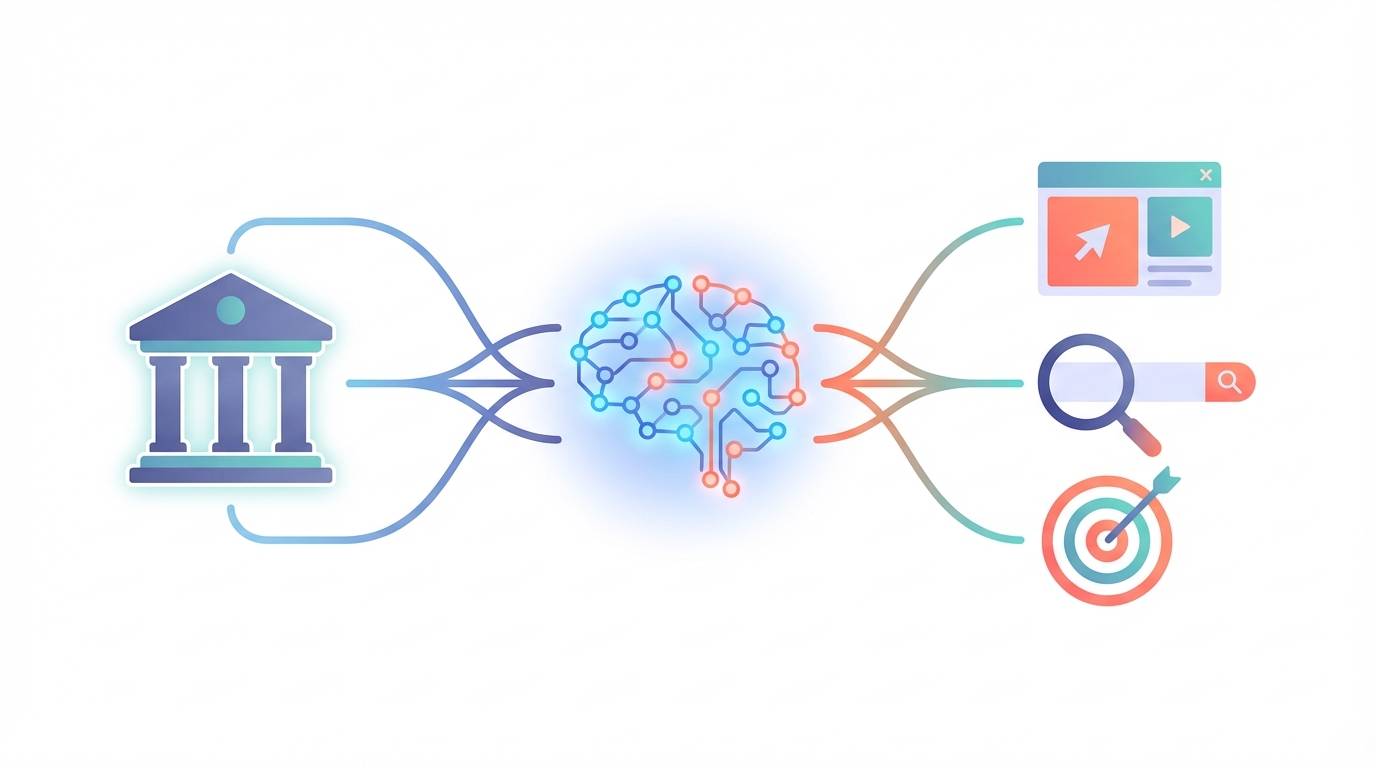
Anthropic Claude Cowork legal plugin and the new playbook for paid ads
AI legal plugins change how law firms buy and optimize paid media. Because these plugins connect foundation models to firm workflows, they surface intent signals that used to hide in raw search data. Therefore, firms can bid on high value queries and avoid low quality clicks. In addition, plugins like the Legal plugin for Claude offer task automations such as NDA triage and contract review that link marketing to intake and fulfillment.
- Smarter targeting because models read context, not just keywords. As a result, audience segments mirror real legal needs. For example, a plugin can flag commercial contract signals differently from consumer injury queries.
- Lower cost per acquisition because bid strategies focus on conversion probability rather than generic traffic. In short, firms spend less on unqualified clicks and more on viable leads.
- Faster creative iteration because AI suggests compliant ad copy and landing page variants. Consequently, A/B tests run more tests, and conversion lifts happen faster.
Vendor strategy with Anthropic Claude Cowork legal plugin in mind
Vendor selection now demands new criteria. First, law firms must evaluate model safeguards and audit logs. Second, they should confirm integrations with case management and document systems. Third, procurement must test for secure Model Context Protocol support.
- Security and compliance matter more than ever. For instance, firms should review MCP implementation notes to understand data flows. See Anthropic’s Model Context Protocol notes for background.
- Open interfaces matter because they reduce vendor lock in. Therefore, prefer plugins that support connectors to Slack, Microsoft 365, Box, and Egnyte.
- Proof of outcomes matters. Ask vendors for conversion lift studies and privacy impact assessments. Also, request sample playbooks that show NDA triage and contract review automations.
Practical deployment steps
- Start with a pilot that pairs PPC campaigns to a plugin-driven intake flow. This lets you measure lead quality, cost per lead, and conversion velocity.
- Instrument tracking to link ads to downstream outcomes. As a result, you can prove ROI and fine tune bidding models.
- Require third party audits of MCP servers and connectors. Notably, some MCP servers had vulnerabilities, so patch management is essential. Read a recent security analysis at TechRadar for context.
Finally, align vendor SLAs with your ethical and compliance policies. In addition, ensure disclosure workflows appear in ads and landing pages. Because advertising that uses AI needs transparency, vendors must support traceability and consumer notices. For more on the Claude Legal plugin itself, see the official plugin page at Claude Legal plugin page.
| Plugin | Key features | Integrations | Compliance and safeguards | Benefits for advertising |
|---|---|---|---|---|
| Anthropic Claude Cowork legal plugin | NDA triage, contract review, intent signal extraction, workflow wrappers | Slack, Microsoft 365, Box, Egnyte, Jira | Model Context Protocol support, audit logs, data isolation options | Improved targeting, lower cost per acquisition, faster creative iteration |
| Claude Code | Developer SDKs, automation templates, prompt engineering tools | GitHub, Slack, Jira, CI CD pipelines | Sandboxed environments, usage controls, role based access | Custom ad logic, rapid bid updates, flexible testing |
| OpenAI legal connectors | Prompt templates, semantic search, compliance helpers | Microsoft 365, Slack, CRM connectors | Data handling policies, API access controls, rate limits | Scalable creative generation, semantic audience matching |
| Evisort AI | Contract intelligence, clause extraction, analytics dashboards | Microsoft 365, Box, Slack | Document redaction, retention rules, audit trails | Better lead qualification, faster intake triage |
| Juro AI | Contract automation, negotiation summaries, template library | Slack, CRM, Microsoft 365 | Permissioning, change logs, export controls | Streamlined onboarding, reduced intake latency |
Choose vendors that support transparent logs, clear data flows, and open connectors. Because integrations link ads to outcomes, traceability matters. Therefore, prioritize plugins that prove conversion lifts and compliance controls.
Anthropic Claude Cowork legal plugin for smarter PPC and creative
AI-enabled assistants change how law firms target audiences and write ads. Because they analyze intent and context, they go beyond keywords. Therefore, campaigns reach users with real legal needs. As a result, firms see fewer wasted clicks and higher lead quality.
How AI assistants improve PPC targeting and ad creative
- Intent signal extraction
- AI reads search context and landing behavior. Consequently, it classifies queries as high or low intent. This helps prioritize bids on high value prospects.
- Dynamic bid adjustments
- Plugins update bids in real time based on conversion likelihood. Therefore, you spend more where the probability of conversion is higher.
- Semantic audience matching
- Models match user language to legal services, not just keyword strings. In addition, this reduces noisy matches and improves relevance.
- Automated ad copy and creative variants
- AI generates compliant headlines and descriptions. Moreover, it proposes landing page copy that reflects the user query.
- Faster A B testing and iteration
- Assistants roll out many creative variants automatically. As a result, you find winners faster and scale them quickly.
- Intake and fulfillment alignment
- Integrations route qualified leads directly into contract review or NDA triage flows. Because of that, marketing converts to billable work more predictably.
Examples and case insights
- Content generation tools help craft emails and ad copy. For instance, Lawmatics launched LM AI to assist firms with marketing templates and messages. See the LawNext article for details.
- Agentic legal assistants enable multi step workflows that link ads to outcomes. For context on agentic systems and legal workflows, see Thomson Reuters CoCounsel reporting.
Practical steps for marketing teams
- Start a focused pilot on one service line. Then connect the plugin to tracking and case management.
- Define conversion events beyond calls, such as NDA starts and contract uploads.
- Require privacy reviews and document data flows. Moreover, align disclosure language with intake forms.
- Monitor CPA, lead quality, and downstream revenue. Because AI changes lead mix, link ads to outcomes for accurate ROI.
In short, AI assistants make PPC both smarter and faster. However, firms must pair technical gains with compliance and careful measurement. Therefore, cross functional teams must lead pilots and scale only after clear proof of improved lead quality.
Conclusion
AI legal plugins have shifted the law firm advertising landscape. They tie foundation models to intake and compliance. As a result, firms can target client intent and reduce wasted spend. Moreover, ad creative and landing pages become more relevant and compliant.
PPC strategies benefit from real time intent signals and dynamic bidding. Therefore, campaigns show higher conversion rates and lower cost per acquisition. At the same time, compliance and disclosure require clear workflows. Consequently, vendor choice must prioritize audit logs, MCP compatibility, and secure connectors.
Adoption gives firms a competitive edge. For instance, firms that pair plugins with case management convert leads faster. In addition, pilots let teams validate ROI before full rollout. Therefore, start small and measure outcomes closely.
Case Quota helps small and mid sized law firms win with advanced legal marketing. Visit Case Quota to learn how their strategies mirror Big Law capabilities. Contact Case Quota to plan a pilot that improves PPC, reduces costs, and strengthens compliance.
Frequently Asked Questions
What are AI legal plugins and how do they help law firm advertising?
AI legal plugins connect foundation models to legal workflows. For example, the Anthropic Claude Cowork legal plugin extracts intent signals and automates intake tasks. As a result, marketing teams target higher value queries and reduce wasted ad spend. In addition, plugins speed up creative testing and landing page personalization.
Will using the Anthropic Claude Cowork legal plugin lower PPC costs and improve lead quality?
Yes. The plugin prioritizes high intent searches and adjusts bids in real time. Therefore, cost per acquisition often falls while lead relevance rises. However, measurement matters. Track downstream conversions to prove true ROI.
How do plugins help with compliance and disclosure?
Plugins can generate compliant ad copy and log model decisions. In addition, they support audit trails and data isolation settings. Because of that, firms can document AI use for regulators and internal audits.
What vendor integrations should law firms require?
Require connectors to case management and document stores such as Microsoft 365. Also insist on Slack and task systems like Jira for handoffs. Finally, demand Model Context Protocol compatibility and clear audit logs.
How should a firm pilot these tools and measure success?
Start with one practice area and a short pilot. Define clear metrics such as CPA, lead quality score, and downstream revenue. Then iterate on bids, creatives, and intake workflows. Finally, scale only after you validate improved outcomes.