

Customer advocacy marketing and online reputation are the twin engines that drive trust for modern law firms. Both shape first impressions quickly. Clients search reviews and testimonials before calling. Studies show 70% of consumers trust online reviews. Therefore, a single review can sway a prospect. Advocacy marketing can boost trust and credibility when done well. It amplifies satisfied clients’ voices as genuine referrals. As a result, referrals convert faster and cost less. Advocates often spend twice as much as average customers, which raises lifetime value. Furthermore, referred clients usually spend about 20% more. For law firms, this matters.
Reputation management reduces the impact of negative feedback. In addition, proactive response can increase return rates by seventy percent. Short social videos and testimonials improve visibility and engagement. For example, short reels drive higher interaction on social platforms. Use testimonials, NPS surveys, and advocate personas to build a steady stream of content. Moreover, community building turns clients into promoters. Word-of-mouth still outranks many paid channels.
Therefore focus on reviews, case studies, and social proof. Optimize profiles for SEO and digital PR to lift visibility. Because 90% of consumers read reviews before buying, this becomes essential. Keep messaging client-focused and compliant with marketing law firm rules. Use structured feedback loops to collect praise and fix issues quickly. Meanwhile, measure NPS and referrals to track progress. Although building advocacy takes time, it pays off in trust and lower acquisition costs. In short, invest in customer advocacy, protect your online reputation, and watch credibility grow steadily.
Customer advocacy marketing and online reputation strategies for law firms
Law firms win clients when prospects trust them quickly. Therefore prioritize client voices and reputation across channels. Because 70 percent of consumers trust online reviews, social proof must guide your marketing choices. Use reviews, referrals, and case studies to build credibility fast. As a result, referred customers often spend about 20 percent more than non referred clients. Track those gains closely and aim to convert advocates into repeat referrers.
Key tactics for Customer advocacy marketing and online reputation
Use short, actionable tactics to start. First, set up an advocacy program. Second, capture testimonials. Third, promote social sharing. Fourth, build a client community. These steps scale trust without heavy ad spend. Advocacy programs can cut acquisition costs five to seven times. In addition, advocates often spend twice as much as average customers.
-
Advocacy programs and platforms
- Launch a simple advocate program to reward referrals. In addition, use a platform to manage activities. For example, check AdvocateHub by Influitive for ideas and tools.
- Define advocate personas and small, legal specific incentives.
-
Testimonials and case studies
- Collect written and short video testimonials. Because video increases engagement, favor short clips. Use client quotes in landing pages and bios.
- Keep testimonials compliant with legal marketing rules. Always get written consent.
-
Social sharing and microcontent
- Convert testimonials into short reels and posts. Short videos and carousels boost visibility significantly.
- Monitor platforms for mentions and respond promptly to both praise and criticism.
-
Community building and referral systems
- Host client webinars and exclusive updates. Moreover, nurture alumni networks for long term referrals.
- Make referral pathways clear. Track referrals and their lifetime value over time.
Measuring success and reputation metrics
Measure Net Promoter Score to track advocacy momentum. NPS gives a clear signal about promoter growth. Aim to improve NPS by 15 points within a year when possible. Also measure referral revenue and client lifetime value because they show economic impact. Track review volume and average rating. Because 90 percent of consumers read reviews, review volume matters (source: BrightLocal).
Monitor search visibility and technical SEO for reputation pages. For practical advice on content and outreach, consult Search Engine Journal.
Finally, document processes for review response. Responding promptly reduces negative impact and increases trust. In addition, a steady program converts happy clients into vocal advocates. Track NPS, referrals, and review trends. As a result, your firm will grow trust, leads, and revenue.
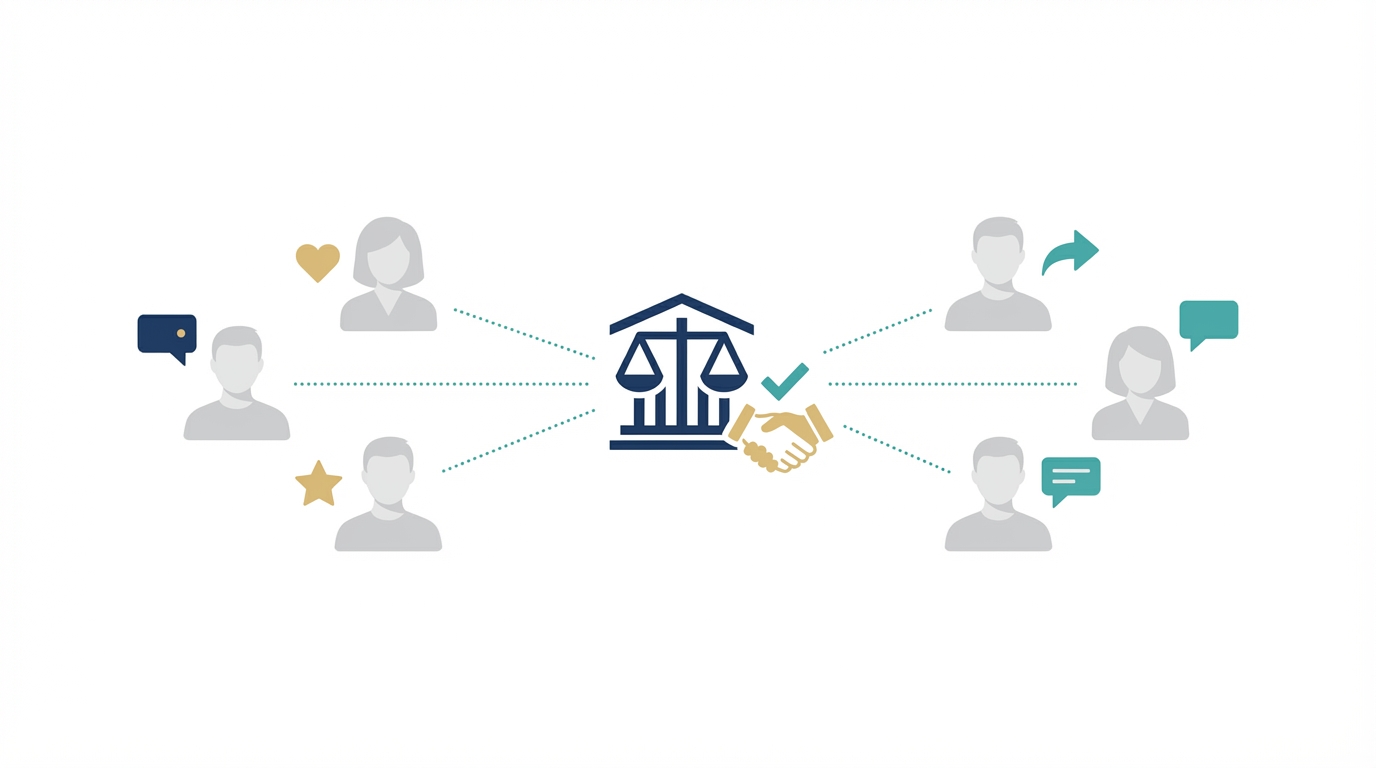
Visual branding tactics for law firms
Strong visual branding supports customer advocacy marketing and online reputation. Visuals help prospects trust your firm quickly. They also make testimonials and client stories more shareable. Therefore invest in consistent graphics and video that match your brand voice and ethics.
Instagram graphic design
Use a consistent palette, typography, and layout. Simple templates speed content creation. For example, create a testimonial template for quotes and short case highlights. Also use branded cover images for carousel posts. For practical Instagram resources, see the official hub: Instagram Business Hub. Because visuals create recognition, keep layouts simple and professional.
IGTV and short reels
Repurpose client testimonials into short reels. Short reels increase engagement by 67 percent, so prioritize them. Moreover, IGTV works for longer explainer videos and client interviews. Keep videos under 60 seconds for reels, and under ten minutes for IGTV when possible. Use captions and clear openings to hook viewers. As a result, you boost watch time and shares.
Hashtags and discoverability
Select three to five targeted hashtags per post. Mix local tags with practice area keywords. Also use branded hashtags for client-driven campaigns. Track hashtag performance over time. This practice helps new clients find social proof and reviews quickly.
Instagram bio and profile optimization
Craft a concise bio that states your expertise and client focus. Include a clear call to action and a link to your reputation hub or contact page. Because most clicks start on the profile, test different CTAs. Use a link aggregator for multiple resources. Also choose a professional profile image and a consistent color accent.
Design tips linked to advocacy and reputation
Use client photos with consent to humanize posts. Also add subtle icons for ratings and trust signals. However avoid platform rule violations and client confidentiality risks. Always get signed releases and scrub identifying details if required. In addition, use short captions that highlight outcomes rather than case specifics.
Measure success by tracking engagement, saves, shares, and referral traffic. Stories make followers 58 percent more likely to engage, so run interactive story polls and Q and A sessions. For deeper content and outreach tactics consult Search Engine Journal and for review behavior see BrightLocal Research.
Visual branding aligns with advocacy and reputation. Therefore design with trust in mind. Test often, iterate, and document what works.
Comparison of customer advocacy marketing tools and platforms
Below is a concise table to help law firms compare common advocacy platforms and white label community hubs. Use this as a starting point when picking a solution that fits your size and compliance needs.
| Platform | Key features | Benefits | Pricing overview | Best use cases |
|---|---|---|---|---|
| AdvocateHub (Influitive) | Advocate management, campaign templates, gamification, rewards, analytics, CRM integrations | Streamlines referrals, tracks advocate activity, improves NPS and retention | Enterprise pricing, demo available. Contact vendor for quote: AdvocateHub | Mid to large law firms running structured referral programs and incentive campaigns |
| Influitive (company platform) | End to end advocacy platform, community hubs, content delivery, deep analytics, integrations | Scales advocacy efforts and reduces acquisition costs, supports thought leadership | Custom pricing for enterprise clients. Learn more: Influitive | Firms seeking an enterprise advocacy stack and advanced reporting |
| Ohana Hub (white label community hub example) | Community forums, member directories, referral tracking, event modules (features vary by vendor) | Affordable community driven advocacy, local personalization, controlled privacy | Often lower cost SaaS or agency build. Pricing varies widely. Contact vendor or agency for quote | Small to medium firms wanting a branded community or phased advocacy program |
Tip: request a demo and confirm compliance and data privacy features before you buy. Test integrations with your CRM and client intake tools.
Conclusion
Customer advocacy marketing and online reputation form the foundation of modern law firm growth. They turn satisfied clients into visible proof. Because prospects rely on reviews and referrals, strong advocacy programs cut acquisition costs. As a result, firms gain higher trust, more referrals, and better revenue per client. Use NPS to measure momentum. Track referral revenue and review trends to prove value.
Key takeaways
- Focus on authentic client voices. They drive trust faster than ads.
- Build a simple advocate program to reward referrals and gather testimonials.
- Measure NPS, referral lift, and review volume to show impact.
- Pair advocacy with visual branding to boost engagement and visibility.
Why this matters for your firm
Satisfied clients do more than return. They spend more and recommend confidently. For example, referred customers tend to spend 20 percent more. In addition, advocates often spend twice as much as average clients. Therefore investing in advocacy and reputation pays off quickly. Firms that respond to reviews and engage on social drive higher conversion. Moreover, proactive reputation work reduces harm from negative feedback.
Next steps
Start small and scale. First collect testimonials and permissioned client stories. Then launch a basic referral pathway and track results. Use short reels and profile optimizations to amplify proof. Also document compliance processes to protect client confidentiality.
Call to action
If you want a focused partner, Case Quota helps small and mid sized law firms adopt Big Law strategies. They design advocacy programs, manage reputation, and build visual brands for growth. Visit Case Quota to learn how they can help your firm achieve market dominance.
In short, invest in customer advocacy marketing and online reputation. Do it consistently. Over time, credibility becomes your competitive advantage.
Frequently Asked Questions (FAQs)
What is customer advocacy marketing and online reputation, and why does it matter for law firms?
Customer advocacy marketing uses satisfied clients to promote your firm. Online reputation measures public opinion across reviews and social proof. Because 70% of consumers trust online reviews, both work together to build immediate trust. In addition, 90% of consumers read reviews before choosing a service. Therefore strong advocacy and reputation shorten decision cycles and lift conversions.
How do I start a simple advocacy program for a law firm?
Start small and focus on permissioned testimonials. First collect written and short video stories with signed releases. Then add a basic referral pathway and track every referral. Also measure Net Promoter Score to find promoters. Finally, scale with gamified tasks or a platform if needed.
Which metrics show advocacy and reputation success?
Track NPS, referral revenue, review volume, and average rating. Also monitor client lifetime value and referral conversion rates. For targets, aim to increase referrals by 20% and improve NPS by 15 points within a year. Moreover track social engagement and referral traffic to show ROI.
Can visual branding and Instagram actually help advocacy and reputation?
Yes. Short reels can increase engagement by about 67%, and Stories make followers 58% more likely to engage. Use IGTV for longer interviews and reels for quick testimonials. Also optimize your bio and hashtags to improve discoverability. However always protect client confidentiality and get consent before posting.
How should my firm handle negative reviews or reputation issues?
Respond quickly and professionally. Apologize when appropriate and offer offline resolution steps. Proactive reputation management can cut the impact of negative feedback significantly. In addition, use feedback loops to fix service issues and convert critics into promoters.
Resources
If you need help building advocacy and reputation programs, start by documenting consent processes and simple referral flows. Then iterate based on NPS and referral data.