

Maintaining Visibility in the Competitive Legal Industry
In the bustling competitive landscape of the legal industry, visibility is paramount. Successfully navigating this terrain relies heavily on effective SEO maintenance and AI content rendering. Law firms, often dealing with large volumes of specialized content, must maintain an online presence that is not only optimized for search engines but is also adaptive to the evolving digital environment. The significance of continuous SEO efforts cannot be understated, as they underpin the firm’s ability to reach potential clients and stand out amidst a sea of legal services.
SEO is not a one-off task but a continuous journey, much like law itself. Consistent SEO maintenance ensures that your firm’s website remains compliant with search engine algorithms, which change frequently. Without ongoing attention, a site’s visibility can suffer, leading potential clients to choose competitors. This checklist serves as a guide to maintaining and enhancing your firm’s digital footprint year-round.
The emergence of AI in content rendering presents new opportunities and challenges. AI tools can enhance content delivery by ensuring content accessibility and improving user experience, essential factors in maintaining positive search engine rankings. As AI becomes an integral part of the digital ecosystem, understanding how to leverage it alongside SEO practices is crucial for law firms aiming for sustained visibility and competitive advantage.
Through this article, we will explore essential tasks and strategies that law firms should incorporate into their regular operations to keep their online presence robust and effective. From the basics of checking site performance to the complexities of adapting content for AI crawlers, we provide insights and actionable steps. Embracing these practices will not only boost your firm’s visibility but also position it as a leader in the digital age.
Why SEO maintenance and AI content rendering matter for law firms
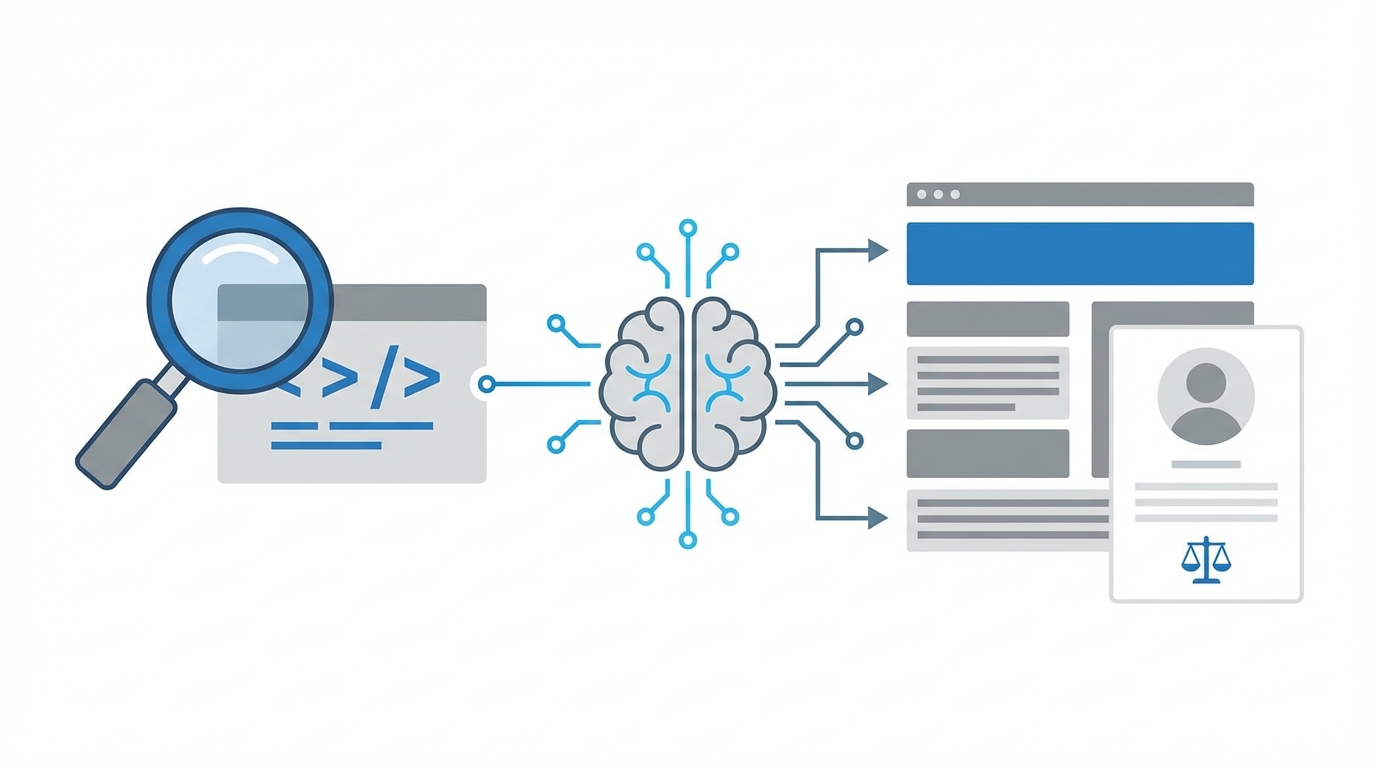
Law firms publish complex, detailed content daily. Because of this, search visibility depends on both SEO hygiene and how machines read that content. AI crawlers and large language models now influence which content surfaces in search interfaces. Therefore, firms must ensure content is accessible to both Google and AI systems. LLMs can’t read content in JavaScript, so content that only appears after script execution risks being invisible to some AI crawlers and assistants.
Google still plays a central role. As one fact explains, “Googlebot processes JavaScript in three main stages: crawling, rendering, and indexing.” For practical guidance, consult Google’s JavaScript SEO basics at Google’s JavaScript SEO basics. In addition, analyses such as Vercel’s Rise of the AI Crawler highlight that many AI bots do not execute JavaScript. See Vercel’s Rise of the AI Crawler for details.
Technical challenges in SEO maintenance and AI content rendering
Dynamic sites often rely on client-side JavaScript. However, this can hide content from machines. The DOM is critical in this context. “The DOM (Document Object Model) is an interface for a webpage that represents the HTML page as a series of ‘nodes’ and ‘objects.’” Thus, content must appear in the DOM on first load. For your website, this means you need to check if your page loads all the pertinent information in the DOM on the first load of the page to satisfy Googlebot’s needs.
Another issue involves differences between bots. Some AI crawlers read raw HTML only. Others run limited rendering. Because of this, you must avoid relying solely on client-side rendering for crucial text. In addition, poorly implemented lazy loading and interactive reveals can hide legal disclaimers or attorney bios. As a result, these elements may not be indexed or used by AI summaries.
Practical technical checks for SEO maintenance and AI content rendering
Use a checklist during audits. First, check view-source and inspect the DOM with Chrome DevTools. Then, use Google Search Console’s URL Inspection tool to see the rendered HTML. Also, run third-party crawlers like Screaming Frog or site crawlers that show rendered output. For deeper testing, compare server-side rendered HTML to client-rendered output. If they differ, implement server-side rendering or pre-render critical pages.
Other checks include:
- Confirm critical content exists in initial HTML or in the DOM after first render
- Verify structured data is present in raw HTML and not injected only by JavaScript
- Audit Core Web Vitals and mobile usability with Lighthouse
- Run quarterly on-page audits using third-party tools
For further context on AI crawler behavior, read the Search Engine Journal piece at Search Engine Journal and the SEO.ai analysis at SEO.ai Analysis.
Key takeaways
- Ensure critical legal content appears in the initial DOM to maximize indexing
- Prefer server-side rendering or pre-rendering for high-value pages
- Use Chrome DevTools and Google Search Console to validate what bots see
- Audit quarterly and log findings for continuous SEO maintenance and AI content rendering
- Because AI and search engines differ, test across multiple crawler types
| Frequency | Related keywords | Priority tasks | Examples and tools |
|---|---|---|---|
| Daily planning | daily planning, SEO maintenance | Monitor organic traffic and ranking dips; check site uptime; resolve critical errors | Google Search Console, analytics dashboard, uptime monitor |
| Monthly planning | monthly planning, content updates | Publish or refresh content; on-page SEO tweaks; backlink review and outreach | CMS edits, Screaming Frog, Ahrefs, Lighthouse |
| Quarterly planning | quarterly planning, SEO audits | Run full on-page audit; technical crawl; structured data and accessibility checks; Core Web Vitals review | Deep crawl tools, Chrome DevTools, Lighthouse reports |
| Annual planning | annual planning, KPI evaluation | Conduct content inventory; backlink audit and disavow; update strategy, budget, and roadmap | Annual audit report, stakeholder workshops, performance dashboards |
Technical SEO best practices for SEO maintenance and AI content rendering
Technical SEO sits at the intersection of site engineering and content strategy. Therefore, law firms must treat it as a routine business function. Because legal content often contains critical client-facing information, you must ensure machines can access and understand it. “The DOM (Document Object Model) is an interface for a webpage that represents the HTML page as a series of ‘nodes’ and ‘objects.’” As a result, ensure the DOM contains the essential text on initial load.
Server-side versus client-side rendering for law firm sites
Choose rendering strategies based on content priority. Server-side rendering delivers ready-to-parse HTML to crawlers. As a result, AI systems and Googlebot more reliably see key content. Conversely, client-side rendering often requires JavaScript to build page content. “LLMs can’t read content in JavaScript,” so client-only render methods can leave content invisible to some AI crawlers.
Therefore, prefer server-side rendering or hybrid pre-rendering for high-value pages. For example, attorney bios, practice area pages, and legal disclaimers should render in HTML without requiring JavaScript. In addition, use dynamic rendering for pages that require client interactivity but still need to be indexed.
Ensuring content accessibility to AI crawlers and Googlebot
Validate what bots actually see. Use view-source and Chrome DevTools to inspect the DOM during the first load. Also, test pages with Google Search Console’s URL Inspection to view the rendered HTML. Remember that “Googlebot processes JavaScript in three main stages: crawling, rendering, and indexing.” Therefore, confirm that critical content appears either in initial HTML or in the DOM immediately after rendering.
In practice, follow these steps during audits:
- Compare source HTML to the fully rendered DOM in Chrome DevTools. See Chrome DevTools for tools and tips.
- Use Google’s JavaScript SEO basics for guidance on rendering approaches. See JavaScript SEO Basics.
- Test with third-party crawlers that simulate non‑rendering bots and rendered output.
Performance, mobile usability, and why they matter
Fast pages improve user experience and indexing. As a result, Core Web Vitals impact visibility and user trust. Therefore, audit site speed and mobile usability regularly. Run Lighthouse and real user monitoring, and then prioritize fixes for slow pages. In addition, limit render-blocking scripts and optimize images.
Mobile-first indexing means your mobile HTML must be complete. Consequently, any difference between desktop and mobile DOMs can cause missing content in indexing and AI retrieval. Thus, ensure structured data and metadata are present in both mobile and desktop HTML.
Audits, logging, and repeatable processes
Quarterly technical audits uncover regressions and hidden issues. For example, run a quarterly on-page audit with third-party tools. Also, keep an issues log and track fixes in your project management system. If problems recur, automate checks with CI/CD tests that include rendering verification. For context on AI crawler behavior and rendering limitations, review investigations like Vercel’s analysis at Vercel’s Analysis and industry discussion at Search Engine Journal Discussion.
Implementation checklist for immediate action
- Prioritize server-side or pre-rendering for high-value pages
- Confirm critical text appears in initial HTML or first-render DOM
- Verify structured data exists in raw HTML, not only via JavaScript
- Audit Core Web Vitals and mobile usability monthly
- Run quarterly full technical and on-page SEO audits
- Log issues and create repeatable remediation workflows
Adopting these technical practices ensures your legal content stays visible. Consequently, your site will perform better for both Google and emerging AI surfaces.
CONCLUSION
Consistent SEO maintenance and AI content rendering are strategic priorities for law firms. Because search and AI surfaces evolve, ongoing effort remains essential. Firms must ensure critical content appears in initial HTML or in the first-render DOM. In addition, prefer server-side rendering or pre-rendering for high-value pages. Use Chrome DevTools and Google Search Console to validate rendered output. Also, audit Core Web Vitals and mobile usability regularly. Quarterly technical and on-page audits help catch regressions early. Track issues in a log and fix them through repeatable workflows.
AI systems and search engines differ in rendering capability. LLMs can’t read content in JavaScript, so do not hide important text behind client-only scripts. Remember that Googlebot processes JavaScript in three stages: crawling, rendering, and indexing. Therefore, confirm structured data and legal notices exist in raw HTML. Test across multiple crawler types to ensure reliability and visibility.
SEO is long term and measurable. Set KPIs and report monthly and quarterly. Then, refine content, backlinks, and technical fixes based on data. A solid plan includes strategy, tactics, assets, measurement, and accountability.
Case Quota is a specialized legal marketing agency that helps small and mid-sized law firms achieve market dominance by applying high-level strategies used by Big Law firms. If you need help implementing this checklist, contact Case Quota. Visit https://casequota.com/ to begin a tailored SEO maintenance plan.
Frequently Asked Questions (FAQs)
Why does JavaScript affect SEO for law firm websites?
JavaScript can delay or hide content from machines. As a result, some crawlers never see client-rendered text. LLMs can’t read content in JavaScript, so critical content may be missed. Therefore, render important attorney bios and practice pages in HTML or use server-side rendering. Also, test with view-source and Chrome DevTools to confirm what bots see.
How often should law firms run SEO audits?
Run lightweight checks daily and monthly. For deeper issues, run quarterly audits using third-party tools. Quarterly planning catches regressions and technical drift. In addition, perform an annual comprehensive audit to update strategy and budget. Document findings and keep a remediation log for accountability.
How does AI change indexing and content visibility?
AI surfaces increasingly shape how users find answers. However, AI crawlers vary in rendering ability. Googlebot processes JavaScript in three stages: crawling, rendering, and indexing. Because of this, confirm content appears in the initial DOM. As a result, content that lives only in client-side scripts risks exclusion from AI summaries.
What practical steps can small law firms take right now?
Prioritize high-value pages for server-side rendering or pre-rendering. Next, verify structured data exists in raw HTML, not only via JavaScript. Run Core Web Vitals and mobile usability checks monthly. Finally, maintain a cadence for content updates, backlink reviews, and KPI reporting.
How should firms measure ROI from SEO maintenance and AI content rendering?
Track organic leads, conversion rate, and ranking trends as primary KPIs. Then, add technical metrics like Core Web Vitals and crawl errors. Also, report monthly and analyze quarterly to inform annual planning. This approach links maintenance tasks to business outcomes and budget decisions.