
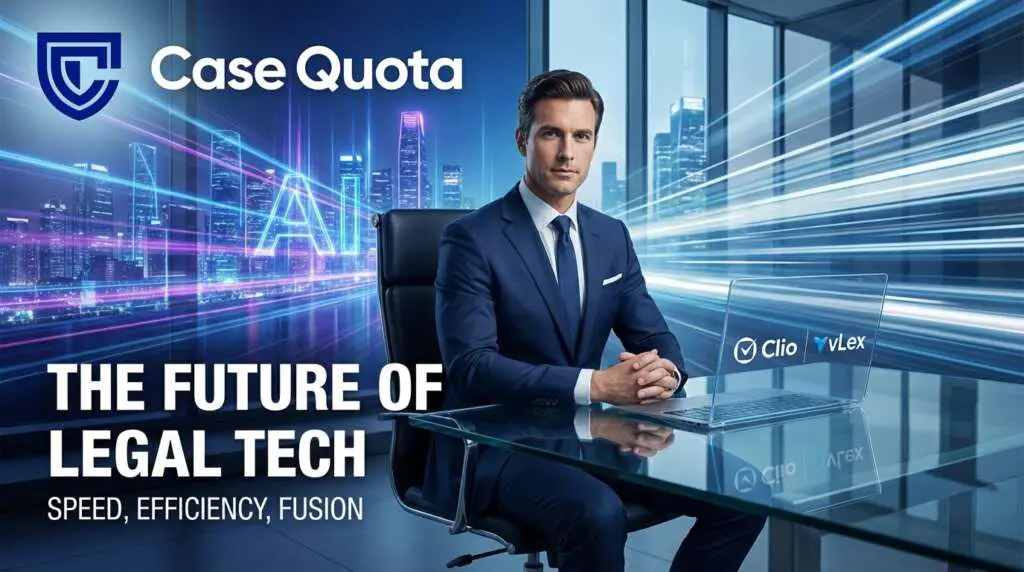
Clio acquires vLex for $1B: The Biggest Legal Tech Deal of 2025 and What Comes Next
Clio acquires vLex for $1B marks a watershed moment for legal technology. It stands as the biggest legal tech deal of 2025, and likely the largest ever. Because of its scale, the acquisition reshapes expectations for firms and vendors. Moreover, it signals a new phase where generative AI meets cloud practice management.
The deal pairs vLex’s research and docket capabilities with Clio’s cloud practice management. As a result, Vincent AI and Docket Alarm data could integrate into client intake and billing. They could also surface matter-level insights inside workflows. Consequently, lawyers may access AI-driven legal research and docket data without leaving their practice platform. That convergence promises faster insights and smarter client service.
This introduction previews themes explored later. First, we will examine the technology assets involved. Second, we will analyze strategic motives from both companies. Third, we will assess market implications for competitors and law firms. Finally, we will outline practical scenarios where an AI-driven platform transforms legal operations.
Throughout this article, expect focused analysis and realistic forecasts. We will discuss generative AI, legal research, docket data, and cloud practice management. We will also reference Fastcase lineage and the role of Ed Walters in shaping strategy. Because the deal closed on November 10, the timelines matter for integration planning. Therefore, this piece offers both immediate takeaways and long term questions for legal leaders.
By the end, readers should understand why Clio acquires vLex for $1B matters. They will also see how AI-driven platforms can unify the business and practice of law.

Strategic insights: Clio acquires vLex for $1B
The acquisition of vLex for $1 billion reflects a clear strategic bet by Clio. Because cloud practice management sits at the center of legal workflows, Clio gains unique leverage. Moreover, the deal folds deep legal research and docket intelligence into client-facing operations. As a result, the combined platform could surface actionable insights during intake, billing, and matter management.
Technology assets and lineage
Two prior moves explain the tech depth behind this acquisition. First, vLex merged with Fastcase in 2023, creating a broad global law library and consolidating significant legal content. For details on that merger, see this article. Second, the vLex-Fastcase union included Docket Alarm, a trove of court docket data that enhances litigation intelligence. Consequently, Clio now owns data that can power timeline reconstruction and risk signals across matters.
Generative AI and Vincent AI
Critically, the combined group accelerated Vincent AI, vLex’s generative AI assistant. Vincent can summarize cases, draft research memos, and extract precedent patterns. Therefore, pairing Vincent with a practice management layer opens workflow automation unseen in the market. For context on AI, innovation, and strategy from the Fastcase lineage, review this resource. In addition, Clio’s announcement confirmed the acquisition closed on November 10, making integration planning immediate. See this press release.
How research, docket data, and practice management unify
The practical logic is simple. Legal research feeds matter context. Docket data supplies procedural signals and timelines. Practice management orchestrates tasks, timekeeping, and billing. When unified under AI, these layers can power predictive triage. For example, AI could flag deadlines, suggest pleadings, and estimate litigation cost trajectories. Consequently, firms may reduce research time and improve pricing accuracy.
Forward-looking implications for legal tech
First, this deal accelerates market consolidation. Competitors must respond with deeper integrations or partnerships. Second, law firms will face new expectations for speed and insight. Smaller firms could gain access to enterprise-grade research tools. Conversely, incumbents may invest more in proprietary data and AI models. Finally, leadership continuity matters. Ed Walters, who led Fastcase and then vLex strategy, now occupies a Clio innovation role. Therefore, Clio gains both technology and leadership continuity for execution.
In short, Clio acquires vLex for $1B not just for content. It buys an architecture that can merge data, AI, and practice workflows. As a result, the legal industry enters a phase focused on integrated, AI-driven service delivery. Subsequent sections will analyze integration timelines, competitive responses, and practical use cases that matter to law firms and vendors alike.
| Entity | Role in the deal | Key technologies and data contributed | Strategic value | Timeline and milestones |
|---|---|---|---|---|
| Clio | Acquirer and cloud practice management leader. | Clio’s cloud practice management platform and client workflow orchestration. | Integrates research and docket data into matter workflows. Therefore, it can surface insights during intake and billing. | Completed acquisition on November 10. Integration planning is now a priority. |
| vLex | Legal research provider and AI innovator. | Vincent AI generative assistant and a global law library of primary and secondary sources. | Supplies AI models and curated legal content to power in-platform research and summaries. As a result, firms gain faster legal answers. | Merged with Fastcase in 2023, which accelerated Vincent AI development. Now part of Clio via the $1 billion deal. |
| Fastcase | Legal content and docket data contributor with legacy engineering. | Docket Alarm trove of court docket data and established research tooling. | Adds litigation timelines, procedural signals, and rich docket metadata for predictive workflows. Consequently, the combined product can offer litigation risk signals. | Founded in 1999. Merged into vLex (2023). Its data assets transferred to Clio through the acquisition. |
The table highlights how research, docket data, and practice management can merge under AI.
Use this as a quick reference while reading deeper analysis and use cases later in the article.
AI-Driven Future After Clio Acquires vLex for $1B
The acquisition of vLex by Clio sets a foundation for a future where legal tech thrives on integration, efficiency, and innovation. As the layers of legal research, docket data, and cloud practice management unify under an AI-driven platform, the legal industry stands on the brink of transformation.
Streamlining Legal Workflows
- Enhanced Research Capabilities: Vincent AI provides generative AI capabilities that streamline legal research. It efficiently summarizes cases and extracts relevant legal concepts, saving precious time for legal professionals.
- Automated Docket Management: With Docket Alarm’s extensive dataset, firms can automate management of schedules and deadlines, minimizing human errors.
- Insightful Client Interactions: Using AI-driven analytics, firms can surface client-specific insights, yielding smarter client service and improved outcomes.
Market Shifts in Legal Tech
- Competitive Landscape Redefined: This acquisition forces competitors to seek partnerships or develop proprietary integrations. It raises the bar for innovation across the industry.
- Access for All Firm Sizes: The integrated platform can level the playing field, offering smaller firms access to cutting-edge technology previously reserved for larger entities.
Leadership and Strategy
Ed Walters, visionary founder of Fastcase and now Clio’s Vice President of Legal Innovation, underscores the strategic ambition. He states, “Integrating research and practice platforms promises quicker decisions and better client service.” For more on his strategic thinking, see this analysis.
The Future is Now
This integration not only augments Clio’s offerings but also pushes the legal sector toward innovations powered by data and AI. Insight-driven decisions will become the norm. Legal teams can harness AI to predict case outcomes, manage litigation risks, and optimize client billing.
For details on Clio’s journey in legal tech, explore Clio’s growth and strategic moves as well as AI advancements.
In conclusion, Clio’s acquisition of vLex for $1B establishes a new golden standard in legal tech, positioning itself as a frontrunner in a rapidly evolving sector. It is a bold stride into an AI-enhanced legal landscape, creating vast opportunities for redefined success.
Conclusion: Clio acquires vLex for $1B — a turning point for legal tech
Clio acquires vLex for $1B represents a decisive shift in legal technology. Because the deal unites research, docket data, and practice management, it changes how firms deliver legal services. As a result, AI-driven legal research and workflow automation will move from niche tools to core practice capabilities. Therefore, firms that adopt these integrations early will gain tangible time and cost advantages.
The real value lies in practical integration. Vincent AI can summarize law and draft memos inside matter workflows. In addition, Docket Alarm’s signals can automate calendars and risk alerts. Consequently, lawyers will spend less time searching and more time advising. Moreover, clients will see faster answers and clearer pricing models.
Market effects will follow quickly. Competitors must innovate or partner to keep pace. Smaller firms can access enterprise-grade research tools, leveling competition. Conversely, large vendors may double down on proprietary data and AI models to maintain differentiation.
For law firms looking to convert these changes into growth, marketing matters. Case Quota helps small and mid-sized firms adopt high-level strategies used by Big Law. They specialize in legal marketing, client acquisition, and positioning around new tech capabilities. Visit Case Quota to learn how they drive market dominance for growing practices.
In short, the Clio-vLex combination marks a new era. It makes AI-driven platforms central to legal practice management and research. Therefore, leaders should plan now for integration, training, and client communication.
Frequently Asked Questions (FAQs)
Clio acquires vLex for $1B — quick answers
What exactly happened in this deal?
Clio acquired vLex for one billion dollars. The transaction closed on November 10. It is described as the biggest legal tech deal of 2025. Because of its size, the deal reshapes expectations for vendors and law firms.
Why did Clio buy vLex? What strategic value does this add?
Clio bought vLex to combine legal research, docket data, and cloud practice management. vLex brings Vincent AI and a global law library. Fastcase contributed Docket Alarm’s court docket data. As a result, Clio can embed research and procedural signals into matter workflows.
How will AI integration change legal workflows and client service?
Generative AI, led by Vincent AI, will speed research and drafting. For example, AI can summarize cases, draft memos, and suggest pleadings. In addition, docket data can trigger automated deadlines and risk alerts. Therefore, lawyers can spend more time advising clients and less time searching.
Who are the key figures and what is their role going forward?
Ed Walters is a central leader. He cofounded Fastcase in 1999 with Phil Rosenthal. After Fastcase merged with vLex, Walters became vLex’s chief strategy officer. Now, he serves as Clio’s vice president of legal innovation and strategy. Consequently, Clio retains leadership continuity for execution.
What are the main market implications and next steps for law firms?
The deal will accelerate consolidation in legal tech. Competitors will seek partnerships or deeper integrations. Smaller firms may gain access to enterprise-grade tools, leveling competition. However, firms must plan for integration, train staff, and update client communication. In short, leaders should evaluate how an AI-driven platform changes pricing, workflows, and competitive positioning.