

AI Visibility and SEO Priorities for Law Firms
AI visibility and SEO (indexing, citations, agentic commerce) is now a boardroom priority for law firms. Because AI surfaces and agentic storefronts change discovery, firms must adopt advanced technical and local tactics.
However, indexing signals, citation grounding, robots.txt hygiene, and agent commerce feeds each impact visibility and intake. To succeed, technical SEOs and law firm marketers should treat indexing as a product roadmap, because small errors cascade into major ranking losses; therefore run regular audits to detect issues such as duplicate content, parameterized add-to-cart style URLs in CMSs, or pages marked Indexed though blocked by robots.txt, and then fix canonicalization, deploy precise noindex directives where appropriate, and tighten robots.txt rules so crawlers focus on attorney profiles, practice pages, and intake forms.
Additionally, prioritize high-quality citations and provenance signals because conversational AI and copilot agents rely on grounding queries and Citation Share to choose sources, so claim and normalize local listings, embed verifiable contact metadata, and expose structured data like LegalService, LocalBusiness, and ContactPoint to improve grounding.
Finally, instrument agentic commerce and booking endpoints with consistent schema and authenticated payment flows so agents can complete engagements, measure outcomes with AI Performance dashboards, and effectively iterate based on Intents and Topics classifications.
Understanding robots.txt and the “Indexed, though blocked by robots.txt” status
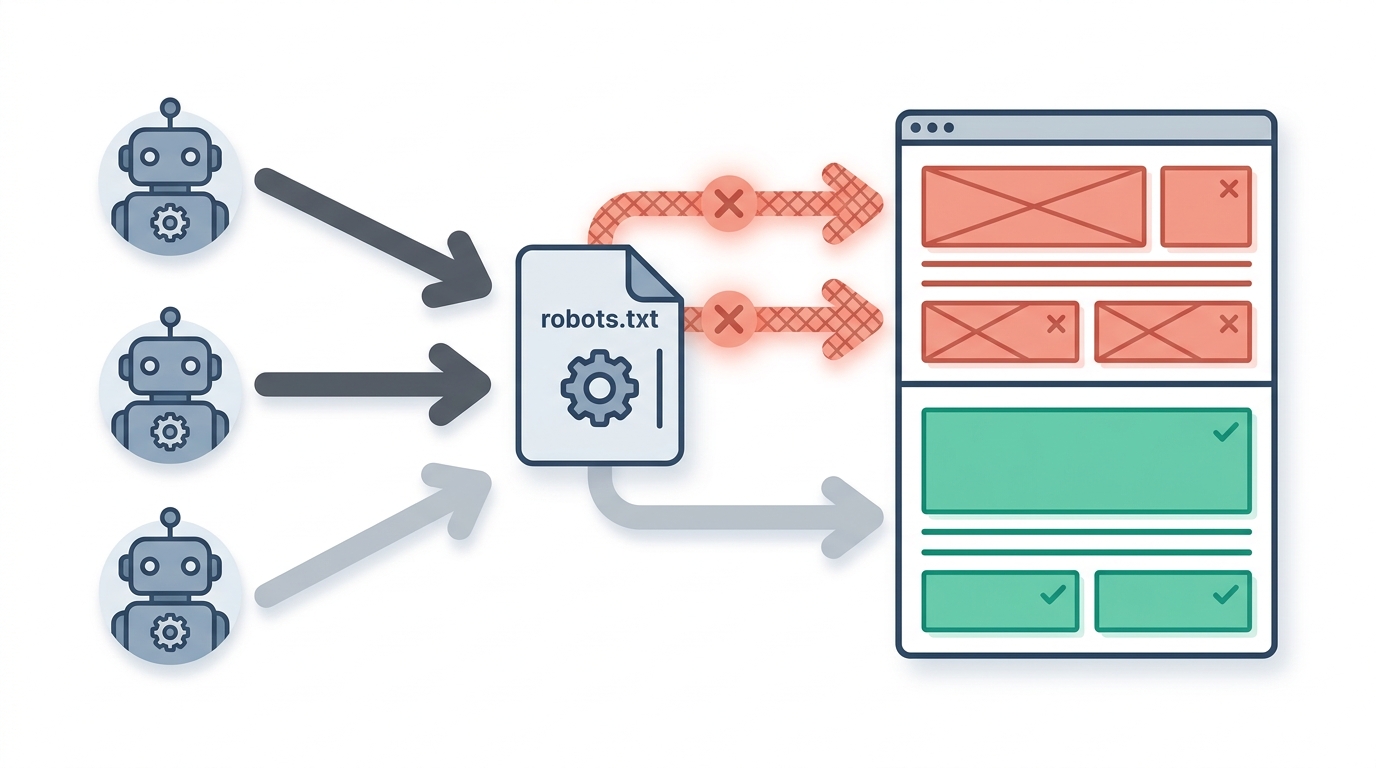
The robots.txt file tells crawlers which parts of a site they may access. However, blocking a URL does not guarantee it stays out of the index. In Google Search Console the status Indexed, though blocked by robots.txt means Google saw the URL but could not crawl it. As a result, Google may index the URL based on external links or other signals.
Why this happens and practical evidence
Google can index a blocked URL using anchor text or links from other pages. Therefore if a WooCommerce parameterized link appears externally, Google may index that add-to-cart URL even if robots.txt disallows it. John Mueller explained the practical tradeoff: “You don’t need the add-to-cart URLs indexed. Blocking them with robots.txt is fine. Even if they get “indexed” since they’re blocked by robots.txt, it’s unlikely that they’ll be shown in search (unless you do specific queries for those URLs, which users don’t do).”
A real world report shows how this plays out. A site with many parameterized product links can trigger large numbers of Indexed, though blocked by robots.txt warnings in Search Console. In one community post a WooCommerce admin wrote about 51,000 affected pages and asked whether removing robots.txt rules or adding noindex would fix the issue. The Redditor excerpt describes add-to-cart URL parameters and canonical concerns and asks whether to change crawl rules or use noindex.
Do’s and don’ts for law firms with product or booking flows
Do
- Use robots.txt to block functional add-to-cart and session URLs so crawlers avoid low-value pages.
- Keep canonical tags on product or booking pages pointing to clean, canonical URLs.
- Use noindex on pages you want out of search when crawling must remain allowed.
- Audit parameterized URLs with tools like Screaming Frog and export Search Console data.
Don’t
- Rely only on disallow rules when you also need content-level control.
- Allow thousands of parameter variations to remain indexable.
- Ignore external links that point to parameterized or session URLs.
How this helps AI visibility and SEO (indexing, citations, agentic commerce)
Clean crawl rules improve index signals, and therefore improve the quality of citations used by AI grounding. Because agentic commerce depends on clean product data and consistent schema, blocking low-value URLs prevents noise in agent feeds. Additionally, implementing canonical and noindex correctly improves Citation Share and grounding quality for copilot agents. For detailed robots.txt guidance see Google Developers at WooCommerce add-to-cart details see Conductor’s guide.
AI citations, agentic commerce protocols, and why they matter for law firms
AI-driven discovery relies on trusted citations and clean commerce protocols. For law firms that offer paid consultations, subscription services, or retainers, understanding Agentic Commerce Protocols matters because AI agents use both citation signals and commerce feeds to recommend providers and complete transactions. The two protocols most relevant to this ecosystem are ACP and UCP.
ACP and UCP explained
-
ACP (Agentic Commerce Protocol/Suite) was introduced as a Stripe/OpenAI-backed suite to enable agent-driven purchases and secure payment flows. It focuses on agent authentication, shared payment tokens, and merchant control during agent-initiated checkout. For background see
Stripe’s announcement. -
UCP (Universal Commerce Protocol) is the Google/Shopify-led protocol to standardize product and checkout interactions across AI agents and surfaces. It aims to simplify cart handoffs and normalize schema for agentic storefronts. Read
TechCrunch’s coverage.
Why this matters for law firms
-
Agentic storefronts and commerce feeds let AI agents surface consultation availability, pricing, and booking links directly in conversation. Shopify Agentic Storefronts are active by default for eligible merchants, and law firms using Shopify-based storefronts or appointment plugins will appear in agentic surfaces. See
Shopify’s announcement. -
BigCommerce and other platforms are adding support for agentic commerce through Stripe integrations, widening distribution channels for agent-driven referrals. For example, the BigCommerce integration overview is at
this link.
Data points and performance signals
-
Adobe’s Digital Economy Index and related reporting frame the commercial impact of platform changes. While a specific Adobe AI Traffic Report citing a 42% conversion lift for AI-referred traffic is not publicly available, Adobe’s digital commerce data remains a key reference for e-commerce trends:
Adobe Digital Economy Index. - The AI Performance dashboard is emerging as a measurement surface for agentic interactions and conversions. Implementing agentic-compatible schema and clean product or service data improves signal quality for these dashboards.
Citation Share and grounding
- Citation Share measures the percentage of citations a site receives for a grounding query. Higher Citation Share increases the likelihood AI agents will cite your firm when answering legal queries.
- Structured data such as LegalService, LocalBusiness, ContactPoint, Offer, and Product schema improves grounding. Additionally, consistent NAP, verified local listings, and authoritative backlinks increase Citation Share.
Key benefits summary
- Increased conversion rate potential because AI-referred traffic often converts better than generic traffic.
- New distribution paths via agentic storefronts and protocol-level integrations.
- Better grounding and citation reliability when Citation Share is high.
- Streamlined booking and secure payment flows using ACP or UCP standards.
- Improved analytics and iteration via AI Performance dashboard metrics.
For implementation, begin by cleaning product and service data, adding lawyer and practice-level schema, and testing agent flows using platform docs and the Stripe sessions and updates at
Stripe Sessions.
Comparison of Commerce Protocols for Agentic Commerce and AI Visibility
| Protocol | Launch date | Backers and partners | Key features | Best fit for law firms | SEO and AI visibility benefits |
|---|---|---|---|---|---|
| ACP (Agentic Commerce Protocol / Suite) | September 2025 | Stripe, OpenAI, payments ecosystem partners | Agent authentication, shared payment tokens, agent-initiated checkout, merchant control over fulfillment | Firms needing secure agent-driven payments for consultations and retainers | Reduces friction for agent bookings, surfaces verified transaction endpoints to AI agents, improves trust signals for Citation Share and AI Performance dashboard |
| UCP (Universal Commerce Protocol) | January 2026 | Google, Shopify, platform partners | Standardized cart handoffs, normalized product and checkout schema, agentic storefront compatibility | Firms on Shopify or platform storefronts needing broad agent distribution | Enables agentic storefront listing, normalizes schema for better grounding, improves exposure across AI surfaces and agentic storefronts |
| AP2 (Agent Payments Protocol) | April 2026 | Donated to FIDO Alliance; 60 co-developing organizations | Payment token standards, strong authentication, cross-platform payment verification | Firms requiring high-assurance payment verification and cross-platform token support | Strengthens provenance of transactions, enhances payment-level trust for AI agents, and reduces friction in agentic commerce flows |
Notes
- ACP focuses on merchant control and secure agent checkouts.
- UCP emphasizes platform-level compatibility and distribution.
- AP2 raises payment authentication and cross-platform trust.
Use these differences to choose the protocol that matches your platform, security needs, and AI visibility goals.
CONCLUSION
AI visibility and SEO (indexing, citations, agentic commerce) require coordinated technical and local tactics. Law firms should treat indexing signals, citation grounding, robots.txt hygiene, and agentic feeds as part of intake. Because clean crawl rules reduce noise, fix Indexed, though blocked by robots.txt cases and canonicalize booking and product endpoints.
Additionally, prioritize quality citations and structured data so AI agents can ground answers to your firm. Agentic commerce protocols such as ACP, UCP, and AP2 open new distribution paths and streamline secure booking. Therefore implement LegalService schema, test agent flows, and monitor the AI Performance dashboard to iterate.
Small and mid sized firms can adopt Big Law level playbooks without enterprise overhead. Case Quota specializes in legal marketing and adapts these strategies for smaller firms; visit Case Quota to learn more. Start with an indexing audit, fix crawl blockers, claim local citations, and instrument agentic flows to measure outcomes.
This sequence improves rankings, increases Citation Share, and reduces noise for AI grounding. Additionally, cleaner data helps agentic storefronts convert more leads and lower abandonment. Finally, partner with a specialized agency if you lack internal resources to execute or measure. Case Quota combines technical SEO, citation campaigns, and agentic commerce design for measurable intake growth.
Frequently Asked Questions (FAQs)
What does “Indexed, though blocked by robots.txt” mean and how should I fix it?
It means a search engine discovered a URL but could not crawl it. As a result the URL can still appear in the index based on external signals. To fix this, first identify parameterized or session URLs in Search Console. Then either allow crawling and serve a noindex tag or keep the disallow and add canonical tags to the clean page. Also audit external links that point to blocked URLs and update them where possible.
Should law firms block add-to-cart or booking parameter URLs like WooCommerce add-to-cart links?
Yes block functional parameters with robots.txt when they provide no user value. However, because blocked URLs can still be indexed, consider adding noindex when crawling must be allowed. Also use canonical tags on canonical booking or service pages. For WooCommerce, remove indexable parameter pages from sitemaps and test with tools like Screaming Frog.
How do AI citations and Citation Share affect legal visibility?
AI agents pick grounded sources using citation signals and Citation Share. Therefore higher Citation Share increases the chance agents cite your firm. To improve share, claim and normalize local listings, add LegalService and LocalBusiness schema, and build authoritative backlinks. Also maintain consistent NAP and verified contact metadata to help grounding.
Which commerce protocol should my firm adopt ACP UCP or AP2?
Choose by platform and risk profile. If you use Stripe or need merchant control, ACP fits well. If your site is Shopify first and you need wide agent distribution, UCP is the default choice. If you need strong cross platform payment authentication, AP2 enhances token security. In practice many firms adopt the protocol their platform supports.
How do I measure agentic commerce performance and SEO impact?
Instrument agentic endpoints with analytics and measure conversions in the AI Performance dashboard. Also track Citation Share for grounding queries and monitor Search Console for indexing issues. Finally run A B tests on booking flows to verify lift and reduce abandonment.