

publishing workflow fixes: Boost law firm ad revenue by aligning organic search and paid campaigns
publishing workflow fixes can unlock higher ad revenue for law firms by removing publishing friction. When editors publish smoothly, search visibility improves and paid campaigns convert better. Therefore you earn more from both organic search traffic and targeted ads.
This article explains four practical publishing workflow fixes that reduce the Fragmentation Tax. You will learn how unified publishing standards, automated checklists, and staged edits work together. Moreover the post shows how collaborative editing separates text media and metadata for clarity. As a result your editorial velocity rises, while siloed data and tech debt fall.
We also tie technical fixes to real revenue metrics, including attribution and conversion funnels. Jason Konen and WP Engine provide product context and best practices in this sponsor post. Importantly when your site runs fast and stable, editors can publish without breaking pages. Thus you protect reader retention while improving ad viewability and campaign performance.
Read on for concrete checklists, governance patterns, and measurement plans you can copy. Additionally we outline steps to align SEO metadata and tracking pixels with paid creative. By the end you will have an action plan to grow organic traffic and ad revenue. Therefore start here to stop paying the Fragmentation Tax and reclaim lost revenue.
We will include examples of live blogs and breaking news workflows that keep readers on your domain. Furthermore we explain how to align paid media landing pages with SEO intent to lift conversions. Finally the guide offers a reproducible checklist to embed governance into daily publishing.
The Fragmentation Tax and Its Impact on Publishing Workflows
The Fragmentation Tax is the hidden cost of operational inefficiency. In law firm publishing workflows it drains revenue, attention, and momentum. Because teams juggle fragmented tools, they lose sight of audience signals. As a result paid campaigns fail to match organic intent and ad revenue suffers.
Think of a newsroom where metadata lives in one spreadsheet. Media assets live in another system. Tracking pixels live in a developer ticket queue. This fragmentation creates real, measurable loss. For example, a sponsored article may not fire viewability tags correctly. Consequently the ad network underpays or misattributes conversions.
Jason Konen explains the problem plainly. “The Fragmentation Tax is the hidden cost of operational inefficiency,” he says. Moreover he adds, “By removing the technical toil that typically hides insights in siloed tools, media organizations can finally trade operational friction for strategic agility.” You can read more from WP Engine at WP Engine.
The tax is paid in three distinct currencies
- Siloed Data and Strategic Blindness
- When analytics, CRM, and editorial notes do not connect, teams lose campaign-level insights. For example paid search may amplify topics that underperform organically. Thus marketers cannot optimize bids or landing pages correctly.
- The Editorial Velocity Gap
- Slow, fragile publishing slows breaking coverage and lowers reader retention. For instance live blogs that rely on third-party embeds reduce page speed. Therefore audiences leave for faster sources and ad impressions drop.
- Tech Debt Versus Innovation
- Older stacks demand firefighting instead of experimentation. When engineers patch rather than build, teams miss opportunities to test creative and tracking. As a result new monetization tactics stall.
Together these costs hamper ad revenue and audience growth. When attribution fractures, conversion funnels leak. When editorial velocity lags, reader sessions shorten. Consequently monetization and SEO both suffer.
To stop paying the Fragmentation Tax, organizations must unify governance and embed automated checklists. For practical examples and industry context see Search Engine Journal and the rising role of community sources like Reddit.
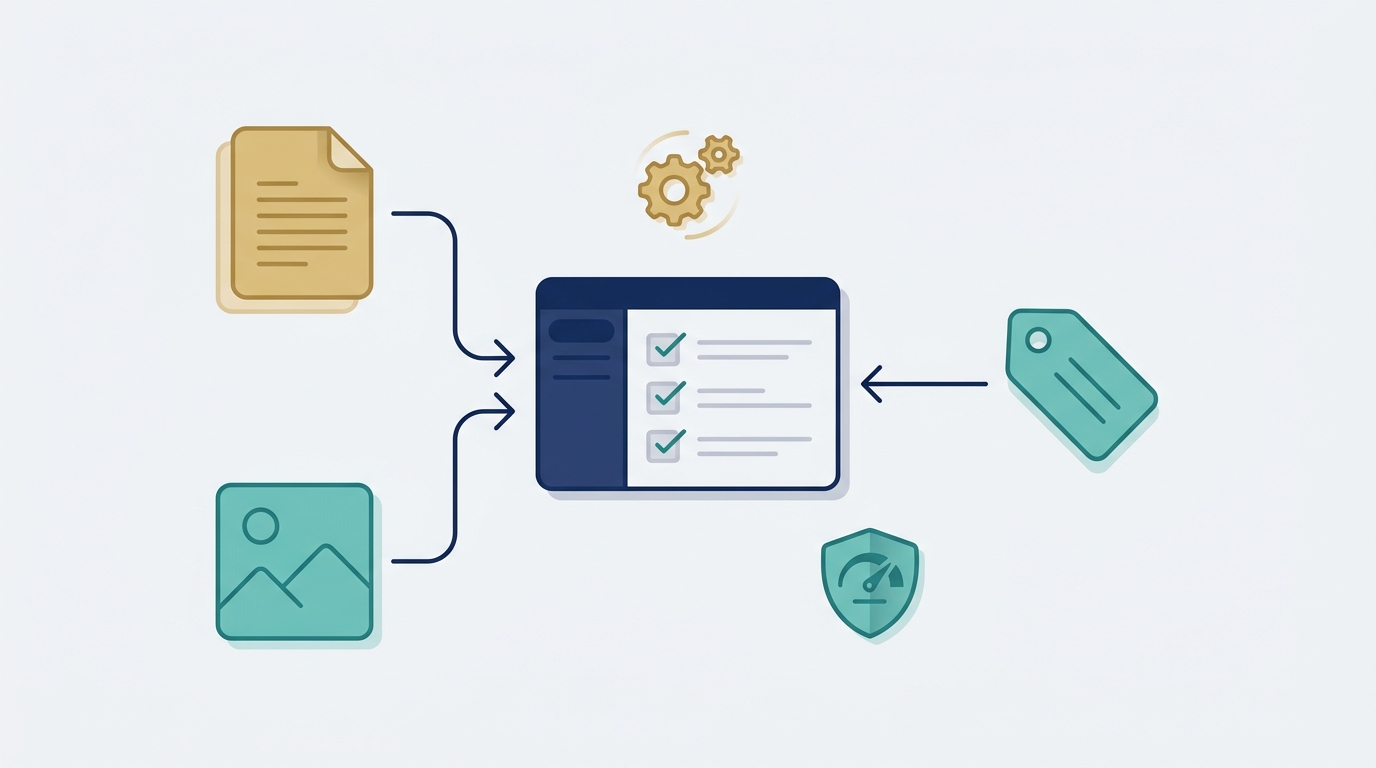
| Area | Traditional Fragmented Workflow | Modern Unified Publishing Standard |
|---|---|---|
| Governance embedded in workflow | Governance lives outside the workflow, policies sit in separate documents, and approvals slow teams. | Governance is native to the workflow with automated gates that enforce brand standards and reduce errors. |
| Collaborative editing | Editors, designers, and metadata owners use separate tools. Handoffs cause delays and lose context. | Collaborative editing happens in one interface. Text, media, and metadata are separated yet linked so teams work in parallel. |
| Automated checklists | Manual pre-publish checks live in tickets and spreadsheets, which slows speed and causes misses. | Automated checklists run at publish time and validate required fields and tracking pixels. Therefore tag errors drop. |
| Staged edits | Edits often go live immediately or require full republish, which risks breaking pages. | Staged edits enable safe drafts on live content so teams update without disrupting uptime. |
| Site uptime reliability | Patchwork integrations create outages and slow page loads. | A unified stack prioritizes fast, stable platforms and improves uptime and page speed. |
| SEO metadata and tracking pixels | SEO metadata lives separately and tracking pixels often misfire, breaking attribution. | Metadata and pixels are embedded in the workflow. Tags fire reliably and attribution improves. |
| Editorial velocity | Slow manual processes reduce publishing cadence and harm live coverage. | Faster publishing cycles increase editorial velocity. Teams capture breaking news on the brand domain. |
| Impact on organic search traffic | Inconsistent metadata and slow pages lower organic search traffic. | Consistent SEO metadata and faster pages grow organic search traffic and reader retention. |
| Impact on ad revenue | Misfired tags and low viewability cause revenue leakage. | Reliable tagging and improved viewability increase ad revenue and campaign ROI. |
How publishing workflow fixes align organic search and paid campaigns
Publishing workflow fixes close the gap between organic search and paid campaigns. When governance, SEO metadata, and tracking pixels align, campaigns become measurable and repeatable. As a result law firms can increase ad revenue while growing organic traffic.
Start with governance. A unified publishing standard embeds brand rules and measurement gates into the workflow. Therefore every article ships with consistent SEO metadata and required tracking pixels. This reduces mismatches between paid landing pages and organic pages. Moreover when both channels use the same metadata, paid creative can mirror search intent. Consequently clickthroughs convert at higher rates.
Next, treat tracking pixels and tags as first class. Instead of chasing tag errors in ad reports, automate pixel deployment inside the publishing flow. For example an automated checklist can validate viewability tags and conversion pixels before publish. Thus ad networks receive accurate signals. As a result attribution improves and conversion funnels tighten. For practical platform guidance see WP Engine.
Manage SEO metadata centrally. When title tags, meta descriptions, and schema live in the workflow, writers and paid media teams share a single source of truth. Therefore paid campaign landing pages use the same keywords that rank organically. This alignment reduces wasteful ad spend on low-intent pages. Additionally consistent metadata supports stronger search snippets and higher organic clickthrough rate.
Improve reader retention by using staged edits and collaborative editing. Editors can update live content safely without breaking pages. Consequently teams can refresh headlines, add context, and optimize CTAs while preserving uptime. This practice increases session duration and ad viewability. Furthermore cohesive live coverage keeps audiences on the brand domain instead of on aggregator sites.
Speed matters. When the site foundation is solid and fast, editors hit publish without fear. Jason Konen notes, “When your site’s foundation is solid and fast, editors can hit ‘publish’ without worrying about things breaking.” Therefore real-time publishing becomes a revenue play. Live stories capture attention, improve ad impressions, and feed paid campaigns with timely landing pages.
Close the loop with measurement. Use unified analytics that combine organic ranking data with paid performance. Then map conversion funnels from search entry to paid landing pages and back to on-site behavior. As a result teams spot where editorial content needs to change to support paid bids. In turn this reduces the Fragmentation Tax and recovers lost revenue.
Finally, prioritize platform choices that reduce technical toil. The era of stitching software together with sticky tape is over. Instead choose a stack that supports collaborative editing, automated checklists, and reliable pixel firing. For implementation examples and product context, explore WP Engine and industry best practices at Search Engine Journal.
By aligning governance, SEO metadata, and tags, law firms can close attribution gaps. Consequently they increase conversion rates, boost ad revenue, and grow organic search traffic. These publishing workflow fixes turn editorial work into measurable business outcomes.
Conclusion
Publishing workflow fixes provide a clear path to stop paying the Fragmentation Tax. First, unify governance so SEO metadata and tracking pixels travel with every article. Next, add automated checklists and staged edits to reduce errors and preserve uptime. Finally, use collaborative editing to separate text, media, and metadata and increase editorial velocity. As a result teams regain strategic clarity and operational speed.
These changes directly impact ad revenue and audience growth. When tags fire reliably and metadata aligns, attribution improves and conversion funnels tighten. Therefore paid campaigns cost less per conversion and organic landing pages convert better. Moreover faster, cohesive live coverage keeps readers on your domain and boosts ad viewability.
For law firms seeking execution support, Case Quota offers specialized legal marketing services that implement these high level strategies. Case Quota helps small and mid sized law firms achieve market dominance through editorial governance, SEO alignment, and paid campaign integration. Visit Case Quota to learn how they translate publishing workflow fixes into measurable revenue gains and audience growth.
In short, treat your publishing workflow as a revenue engine. Start by fixing the basics, then measure lift in organic traffic and paid campaign ROI. With a unified standard, law firms can turn editorial work into predictable business outcomes and reclaim revenue lost to fragmentation.
Frequently Asked Questions (FAQs)
What are publishing workflow fixes and why do they matter for law firm ad revenue?
Publishing workflow fixes are operational changes that unify editorial functions. They include governance embedded in the workflow, automated checklists, staged edits, and collaborative editing for text media and metadata. Because these fixes reduce errors and speed publishing, organic search traffic improves. Moreover aligned SEO metadata and reliable tracking pixels make paid campaigns more measurable. As a result law firms see better attribution, higher conversion rates, and increased ad revenue.
How do publishing workflow fixes reduce the Fragmentation Tax?
The Fragmentation Tax shows up as siloed data, slow editorial velocity, and tech debt. Publishing workflow fixes remove these inefficiencies by centralizing metadata and automating checks. For example automated checklists validate tracking pixels before publish. Therefore tag failures fall and ad networks receive accurate signals. Additionally staged edits let teams update live content safely. Consequently teams stop losing revenue to misattribution and dropped impressions.
Can publishing workflow fixes improve alignment between organic search and paid campaigns?
Yes. When SEO metadata and paid landing pages share the same source of truth, paid creative mirrors search intent. Furthermore consistent title tags and meta descriptions improve organic clickthrough rate. When pixels fire reliably, attribution links search entries to paid activity. As a result conversion funnels tighten and paid spend becomes more efficient. For platform guidance and product context see WP Engine and for tactical SEO advice consult Search Engine Journal.
How quickly will law firms see measurable benefits after implementing fixes?
You can see technical wins in weeks and revenue gains in months. First, automated checklists and metadata alignment reduce tag errors quickly. Next, faster pages and staged edits lift editorial velocity and reader retention. Consequently ad viewability improves and paid campaign ROI rises. However full attribution clarity depends on unified analytics and consistent measurement across teams.
What steps should a law firm take to get started?
Begin with a diagnostic audit of SEO metadata, tracking pixels, and editorial handoffs. Then embed governance into the publishing workflow and add automated checklists. Also adopt collaborative editing that separates text media and metadata. Finally choose a stable platform that supports fast publishing. For help with execution, consider specialized agencies that apply these high level strategies to legal marketing.