

Ted Turner and the Evolution of Legal Media
In an era where media coverage of legal affairs is omnipresent, the role of Ted Turner in reshaping legal media remains unparalleled. Known for his revolutionary influence, Ted Turner transformed how the legal world interacts with the public. His bold ventures into legal media, like Court TV and American Lawyer Media (ALM), marked a pivotal shift in bringing courtrooms and legal matters to a broader audience. In this article, we will delve into Ted Turner’s seminal contributions, examining how and why he became a monumental figure in the evolution of legal media.
Ted Turner was not just another media mogul; he was a visionary who understood the power of media in shaping public consciousness around legal systems. Through his involvement in the creation of Court TV, launched on July 1, 1991, Turner dared to broadcast real, live court proceedings, offering an unfiltered glimpse into the justice system Time Warner and Liberty Media. His efforts helped demystify the often opaque legal processes for the average viewer.
In addition to Court TV, Turner’s acquisition of American Lawyer Media underscored his commitment to enhancing legal journalism. ALM, known for its robust reporting and analysis, became an essential resource for legal professionals. This strategic move not only elevated ALM’s standing but also positioned Turner as a key architect in the media landscape.
Key Themes:
- Innovation in Legal Journalism: Ted Turner’s initiatives, particularly with Court TV and ALM, revolutionized legal coverage by providing unrivaled access and insight into the justice system.
- Impact on Public Awareness: Turner’s ventures increased public understanding and engagement with legal matters through intuitive storytelling and comprehensive coverage.
- Legacy and Influence: Beyond individual projects, Turner’s approaches set a new standard for media’s role in the legal field, influencing ongoing conversations about media transparency.
Join us as we explore how Ted Turner reshaped legal media through historical insights and analytical reflections, leaving an indelible mark on both media and law. His legacy, like the courtroom dramas he aired, continues to influence and inspire. This reflective journey through his achievements will uncover a legacy of innovation and impact that still resonates in today’s media-driven world.
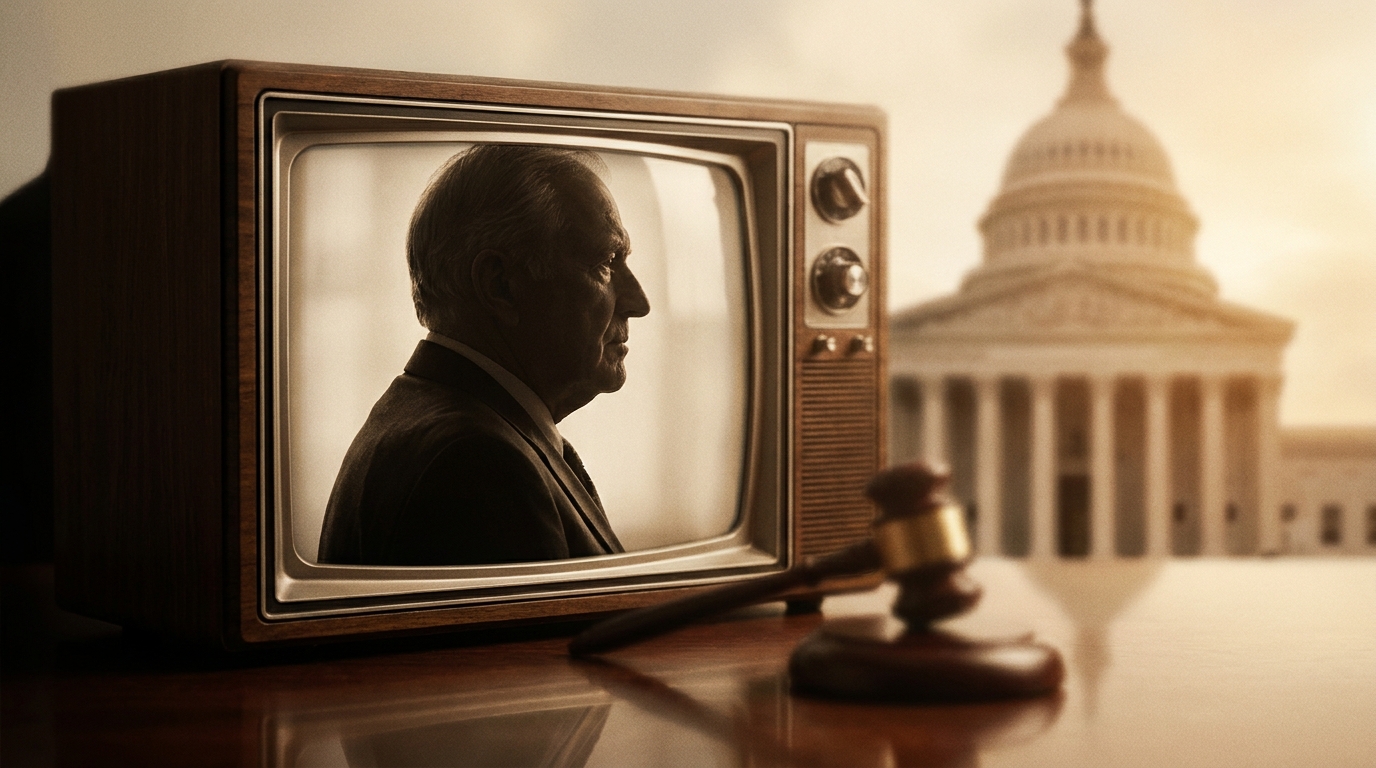
Ted Turner’s Role in Transforming Legal Media
The proposition that Ted Turner reshaped legal media is not hyperbole. He fused broadcast ambition with legal journalism and created platforms that changed public access to the courts. Through Court TV and American Lawyer Media he forced a rethink about who could cover legal stories. He also altered the business model for legal publishing and broadcasting.
Court TV and a new model for courtroom coverage
Court TV launched a new era of gavel to gavel coverage. The network began on July 1, 1991 and offered live court broadcasts to mass audiences. As a result, trials once confined to courtrooms became national conversations. Court TV made courtroom procedure a part of mainstream viewing, and it pressured other networks to pay attention to legal real time storytelling. For more on the network today visit Court TV.
American Lawyer Media and trade journalism amplified
Turner did not stop at television. His acquisition linked Turner Broadcasting content muscle with specialized legal journalism. American Lawyer Media and The American Lawyer brought deep industry reporting to law firms and practitioners. Because ALM later launched Law.com, it also helped usher legal trade media into the digital era. The ALM home page remains a central resource at ALM.
The 1996 1997 deal and Turner’s corporate leverage
The late 1996 Time Warner transaction changed the stakes. Time Warner announced its intention to buy Turner and then paused that plan, which affected deals in process. When the merger closed in October 1996, Turner became vice chairman of Time Warner and gained effective authority over cable assets. That move reshaped corporate control for Turner Broadcasting and for networks like Court TV. Meanwhile, other business actors such as Bruce Wasserstein and firms like Wasserstein Perella played roles in ALM ownership transitions.
Structural shifts and people at the center
Steven Brill and others helped build the content engines Turner acquired or influenced. Brill left Court TV and ALM in February 1997 with a significant payout. Time Warner ultimately kept Court TV, and in 2006 it bought the remaining stake from Liberty Media for a large sum before folding the network into Turner Broadcasting. The network later rebranded as TruTV in 2008. For context on Turner and his media career see Britannica and on corporate partners see Liberty Media.
Bulleted insights
- Court TV turned legal proceedings into televised public events and raised transparency and controversy simultaneously.
- ALM professionalized legal reporting and accelerated the move to digital platforms such as Law.com.
- The Time Warner merger gave Turner strategic control that influenced cable networks and legal media assets.
- Leadership moves by Steven Brill and executives shaped editorial direction and commercial outcomes.
- Legacy effects include greater public engagement with trials and a permanent place for legal news in mainstream media.
Together these moves explain how Ted Turner reshaped legal media. He combined broadcast scale, trade journalism pedigree, and corporate muscle to remake how legal stories reach the public and practice communities.
| Entity | Launch or Founding | Major Acquisitions and Rebrands | Ownership and Corporate Notes | Impact on Legal Media |
|---|---|---|---|---|
| Court TV | July 1, 1991 | Time Warner kept Court TV; in 2006 it bought Liberty Media’s remaining stake; folded into Turner Broadcasting | Built under Turner Broadcasting; the 1996 Time Warner deal made Turner vice chairman and altered cable control | Made gavel-to-gavel coverage mainstream; increased public engagement and scrutiny; sparked debates about trial broadcasting. Visit Court TV |
| American Lawyer Media (ALM) and The American Lawyer | The American Lawyer founded 1979; ALM grew as a legal trade media group | ALM later launched Law.com in 1999; publications were acquired by Wasserstein after the Turner bid | ALM became a trade journalism powerhouse that Turner influenced through ownership moves | Professionalized legal reporting; strengthened industry analysis and business coverage. Visit ALM |
| Law.com | 1999 | Launched by ALM as a digital hub; replaced services such as Counsel Connect | Served as ALM’s primary online platform; later merged with Law Business Research in part of broader consolidation | Accelerated the shift to online legal news and community building for practitioners. Visit Law.com |
| TruTV (successor to Court TV) | Rebranded January 1, 2008 | Court TV rebranded as truTV as programming focus shifted to reality and action | After the Time Warner and Liberty Media transactions, the channel’s strategy changed under Turner Broadcasting | Marked a retreat from pure courtroom broadcasting toward entertainment formats; shows the commercial evolution of legal-themed cable. Reporting on rebrand: Read more about the rebrand |
These entries show how Ted Turner reshaped legal media through broadcast scale, trade journalism influence, and corporate transactions. As a result, legal news moved from niche trade pages and courtrooms into national media circulation and online platforms.
Challenges When Ted Turner reshaped legal media
Ted Turner reshaped legal media, but his ventures faced notable headwinds. Corporate deals, leadership turnover, and shifting technology all complicated execution. As a result, bold ideas met institutional friction and strategic recalibration.
Corporate turbulence and the 1996 1997 deal
The Time Warner negotiations in late 1996 disrupted ongoing plans. Time Warner announced its intent to buy Turner and briefly put the deal on hold. When the merger closed in October 1996, Turner became vice chairman of Time Warner and gained authority over cable assets. However, this shift changed bargaining positions for partners and buyers. The pause affected acquisitions in progress and altered the timing for deals tied to Court TV and ALM. For background on Turner’s media career see Britannica.
Leadership changes and editorial stability
Leadership turnover proved consequential. Steven Brill left Court TV and ALM in February 1997 with a large payout, reportedly in the eight figures. Consequently, editorial direction and operational momentum suffered. New executives had to rebuild trust and clarify strategy. Meanwhile, ownership shifts, including interest from firms like Wasserstein Perella, complicated long term planning. ALM publications later moved through additional ownership transitions that reshaped priorities and investment.
Platform consolidation and technological transition
Digital change challenged legacy products. ALM responded by launching Law.com in 1999, which replaced services such as Counsel Connect. Counsel Connect wound down as online communities and publishing models evolved. Because audiences moved online, ALM invested in digital hubs and subscription models to retain professional readers. For ALM’s current presence see ALM and for Law.com visit Law.com.
Brand evolution and commercial trade offs
Court TV’s commercial path illustrates trade offs. Time Warner kept Court TV, bought Liberty Media’s remaining stake in 2006, and later folded the network into Turner Broadcasting. In 2008 the channel rebranded as TruTV, shifting toward entertainment formats. Consequently, the pure courtroom focus receded while legal themes entered mainstream reality programming. For corporate context see Liberty Media.
Legacy and continuing influence
Despite challenges, Turner’s impact endures. He normalized gavel to gavel coverage and elevated trade journalism. As a result, legal stories entered mainstream news cycles and online practice communities. Today, Law.com, ALM titles, and courtroom reporting trace roots to that era. Moreover, Turner’s moves taught media leaders how corporate power affects editorial independence. Therefore, his legacy remains both inspiring and cautionary.
Key takeaways
- Corporate deals can accelerate or upend media strategies
- Leadership exits alter editorial and commercial momentum
- Digital pivots replaced older services like Counsel Connect
- Turner’s model expanded public engagement with legal systems
CONCLUSION
Ted Turner reshaped legal media through scale, risk, and a willingness to change conventions. He pushed courtroom coverage into living rooms, and he elevated trade journalism through assets like ALM and The American Lawyer. As a result, legal content moved from niche publications into mainstream and digital channels. Therefore, his initiatives created enduring templates for audience engagement, editorial depth, and commercial strategy.
However, the story also shows limits and trade offs. Corporate deals, such as the 1996 Time Warner transaction, created turbulence. Leadership shifts like Steven Brill’s 1997 exit changed editorial momentum, and platforms like Counsel Connect wound down. Yet the core idea survived. Because Turner linked broadcast reach with legal expertise, gavel to gavel coverage and platforms like Law.com took root.
Modern law firms can act on these lessons. First, build regular, high quality content that mirrors The American Lawyer’s depth. Second, use live and near live formats to humanize complex cases. Third, invest in owned channels, because digital hubs deliver compounding value. Fourth, align editorial standards with business goals to protect trust and reputation.
Actionable takeaways for law firms and marketers
- Prioritize consistent thought leadership pieces to build domain authority
- Use multimedia and short form video to explain legal issues clearly and quickly
- Create an owned newsroom or hub modeled on Law.com for long term traffic and leads
- Support content with distribution plans across niche and mainstream channels
Ted Turner’s legacy is both inspirational and instructive. His work shows how media power shapes public understanding of law. Therefore, law firms that adopt similar strategies can expand visibility, win more meaningful work, and shape legal narratives. For small and mid sized firms seeking that scale, specialized help speeds the journey. Case Quota helps firms compete with Big Law by implementing high level marketing strategies and content systems. Visit Case Quota to learn how focused legal marketing can drive market dominance and sustainable growth.
Frequently Asked Questions (FAQs)
What does it mean that Ted Turner reshaped legal media?
Ted Turner reshaped legal media by combining broadcast scale with legal journalism. He backed Court TV and invested in American Lawyer Media. As a result, courtroom proceedings and trade reporting moved into mainstream and digital channels.
How did Court TV change public access to trials?
Court TV launched gavel to gavel coverage on July 1, 1991. Consequently, trials became national stories and public awareness rose. However, that greater visibility also raised debate about trial fairness and media influence.
What became of American Lawyer Media and The American Lawyer?
The American Lawyer began under Steven Brill in 1979 and grew into ALM. ALM launched Law.com in 1999 to meet digital demand. Brill left Court TV and ALM in 1997, and ALM later passed through ownership changes, including purchases by Wasserstein and others.
Why did Court TV rebrand as TruTV, and what did that signal?
Time Warner kept Court TV and bought Liberty Media’s remaining stake in 2006. In 2008 the channel rebranded as TruTV and shifted toward entertainment programming. Therefore, the rebrand signaled a commercial move away from pure courtroom broadcasting.
What practical lessons should law firms take from Turner’s influence?
First, prioritize consistent thought leadership and clear legal content. Second, use multimedia to explain complex cases. Third, build owned channels like a newsroom or hub to retain audiences. Finally, align editorial quality with business goals, because trust fuels client relationships.