

AI in Lead Generation for Law Firms
AI in lead generation is reshaping how small and mid-sized law firms find and convert clients. Because AI-powered lead generation tools combine real-time insights, conversational LLMs, and automation, firms can capture higher intent prospects. As a result, faster follow-up tactics turn initial queries into booked consultations and signed retainers. This introduction explains why these technologies now matter for measurable ROI and competitive advantage.
Law firms still miss opportunities because 28 percent of business calls go unanswered. However, early adopters that pair AI search with fast response systems saw answered calls increase by 44 percent. AI search platforms like ChatGPT and Gemini understand prospects in real time, so they qualify leads before human contact. Therefore, integrating AI with your lead lifecycle reduces wasted spend across SEO, PPC, and Local Service Ads.
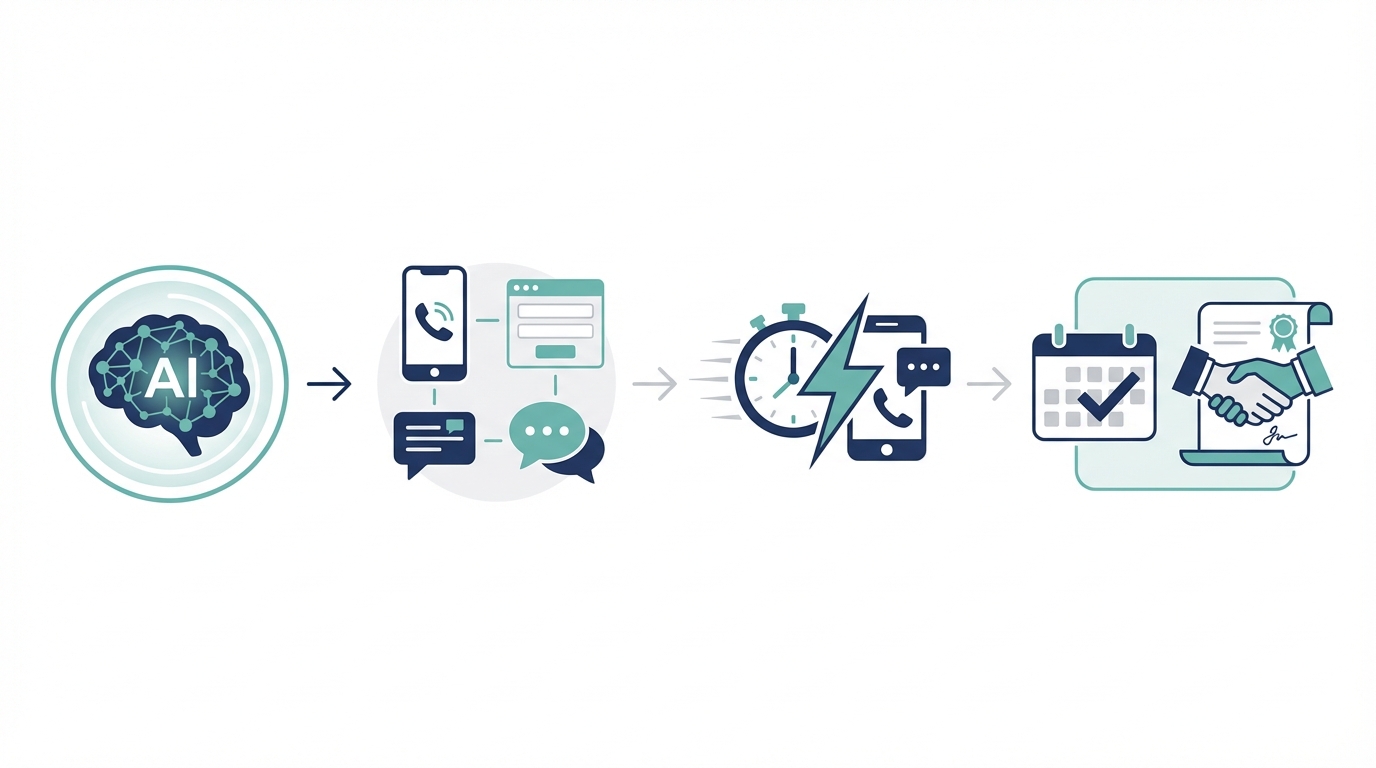
Faster follow-up means routing calls efficiently, replying by text, and using chat to book appointments. Additionally, automated workflows capture forms, calls, and chat leads into unified attribution. Because unified data improves decision making, agencies gain clearer visibility on cost per lead and lifetime value. Consequently, teams convert more leads while lowering acquisition costs.
These AI-powered platforms also help with ad placement and ranking. For example, faster response times earn better placements on Local Service Ads and PPC. Moreover, LLM-driven experiences create brand touchpoints that increase trust and intent. The net effect shows up in better conversion rates and clearer full funnel visibility.
Read on to learn practical, data-driven steps to pair AI with faster follow-up. You will get an agency roadmap, playbook items, and measurable tactics for 2026. By the end, you will know how to turn AI-aware ads into consistent client wins. Start here to convert more leads and prove ROI quickly.
AI in lead generation: Speeding follow-up and improving lead quality
AI in lead generation is changing how law firms respond to prospects. Because AI-powered platforms automate qualification, teams reach high-intent prospects faster. ChatGPT, Gemini, and Perplexity deliver conversational answers in real time. As a result, initial queries move to consultations more quickly. Early adopters have seen answered calls increase by 44 percent, which proves the impact.
AI search and LLMs: Real-time customer understanding
Large language models, or LLMs, read intent from queries and context. Therefore they qualify prospects before human contact. Right now an LLM can answer complex questions and request next steps. This capability reduces friction across calls, chats, and forms. CallRail’s analysis of nearly 20 million leads shows AI search is driving high-intent phone calls and new attribution needs. For more detail, see CallRail’s report.
Faster responses drive better PPC and Local Service Ads performance
Faster response times improve ad outcomes because platforms reward quick engagement. For example, Local Service Ads favor businesses that answer quickly. Therefore faster follow up can improve placement and visibility. Paid search campaigns also convert better when lead response is immediate. Learn more about Local Service Ads here.
Industry coverage highlights the strategic shift toward AI-aware tactics. See analysis on why marketers must pair data with story: Search Engine Journal’s analysis.
Practical tactics that reduce lag and raise conversions
Implement chat flows that qualify and book consultations automatically. Additionally route calls with rules that prioritize high-intent queries. Use unified attribution to capture calls, chats, texts, and forms in one dashboard. Because 28 percent of business calls go unanswered, routing and automation are table stakes. Consequently, combining AI search, real-time chat, and intelligent call routing increases answered contacts.
What this means for conversion and ROI
AI in lead generation cuts time to first contact and improves lead quality. As a result firms convert more of the same traffic and lower acquisition costs. Therefore agencies gain measurable ROI and a clear competitive advantage. Start by mapping touchpoints, adding conversational AI, and closing the response gap.
| Platform | Platform behavior | Industry strengths | Unique features | Impact on lead conversion rates and notes |
|---|---|---|---|---|
| ChatGPT | Conversational LLM that simulates human dialog and quickly answers queries. Therefore it excels at qualification via chat. | Strong across consumer services and legal intake where natural conversation matters. | Flexible prompts, API integrations, and customizable workflows for booking and follow up. | Accelerates qualification and reduces time to first contact. Early adopters report higher answered calls and faster conversion when paired with routing and automation (see CallRail). |
| Gemini | Multimodal LLM with strong contextual understanding and visual integration. As a result it handles complex queries and documents well. | Good for complex practices such as personal injury, corporate law, and firms that use visual case assets. | Strong context retention across long conversations and multimodal inputs. | Improves lead readiness by answering detailed questions inside the search experience. Faster responses translate into better PPC and Local Service Ads placement when routed quickly. |
| Perplexity | Search oriented LLM that prioritizes sources and concise answers, therefore ideal for research heavy queries. | Best for high research intent verticals and B2B legal queries. | Source citations, fast fact recall, and citation links for credibility. | Helps move high intent prospects through the funnel by reducing friction in early research. Use alongside chat routing to convert research into booked consultations. |
| Local Service Ads (Google LSA) | Ads platform that surfaces local providers and rewards quick engagement. Consequently speed and responsiveness affect ranking. | Particularly strong for local practices with immediate-intent searches such as injury and urgent matters. | Paid placements, lead verification, and call booking features tied to provider responsiveness. | Faster response times earn better placements on LSA and PPC. Therefore firms that combine AI search with rapid follow up see measurable gains in visibility and conversions. Learn more. |
Related keywords included: AI search, LLMs, ChatGPT, Gemini, Perplexity, PPC, Local Service Ads, lead attribution, full funnel visibility. For additional industry analysis, see why marketers pair data with story: View the article.
AI in lead generation: Strategic ad tactics for law firms
AI in lead generation is not just an experimental add on. Because AI search and faster follow up change placement and conversion dynamics, law firms must adopt AI aware ad tactics to protect and grow market share. Use these strategies to integrate conversational LLMs and automation into PPC and Local Service Ads campaigns.
Pair AI search with PPC and Local Service Ads
Connect conversational platforms like ChatGPT and Gemini to intake workflows so leads receive instant answers. As a result prospects move from discovery to action faster. Faster response times earn better placements on Local Service Ads and PPC, so prioritize speed in your ad playbook. For vendor details, see Google Local Service Ads.
Optimize for lead attribution and full funnel visibility
Track calls, forms, chats, and texts in a unified attribution system. Therefore you can see which AI touchpoints generate high intent leads and which campaigns waste spend. Integrations with CallRail provide near realtime call analytics and unified attribution across channels. Learn more: CallRail.
Build AI aware landing pages and chat flows
Design landing pages that hand off to AI assistants for instant qualification. Consequently these assistants book appointments, collect intake details, or route high intent calls to live agents. Because 28 percent of business calls go unanswered, automate routing rules to prioritize call pickup for high value queries.
Use data to refine bidding and placements
Feed unified attribution data into bidding strategies so PPC budgets reflect true lead value. Because faster follow up increases conversion rates, adjust bids for campaigns that produce quick responses. In addition, continuous testing and attribution reveal which AI search platforms drive the best ROI. Read industry context from Search Engine Journal on adapting to AI search.
Practical implementation checklist
- Map every touchpoint including AI queries, chats, calls, forms, and texts
- Integrate LLM driven assistants with booking workflows
- Route high intent calls with escalation rules
- Consolidate attribution into a single dashboard
- Use attribution data to inform PPC bids and LSA responsiveness
Expected outcomes
When law firms align AI in lead generation with faster follow up they see measurable gains. Early adopters have seen answered calls increase by 44 percent, which directly lifts booked consultations. Consequently firms improve visibility on Local Service Ads and lower cost per acquisition. Implementing unified data and attribution ensures each ad dollar drives measurable ROI.
In conclusion, AI in lead generation presents a transformative shift for small and mid-sized law firms aiming to maximize lead conversion. By integrating AI-powered platforms, firms benefit from real-time customer engagement, ensuring leads are followed up promptly. These technologies not only improve client interaction but also significantly enhance marketing efficiency. Faster response times, driven by tools like ChatGPT and Gemini, directly impact lead conversion rates and improve ad placement on platforms like Google’s Local Service Ads.
Moreover, leveraging data-driven ad tactics allows law firms to optimize their marketing spend. Unified data and comprehensive lead attribution provide a full-funnel visibility that is crucial for refining PPC strategies and driving a measurable return on investment (ROI).
For law firms ready to leverage these advanced insights and achieve market dominance, partnering with a specialized legal marketing agency is key. Case Quota stands out as a leader in this domain, offering high-level strategies tailored for small and mid-sized firms, replicating success models used by larger firms. To explore how to gain a competitive edge with these AI strategies, visit Case Quota’s website: Case Quota.
Frequently Asked Questions (FAQs)
What is AI in lead generation and how does it help law firms?
AI in lead generation uses large language models and automation to find, qualify, and route prospects. It reads intent from queries and answers basic questions instantly. Because it reduces friction, prospects move to consultations faster. As a result, firms capture higher intent leads without added ad spend. AI also improves consistency by handling common intake tasks at scale.
How do faster follow-up tactics affect conversion rates?
Faster follow up closes more conversations before interest fades. For example, early adopters saw answered calls increase by 44 percent. Therefore faster responses lift booked consultations and signed retainers. In practice, this means routing high intent calls, sending immediate text confirmations, and using chat to book appointments. Consequently firms convert a larger share of the same traffic.
Which AI platforms work best for intake and qualification?
Use conversational LLMs and search oriented assistants together. Chat oriented platforms handle live qualification well. Search oriented tools help with research heavy queries. Multimodal models add context for complex cases. However the best setup combines platforms to match buyer intent. As a result you get faster qualification and better lead readiness.
How do AI-aware ad tactics improve PPC and Local Service Ads performance?
AI aware tactics reduce time to first contact, which improves ad placement. Faster response times earn better visibility on Local Service Ads and PPC. Therefore you should pair ad spend with rapid intake workflows. Also feed unified attribution into bidding to reflect true lead value. Consequently each ad dollar targets real conversions, not just clicks.
How can small and mid-sized firms implement these strategies on a tight budget?
Start with low friction changes that deliver measurable ROI. First map your touchpoints and identify missed calls and slow responses. Then add chat flows that qualify and book automatically. Next route calls with escalation rules for high value queries. Finally consolidate calls, forms, chats, and texts into a single dashboard for attribution. Because unified data reveals waste, you can reallocate budgets to the highest performing channels.