

Google core update and crawl limits: what law firms must change in their SEO strategy
The Google core update and crawl limits demand immediate technical reassessment for law firms with complex websites. Because Google adjusted ranking signals and enforced a strict 2 MB crawl ceiling, indexing behavior will change. Therefore, attorneys must audit page weight, resource loading, canonicalization, and crawl budget allocation.
These shifts affect content discoverability, mobile performance, and search visibility. Law firms must act because core update rollouts now occur in waves and can take weeks to finish. Google often recalibrates Search rankings gradually and recommends waiting at least a full week after rollout completion before analyzing Search Console performance. The company’s spam and quality signals can alter visibility for similar content clusters.
Furthermore, Googlebot’s Search-specific 2 MB fetch limit counts HTTP request headers and separately evaluates external CSS and JavaScript, which means overly heavy pages risk truncated indexing that omits critical legal content. Firms should compress and prioritize HTML, defer or asynchronously load nonessential scripts, inline critical CSS, audit third-party embeds and PDF usage, streamline server response headers, consolidate resources, validate structured data and canonicalization, and use focused sitemaps, internal linking and crawl-rate controls to direct bot attention toward core practice area pages and authoritative case studies to protect rankings and ensure full content indexing.
Understanding Google core update and crawl limits
The March 2026 Google core update and crawl limits combine ranking signal changes with stricter crawl behavior. Google rolled out changes in waves and may take up to two weeks to finish. Because of that, law firms must treat ranking shifts as gradual. John Mueller warned about overlapping signals when sites show spamlike patterns. He said: “One is about spam, one is not about spam. If with some experience, you’re not sure whether your site is spam or not, it’s unfortunately probably spam.” source
Technical specifics of the 2 MB crawl limit
Googlebot for Search enforces a 2 MB fetch limit for HTML per page. When the crawler reaches 2 MB it stops fetching. As a result, Google sends only the downloaded portion to indexing. External resources such as CSS and JavaScript count separately. HTTP request and response headers also count toward the byte limit. Therefore, large headers or many redirects can push pages toward the cutoff. For a technical overview see Google’s crawler architecture summary source and DebugBear’s analysis source.
Why this matters for law firm websites
- Law firm pages often include long bios, case summaries, and embedded PDFs. These elements increase HTML size and push content past 2 MB. Therefore, critical content may not be indexed.
- Mobile homepages have grown. The 2025 Web Almanac reports a median mobile homepage size of 2,362 KB. Because of that trend, many pages now sit near the 2 MB threshold source.
- SE Ranking’s analysis of over 101,000 sites shows core updates can shift rankings widely. Law firms should expect volatility and audit pages that lost visibility source.
Practical indexing risks and signals
- Truncated HTML can remove structured data, internal links, and hreflang tags. Consequently, indexing and ranking signals weaken. Therefore, ensure JSON-LD and critical markup appear early in the HTML.
- Third-party embeds load external scripts. Because they affect fetch behavior, defer or lazy-load them. As SEOs note: “That said, as SEOs we often deal with extreme situations. If you notice certain content not getting indexed on VERY LARGE PAGES, you probably want to check your size.”
In short, the March 2026 Google core update and crawl limits amplify the need for technical audits. Law firms must shrink and prioritize HTML payloads, audit headers, and move essential content before the 2 MB cutoff to preserve indexing and rankings.
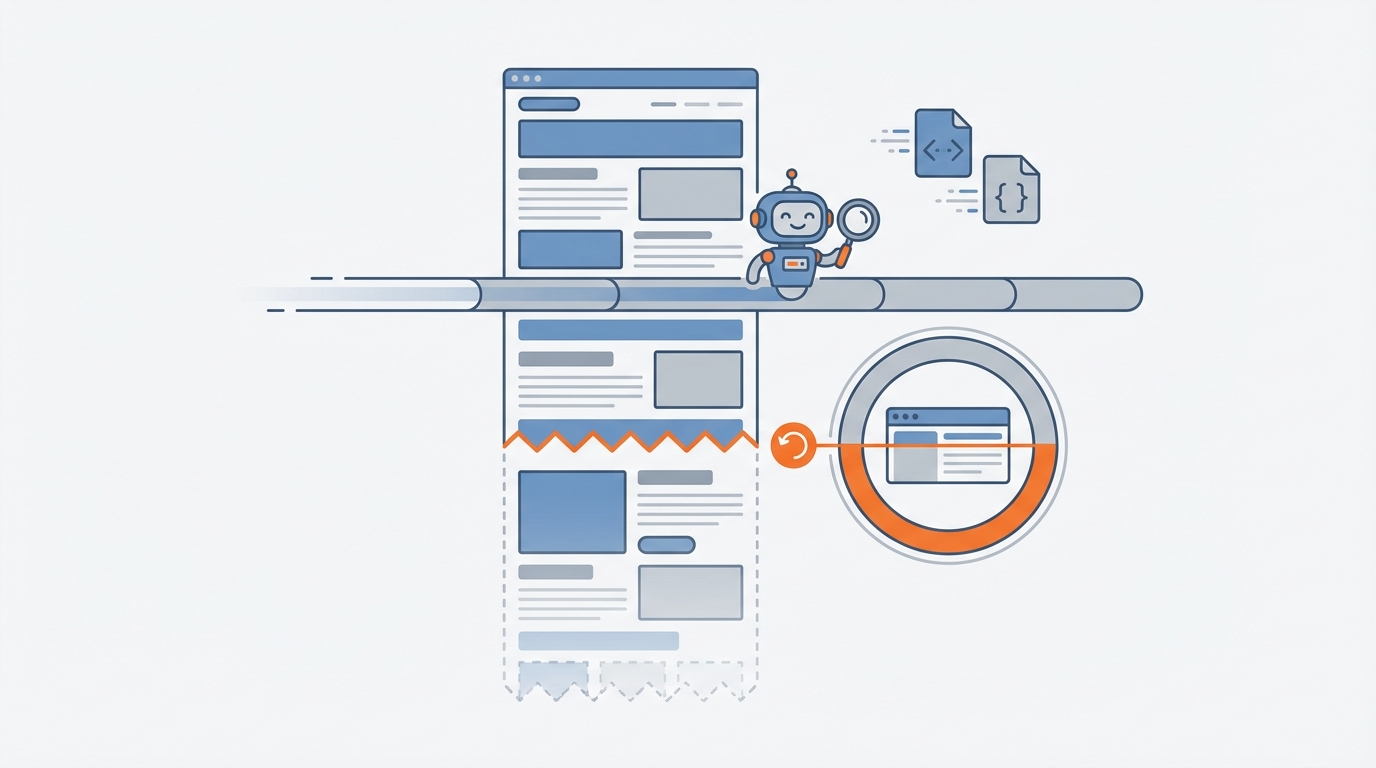
How Google core update and crawl limits change law firm SEO
The March 2026 Google core update and crawl limits force law firms to rethink technical SEO. Because Google combined ranking signal shifts with a strict 2 MB HTML fetch ceiling, indexing behavior will change. Therefore, firms must prioritize what the crawler sees first and reduce nonessential payloads. Expect phased ranking volatility for weeks after rollout. Google recommends waiting at least a full week after rollout completion before interpreting Search Console data. See the rollout guidance at Google Core Update Guidance.
Page size management and payload reduction
- Audit HTML size first. Googlebot stops fetching at 2 MB of HTML. As a result, any HTML beyond that point may not be indexed.
- Reduce header bytes because HTTP request and response headers count toward the limit. Therefore, trim cookie strings, remove redundant redirects, and simplify server response headers.
- Inline only critical CSS and defer noncritical rules. External CSS and JavaScript count separately, but large client-side frameworks still affect perceived weight and render behavior.
- Compress responses and enable Brotli or gzip on the server. This lowers transfer size and helps keep the fetch under the cutoff.
Content prioritization to avoid truncation
- Move critical legal content high in the HTML. Place practice area summaries, core case details, and JSON-LD structured data near the top.
- Split very long single pages into focused sections or paginated series. Because pages have grown nearly three times over the decade, breaking content preserves indexable segments. The 2025 Web Almanac reports a median mobile homepage size of 2,362 KB at 2025 Web Almanac.
- Replace large embedded PDFs with HTML summaries and a lightweight link to the full document. Often, PDFs inflate page weight and reduce crawl efficiency.
Mobile optimization and responsive priorities
- Prioritize mobile-first HTML ordering. Since mobile pages often approach the 2 MB threshold, structure mobile HTML to surface key content early.
- Audit homepage payloads and critical templates. Use lazy-loading for images and defer video embeds.
Handling ranking fluctuations post-update
- Expect waves of change. Core updates roll out over weeks and can appear in waves. Therefore, monitor rankings daily but avoid premature conclusions.
- Wait before deep changes. Google suggests waiting at least a week after rollout finishes before analyzing Search Console performance. Use that window to gather stable signals.
- Use controlled tests. If visibility drops, restore older page versions on a staging environment first. Then test structural changes gradually.
Technical checklist for law firms
- Move JSON-LD and meta data early in the HTML
- Trim response headers and reduce redirects
- Compress and minify HTML, CSS, and JavaScript
- Defer nonessential scripts and lazy-load assets
- Break long case studies into paginated or modular pages
- Monitor indexing with Search Console and server logs
Sources and further reading
- Googlebot size and crawler behavior analysis at DebugBear
- SE Ranking core update analysis and site impact data
By acting now to reduce HTML payloads and prioritize critical legal content, law firms can mitigate truncation risks and protect visibility during the March 2026 core update and crawl limits.
| Year | Google crawl limit (Search) | Typical page size or median value | Notes and implications for law firms |
|---|---|---|---|
| 2016 | No documented 2 MB Search override; broader crawling limits governed platform defaults | Average desktop page weight ~2 000 KB | Pages began growing; law firm sites already adding media and PDFs |
| 2018 | Platform default around 15 MB for many fetches; Search-specific policies not widely publicized | Page weights continued rising as sites added scripts and tracking | Firms using heavy analytics and third-party widgets saw larger payloads |
| 2020 | Centralized crawling platform improvements; no publicized 2 MB Search override | Mobile growth accelerates; responsive images increase weight | Shift toward mobile-first indexing begins to affect crawl priorities |
| 2023 | Google internal crawling platform enforces various limits; Search-specific behaviors refined | Pages larger as JS frameworks proliferate | Law firms adopting JS-heavy templates should audit render paths |
| 2025 | Search-specific adjustments leading toward tighter fetch strategies; groundwork for stricter Search fetch rules | Web Almanac 2025 median mobile homepage size 2,362 KB (source) | Many homepages approach the modern 2 MB threshold; prioritize above-the-fold HTML |
| 2026 (March) | Googlebot for Search enforces a 2 MB HTML fetch limit; 15 MB remains a broader platform default for other use cases | Mobile median still above 2 MB for many sites; page sizes have grown nearly 3x over the decade | Critical: Google stops fetching at 2 MB and passes truncated content to indexing. Law firms must prioritize content, compress payloads, and reduce header bytes |
Summary
This timeline shows a clear divergence: page weights have increased steadily while Search-specific fetch behavior tightened. Therefore, law firms face an elevated risk that critical legal content will be truncated during Googlebot fetches. Audit templates, remove or replace heavy PDFs, and ensure structured data loads early in the HTML to guard against indexing loss.
Conclusion
Adapting to the Google core update and crawl limits is now mandatory for law firms. Because Google combined a fresh core update with stricter crawl behavior, indexing mechanics changed. Law firms that ignore the 2 MB crawl limit and rising page weight risk truncated HTML and lost rankings. Therefore, technical SEO must lead strategy alongside content and outreach.
Key priorities for immediate action
- Audit HTML payload and reduce page weight to avoid the 2 MB fetch cutoff.
- Move JSON-LD and critical legal content high in the HTML to protect indexing.
- Trim HTTP header bytes, remove redundant redirects, and compress responses.
- Break very long pages into focused units and replace bulky PDFs with lightweight HTML summaries.
- Monitor Search Console and server logs, but wait at least a week after rollout peaks before drawing conclusions.
Case Quota helps small and mid-sized law firms adopt advanced, Big Law technical SEO. We implement crawl budget controls, HTML prioritization, and mobile-first optimization. As a result, firms gain stable visibility and compete for market share. Get a technical audit and actionable plan at Case Quota.
Frequently Asked Questions (FAQs)
How does the Google March 2026 core update and crawl limits affect law firm websites?
The update changes both ranking signals and crawl behavior. Because Google enforces a 2 MB HTML fetch limit for Search, overly large pages risk truncated indexing. As a result, structured data, internal links, or case summaries placed late in the HTML may not be seen. For context on page weight trends see the Web Almanac 2025.
What immediate SEO actions should law firms take to avoid content truncation?
First, audit HTML size and server response headers. Then, move critical content and JSON-LD high in the HTML so Googlebot fetches it early. Also compress payloads with Brotli or gzip, trim redirects, and defer nonessential scripts. Finally, replace heavy PDFs with lightweight HTML summaries to reduce page weight.
How should firms prioritize content when a page risks hitting the 2 MB limit?
Prioritize practice area summaries, attorney bios, and core case details above the fold. Therefore, ensure meta tags and structured data appear near the top of the HTML. If a page is long, split it into focused sections or a paginated series to preserve indexable segments. SE Ranking’s analysis shows core updates can cause wide visibility shifts, so act proactively: SE Ranking Analysis.
Will indexing delays or ranking fluctuations happen after the rollout?
Yes. Core updates roll out in waves and can take weeks to finish. As a result, ranking volatility may persist through early April and beyond. Google recommends waiting at least a full week after rollout completion before drawing conclusions from Search Console data.
How do I monitor and validate changes after the update?
Use Search Console for indexing reports and URL Inspection. Also check server logs for fetch byte counts and truncation indicators. For technical debugging of crawler size behavior, see DebugBear’s analysis. Finally, run controlled tests on staging, and monitor organic traffic and rankings daily while avoiding hasty sitewide changes.