
In today’s digital landscape, potential clients searching for legal services overwhelmingly turn to search engines to find attorneys in their local area. When someone types “personal injury lawyer near me” or “divorce attorney in Chicago,” they’re actively seeking legal representation—making local SEO for attorneys one of the most powerful marketing investments a law firm can make.
Local search engine optimization specifically targets geographic-based queries, helping law firms appear prominently when potential clients search for legal services in their city, county, or region. Unlike traditional SEO that competes on a national scale, local SEO focuses on dominating search results within a specific geographic footprint where your firm actually practices law.
This comprehensive guide will walk you through every aspect of local SEO for attorneys, from fundamental Google Business Profile optimization to advanced citation building strategies. You’ll discover how to outrank competitors in local search results, attract more qualified leads, and convert online visibility into actual client consultations. Whether you’re a solo practitioner or managing marketing for a large firm, these proven strategies will help you build a dominant local online presence that drives sustainable business growth.
Understanding Local SEO Fundamentals for Law Firms
Featured Partner
Case Quota: Uses AI to help law firms with digital marketing and market dominance
Case Quota uses AI to help law firms with digital marketing and market dominance.
- It was founded by a former top Los Angeles consultant and aims to help law firms navigate the changing legal marketing landscape by implementing advanced digital strategies
- Onboard quickly with guided setup and white-glove support.
Request a walkthrough in minutes.
Local search operates as a specialized ecosystem where proximity, relevance, and prominence determine which law firms appear when potential clients need legal representation. Understanding these fundamentals helps attorneys develop targeted strategies that capture high-intent local searches and convert online visibility into actual consultations.
The Local Search Ecosystem for Legal Services
The local search ecosystem functions as an interconnected network of signals that Google uses to determine which attorneys deserve prominent placement in location-based queries. When potential clients search for legal services, Google’s algorithm evaluates three primary ranking factors: relevance to the search query, proximity to the searcher’s location, and prominence of the law firm’s online presence. This creates unique opportunities for attorneys to dominate their local markets through strategic optimization.
Legal services face distinct challenges in local search, including strict advertising regulations, intense competition in metropolitan areas, and the critical need to establish trust through online presence. Successful local SEO requires balancing compliance with state bar association rules while maximizing visibility in competitive markets where potential clients make quick decisions about legal representation.
Google’s Local Pack and Map Results
The local pack represents the most valuable real estate in search results, appearing for 46% of all Google searches and receiving click-through rates 300% higher than traditional organic listings. These three prominently displayed business listings appear with integrated maps for searches with local intent, such as “family lawyer near me” or “DUI attorney Phoenix.” Law firms appearing in the local pack capture the majority of local search traffic and phone calls.
Google’s algorithm evaluates hundreds of ranking factors to determine local pack placement, including review quantity and quality, citation consistency, website optimization, and user engagement signals. The local pack algorithm updates frequently, with Google placing increasing emphasis on review velocity, response rates, and mobile user experience metrics that indicate genuine client satisfaction and engagement.
Understanding local pack dynamics helps attorneys prioritize optimization efforts effectively. Recent studies show that the first local pack position receives 44% of clicks, while positions two and three receive 19% and 11% respectively, making top placement crucial for maximizing visibility and lead generation.
Mobile-First Local Search Behavior
Mobile devices account for 68% of local searches for legal services, with users exhibiting fundamentally different behavior patterns that demand mobile-optimized strategies. Mobile searchers often need immediate assistance during stressful situations, leading to higher conversion rates when attorneys optimize for mobile user experience. Click-to-call functionality becomes essential, as 76% of mobile users who search for legal services call within 24 hours.
Google’s mobile-first indexing means that mobile user experience directly impacts local search rankings. Page loading speed, responsive design, and easy-to-access contact information significantly influence both user engagement and search visibility. Law firms that prioritize mobile optimization capture more qualified leads during critical decision-making moments when potential clients need legal representation most urgently.
Mobile local searches demonstrate higher commercial intent, with 82% of mobile searchers ready to take immediate action compared to 61% of desktop users. This creates opportunities for attorneys who optimize their mobile presence to capture clients at the precise moment they decide to seek legal representation.
Google Business Profile Optimization for Attorneys
Your Google Business Profile serves as the digital storefront for your law firm, directly influencing local search rankings and client decision-making. Proper optimization can increase visibility by up to 200% while providing essential information that converts searches into consultations.
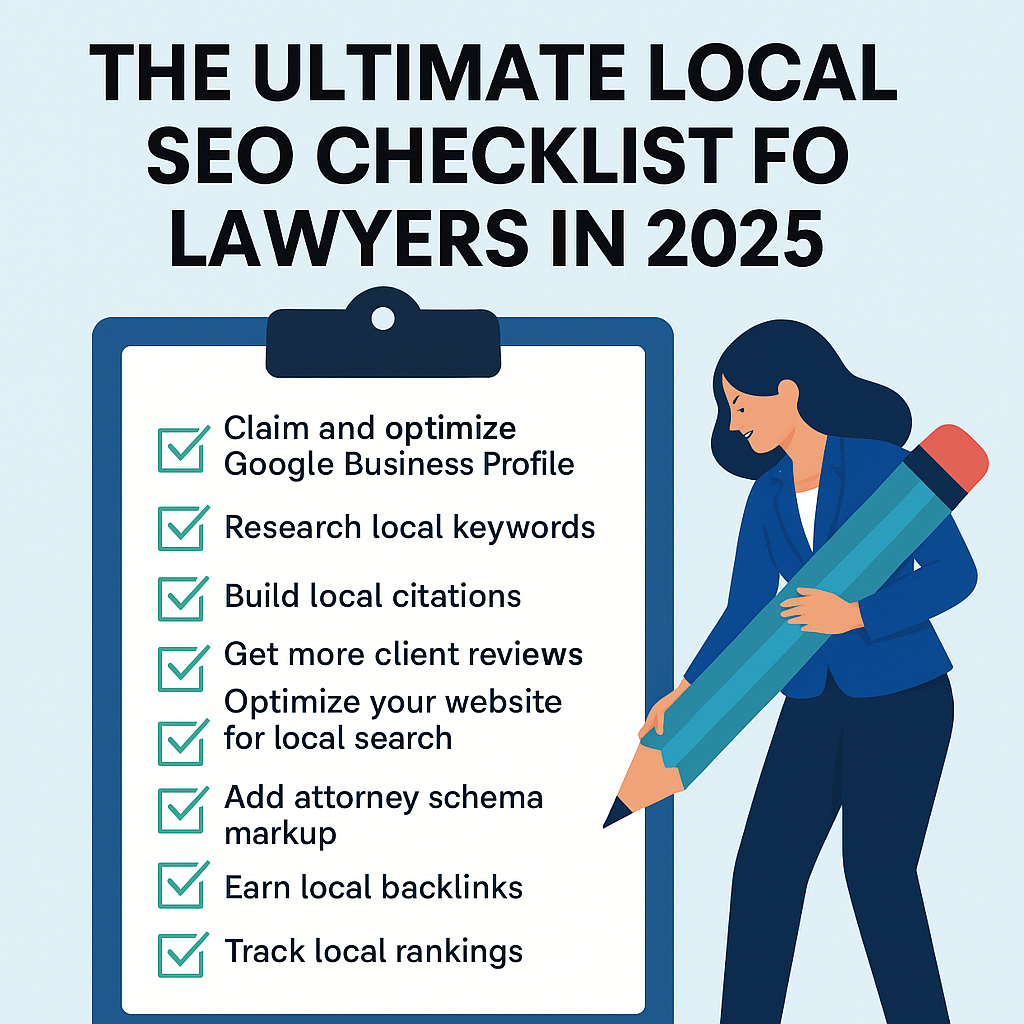
Complete Profile Setup and Verification
A fully optimized Google Business Profile establishes credibility and unlocks advanced features that significantly enhance local search visibility. The verification process validates your business legitimacy and enables features like messaging, appointment booking, and detailed analytics that help track local search performance. Verified profiles receive 70% more views than unverified listings, making verification essential for competitive advantage.
Start by claiming your profile and completing every available field with accurate, detailed information. Include your firm’s exact legal name as registered with state authorities, complete address with suite numbers, primary phone number, and professional website URL. Consistency across all platforms is crucial—even minor discrepancies in NAP (Name, Address, Phone) information can negatively impact local search rankings by up to 15%.
Choose the most specific business categories available for your practice areas. Primary categories like “Personal Injury Attorney” or “Family Law Attorney” carry more algorithmic weight than generic “Attorney” classifications. Add secondary categories to cover additional practice areas, but maintain focus on primary specializations to avoid diluting local search relevance and confusing potential clients about your expertise.
Strategic Keyword Integration in Business Descriptions
Your Google Business Profile description provides 750 characters of valuable real estate for incorporating location-specific keywords while maintaining natural, client-focused language. Craft descriptions that clearly communicate your practice areas, geographic service area, and unique value propositions while naturally including local SEO keywords that align with common search queries. Effective descriptions can increase click-through rates by up to 35%.
Avoid keyword stuffing in favor of informative, compelling descriptions that help potential clients understand how your firm addresses their legal needs. Include specific neighborhoods, cities, or regions you serve, along with practice area keywords that match how clients actually search for legal services. Research shows that 89% of clients use location-specific terms when searching for attorneys.
The description should read naturally while strategically incorporating terms like “experienced [city] divorce attorney” or “trusted personal injury lawyer serving [region].” This approach helps Google understand your geographic relevance while providing valuable information to potential clients evaluating your services during their decision-making process.
Professional Photo and Video Content Strategy
Visual content significantly impacts local search performance and client trust, with businesses including professional photos receiving 42% more requests for directions and 35% more website clicks. High-quality, professional imagery helps law firms differentiate themselves in competitive local search results while building credibility that influences client decision-making. Google prioritizes businesses with complete visual profiles in local search rankings.
Upload diverse photos showcasing your office exterior and interior, professional headshots of attorneys, team photos, and images that convey professionalism and trustworthiness. Include photos of your building’s entrance, parking areas, and reception space to help clients easily locate and access your office. Interior photos should highlight professional meeting spaces and comfortable client areas that demonstrate your commitment to client service.
Video content, particularly attorney introduction videos or office tour content, can significantly enhance engagement and trust-building. Short, professional videos that introduce your team and explain your approach to client service help differentiate your firm from competitors while improving local search visibility through increased engagement metrics and longer profile viewing times.
Review Management and Response Strategies
Online reviews directly impact local search rankings and client decision-making, with 88% of consumers trusting online reviews as much as personal recommendations. Proactive review management involves encouraging satisfied clients to leave reviews while professionally responding to all feedback within 24-48 hours. Law firms with consistent review management see 23% higher local search rankings compared to those that ignore review engagement.
| Review Platform | Impact on Local SEO | Best Practices | Response Time |
|---|---|---|---|
| Google Reviews | Highest impact on local pack rankings | Focus on quantity and recency | Within 24 hours |
| Avvo | Legal-specific authority signals | Maintain complete profile | Within 48 hours |
| Yelp | Secondary ranking factor | Encourage organic reviews | Within 72 hours |
| Social signals and engagement | Integrate with social strategy | Within 24 hours |
Develop systematic approaches to requesting reviews from satisfied clients while remaining compliant with state bar regulations regarding client solicitation. Many states have specific rules about how attorneys can request reviews, so ensure your review generation strategies align with professional conduct requirements and avoid potential disciplinary issues.
Local Citation Building and NAP Consistency
Citation building forms the backbone of local SEO for attorneys, with consistent business information across authoritative directories serving as trust signals that improve search rankings by up to 25%. Strategic citation management requires understanding which platforms provide the most value and maintaining absolute consistency across all listings.
Understanding Citation Authority and Trust Signals
Local citations function as digital trust signals that help search engines verify your business legitimacy and local relevance through consistent mentions across authoritative platforms. High-quality citations from established legal directories, local business listings, and industry-specific platforms contribute significantly to local search rankings. Google’s algorithm weighs citation quality more heavily than quantity, making strategic platform selection crucial for optimization success.
Citation authority varies dramatically between platforms, with established legal directories like Avvo, Martindale-Hubbell, and FindLaw carrying substantially more algorithmic weight than generic business directories. Focus on securing citations from platforms that potential clients actually use when researching attorneys, rather than pursuing quantity over quality. Research indicates that 20 high-authority citations outperform 100 low-quality listings.
The consistency of citation information across all platforms directly impacts local search authority. Even minor discrepancies in business name formatting, address abbreviations, or phone number presentation can confuse search engines and weaken local search performance by up to 18%. Maintain detailed records of all citations to ensure consistency and regularly audit existing listings for accuracy.
Strategic Directory Selection for Law Firms
Not all directories provide equal value for attorney local SEO, making strategic selection essential for maximizing time investment and achieving measurable results. Prioritize legal-specific directories, major local business platforms, and industry associations that offer high-authority backlinks and genuine client referral potential. Strategic directory selection can improve local search visibility by 40% compared to random citation building approaches.
Start with major platforms like Google Business Profile, Bing Places, Apple Maps, and Yelp before expanding to legal-specific directories. These foundational platforms provide the highest impact on local search rankings and reach the largest audiences of potential clients. State and local bar association directories provide valuable authority signals while demonstrating professional credentials and compliance with licensing requirements.
Consider directories that serve your specific practice areas, such as personal injury attorney networks, family law associations, or criminal defense platforms. These specialized citations provide targeted visibility to clients specifically seeking your areas of expertise while building topical authority in local search results that helps Google understand your specializations and match you with relevant searches.
Managing Multi-Location Citation Strategies
Law firms with multiple office locations face unique citation management challenges that require systematic approaches to maintain consistency while avoiding duplicate content penalties. Each location needs individual citation profiles that accurately reflect specific addresses, phone numbers, and service areas. Proper multi-location management can increase local search visibility by 65% across all office locations when executed correctly.
Develop location-specific landing pages for each office, incorporating unique content about local community involvement, regional legal expertise, and location-specific practice area focus. This approach helps search engines understand the distinct value proposition of each office while supporting local search optimization for multiple markets without triggering duplicate content issues.
Use consistent naming conventions across all locations while clearly differentiating between offices through location identifiers. For example, “Smith Law Firm – Downtown” and “Smith Law Firm – Westside” provide clarity for both search engines and potential clients while maintaining brand consistency and avoiding confusion in local search results.
Citation Audit and Cleanup Processes
Regular citation audits identify inconsistencies, duplicate listings, and optimization opportunities across your local SEO citation profile while maintaining data quality that supports strong search rankings. Systematic auditing helps maintain citation quality while identifying platforms where your firm should establish new presence. Monthly audits can prevent citation decay that negatively impacts local search performance over time.
Begin audits by searching for your firm name across major search engines and directory platforms to identify existing citations and spot inconsistencies. Document all findings in spreadsheets that track platform names, URLs, NAP information, and accuracy status. This systematic approach helps prioritize cleanup efforts and track improvement progress over time.
Address duplicate listings immediately, as they can confuse search engines and dilute local search authority. Contact platforms directly to merge or remove duplicate profiles, providing documentation of business legitimacy when necessary. Clean citation profiles typically see 15-30% improvements in local search rankings within 60-90 days of optimization completion.
width: 100%; border-collapse: collapse; margin: 20px 0;”>
Citation Audit Element
Frequency
Tools Required
Priority Level
NAP Consistency Check
Monthly
BrightLocal, Moz Local
High
Duplicate Listing Detection
Quarterly
Google Search, Manual Review
High
New Citation Opportunities
Bi-annually
Competitor Analysis Tools
Medium
Broken Link Identification
Quarterly
Screaming Frog, Ahrefs
Medium
Create comprehensive spreadsheets documenting all existing citations, including platform names, URLs, NAP information, and last update dates. This documentation serves as your master reference for maintaining consistency and identifying platforms requiring updates when business information changes.
Monitor competitor citation profiles to identify valuable directories where your firm should establish presence. Tools like BrightLocal or Moz Local can automate much of this monitoring while providing actionable insights for citation strategy improvement.
On-Page SEO for Attorney Websites
Local on-page optimization for attorney websites requires balancing technical SEO best practices with location-specific content that demonstrates geographic relevance and legal expertise. This approach helps law firms rank for both broad practice area terms and location-specific queries that drive qualified local traffic.

Location-Specific Landing Page Development
Creating dedicated landing pages for each geographic market you serve establishes topical authority while targeting location-specific search queries effectively. These pages should provide unique value beyond simply inserting city names into template content, offering genuine insights about local legal landscapes, court systems, and community-specific legal needs.
Develop comprehensive location pages that include local market statistics, information about nearby courts, relevant local laws or regulations, and community involvement details. For example, a personal injury attorney serving multiple cities should create unique content addressing each area’s traffic patterns, accident statistics, and local hospital information that demonstrates genuine local expertise.
Include location-specific schema markup to help search engines understand geographic relevance. Local business schema, service area markup, and breadcrumb structured data provide clear signals about your firm’s geographic focus while improving search result appearance through rich snippets.
Practice Area and Geographic Keyword Integration
Strategic keyword integration combines practice area expertise with geographic modifiers to capture high-intent local search traffic. Focus on natural integration of terms like “Chicago divorce attorney” or “Denver personal injury lawyer” within contextually relevant content that provides genuine value to potential clients.
Research long-tail keyword variations that include neighborhood names, nearby landmarks, or regional terminology that local residents commonly use. Tools like Google Keyword Planner and SEMrush reveal search volume data for location-specific legal terms, helping prioritize optimization efforts for queries with commercial intent.
Create content clusters around practice areas and locations, with pillar pages covering broad topics like “family law” and supporting pages targeting specific services like “child custody modification in [city].” This approach builds topical authority while capturing traffic across the entire client journey from initial research to specific service needs.
Technical SEO Elements for Local Visibility
Page loading speed directly impacts local search rankings, with mobile page speed particularly crucial since 60% of legal service searches occur on mobile devices. Optimize images, minimize code, and leverage content delivery networks to achieve loading times under three seconds for optimal user experience and search performance.
Implement proper heading structure with H1 tags containing primary location and practice area keywords, followed by H2 and H3 tags that incorporate semantic variations and related terms. This hierarchical structure helps search engines understand page content while improving accessibility for users with screen readers.
Ensure mobile responsiveness goes beyond basic functionality to provide exceptional user experience on smaller screens. Click-to-call buttons, simplified navigation, and easily accessible contact forms reduce friction for mobile users ready to contact your firm immediately after finding your website.
Internal Linking Strategies for Local Authority
Strategic internal linking distributes page authority while guiding users through relevant content paths that demonstrate comprehensive legal expertise. Link location-specific pages to related practice area content, creating logical pathways that keep users engaged while building topical relevance signals.
Create hub pages for major practice areas that link to location-specific service pages, case studies, and related blog content. For example, a personal injury hub page should link to city-specific personal injury pages, relevant case results, and informational content about injury types or legal processes.
Use descriptive anchor text that includes location and practice area keywords naturally within contextual sentences. Avoid over-optimization by varying anchor text while maintaining relevance to linked content. This approach builds internal link equity while providing clear navigation paths for users seeking specific information.
Content Marketing for Local Legal Authority
Content marketing establishes law firms as trusted local authorities while providing valuable resources that attract potential clients during their research phase. Strategic content creation addresses common legal questions, explains complex processes, and demonstrates expertise in ways that build trust and encourage consultation requests.
Local Legal News and Commentary
Publishing timely commentary on local legal developments positions your firm as a go-to resource for media, referral sources, and potential clients seeking current legal insights. Monitor local court decisions, legislative changes, and community legal issues that impact your practice areas, then provide expert analysis that demonstrates deep understanding of local legal landscapes.
Develop relationships with local journalists and bloggers who cover legal topics, offering expert commentary on breaking news or trending legal issues. These relationships often result in media mentions, backlinks, and increased visibility within your local market while establishing credibility as a legal expert.
Create monthly roundups of significant local legal news with your firm’s perspective on implications for residents or businesses. This content provides ongoing value while incorporating location-specific keywords naturally within informative, expert-level analysis that search engines recognize as authoritative content.
Community-Focused Content Creation
Creating content that addresses local community concerns demonstrates genuine investment in your market while targeting location-specific search queries. Write about local business legal requirements, community event legal considerations, or neighborhood-specific legal issues that residents commonly face.
Partner with local organizations, chambers of commerce, or community groups to create educational content addressing their members’ legal needs. These partnerships often result in speaking opportunities, referral relationships, and content distribution through established community networks that extend your firm’s reach.
Develop seasonal content addressing legal issues that coincide with local events, weather patterns, or economic cycles. For example, ski resort towns might need content about premises liability during winter sports season, while agricultural areas require information about seasonal worker legal protections.
Educational Resource Development
Comprehensive legal guides and resources attract potential clients while demonstrating expertise through helpful, actionable information. Create downloadable guides, checklists, and templates that address common legal processes within your practice areas and geographic market.
| Content Type | SEO Impact | Client Value | Production Time |
|---|---|---|---|
| Legal Process Guides | High – Long-tail keywords | Very High – Actionable info | 4-6 hours |
| Local Court Directories | Medium – Location keywords | High – Practical utility | 2-3 hours |
| FAQ Collections | High – Question-based queries | Medium – Quick answers | 3-4 hours |
| Video Explanations | Very High – Engagement signals | Very High – Personal connection | 6-8 hours |
Optimize educational resources for local search by including location-specific examples, references to local courts or agencies, and region-specific legal requirements. This approach provides genuine value while naturally incorporating geographic keywords that improve local search visibility.
Gate premium resources behind contact forms to capture lead information while providing immediate value. Ensure gated content provides sufficient value to justify the information exchange, building trust while generating qualified leads for your firm.
Advanced Local SEO Strategies for Law Firms
Advanced local SEO techniques help established law firms maintain competitive advantages while newer practices accelerate their local search visibility. These strategies require deeper technical knowledge and ongoing optimization but deliver significant results for firms committed to dominating local search results.

Schema Markup Implementation for Legal Services
Structured data markup helps search engines understand your legal services while enabling rich snippets that improve click-through rates from search results. Legal-specific schema types include Attorney, LegalService, and LocalBusiness markup that provide detailed information about your practice areas, credentials, and service offerings.
Implement comprehensive schema markup including practice area specializations, attorney credentials, office locations, and service area coverage. This structured data helps search engines display enhanced search results with star ratings, business hours, and direct contact information that increases visibility and click-through rates.
Use JSON-LD format for schema implementation, as it’s Google’s preferred method and easier to maintain than microdata alternatives. Tools like Google’s Structured Data Testing Tool verify proper implementation while identifying opportunities for additional markup that could improve search result appearance.
Hyperlocal Content Optimization
Hyperlocal content targets extremely specific geographic areas, neighborhoods, or communities within your broader service area to capture highly targeted search traffic. This approach works particularly well for law firms serving large metropolitan areas where competition for city-wide terms is intense.
Create neighborhood-specific content addressing local legal issues, community concerns, or area-specific regulations that demonstrate intimate knowledge of hyperlocal markets. For example, content about zoning issues in specific neighborhoods or traffic enforcement patterns on particular streets shows genuine local expertise.
Develop content around local landmarks, schools, businesses, or community organizations that residents commonly search for alongside legal terms. This approach captures search traffic from queries like “divorce attorney near [landmark]” or “personal injury lawyer [neighborhood name]” that indicate strong local intent.
Competitive Gap Analysis and Opportunity Identification
Systematic competitor analysis reveals local SEO opportunities where your firm can gain competitive advantages through strategic optimization efforts. Analyze top-ranking competitors’ citation profiles, content strategies, and technical implementations to identify gaps your firm can exploit.
Use tools like SEMrush or Ahrefs to identify keywords where competitors rank but your firm doesn’t appear, focusing on location-specific terms with commercial intent. These keyword gaps represent immediate opportunities for content creation and optimization that can capture market share from established competitors.
Monitor competitors’ Google Business Profile activities, review response strategies, and content publication schedules to identify areas where your firm can provide superior user experience or more comprehensive information. Consistent execution in areas where competitors are inconsistent often yields significant local search improvements.
This comprehensive approach to local SEO for attorneys creates sustainable competitive advantages while building the online authority necessary to attract and convert high-value legal clients in your local market.
width: 100%; border-collapse: collapse; margin: 20px 0;”>
Audit Component
Frequency
Key Metrics
Action Items
NAP Consistency Check
Monthly
Citation accuracy percentage
Correct inconsistencies immediately
Duplicate Listing Detection
Quarterly
Number of duplicate profiles
Merge or remove duplicates
New Citation Opportunities
Bi-annually
Authority score of new platforms
Prioritize high-authority submissions
Competitor Citation Analysis
Annually
Citation gap analysis
Target competitor citation sources
Create comprehensive spreadsheets tracking all citations with platform names, URLs, submission dates, and current status. This systematic approach ensures no citations fall through the cracks while maintaining organized records for future reference and updates.
Use tools like BrightLocal, Whitespark, or Moz Local to streamline citation discovery and management processes. These platforms can identify citation opportunities, track submission status, and monitor for new duplicate listings that may appear over time.
Advanced Local SEO Strategies for Competitive Markets
Hyperlocal Content Development
Creating neighborhood-specific content helps law firms dominate local search results in competitive metropolitan markets. Develop dedicated pages for specific neighborhoods, suburbs, or districts within your service area, incorporating local landmarks, community events, and area-specific legal concerns.
Research local search trends using Google Keyword Planner and Google Trends to identify neighborhood-specific search patterns. Terms like “downtown Phoenix DUI lawyer” or “Westside family attorney” often have lower competition than city-wide keywords while attracting highly targeted traffic from specific geographic areas.
Incorporate local news, community involvement, and area-specific case studies into your content strategy. This approach demonstrates genuine community connection while providing search engines with location-specific relevance signals that improve local search rankings.
Schema Markup Implementation for Legal Services
Structured data markup helps search engines understand your law firm’s services, location, and credentials more effectively. Implement LocalBusiness schema, LegalService schema, and Attorney schema markup to enhance search result appearance and improve local search visibility.
Legal-specific schema markup includes elements like bar admissions, practice areas, years of experience, and client review aggregations. This structured data can trigger rich snippets in search results, displaying additional information that helps your firm stand out from competitors.
Professional Services schema allows you to specify service areas, consultation types, and specialization details that align with local search queries. Proper implementation can improve click-through rates by 20-30% while providing search engines with detailed information about your legal services and geographic coverage.
Local Link Building for Attorney Websites
Building relationships with local organizations, news outlets, and community groups creates valuable backlink opportunities that boost local search authority. Focus on earning links from local chambers of commerce, bar associations, community organizations, and local media publications.
Sponsor local events, participate in community legal clinics, or provide expert commentary on local legal issues to earn natural backlinks from authoritative local sources. These links carry significant weight for local SEO while demonstrating community involvement that builds trust with potential clients.
Guest posting on local business blogs, contributing to community newsletters, and participating in local podcast interviews creates link-building opportunities while establishing thought leadership in your geographic market. Prioritize quality over quantity, focusing on links from sources that potential clients actually read and trust.
Competitive Analysis and Market Positioning
Understanding competitor local SEO strategies reveals opportunities for differentiation and market advantage. Analyze top-ranking competitors’ Google Business Profiles, citation portfolios, content strategies, and review management approaches to identify gaps in your local SEO efforts.
Use tools like SEMrush, Ahrefs, or BrightLocal to analyze competitor local search performance, identifying keywords they rank for, citation sources they utilize, and content topics that drive engagement. This intelligence informs strategic decisions about where to focus optimization efforts for maximum impact.
Monitor competitor review patterns, response strategies, and client engagement tactics to identify opportunities for superior customer service and communication. Often, providing better client experiences and more responsive communication can overcome technical SEO disadvantages in local search results.
Measuring and Tracking Local SEO Performance
Key Performance Indicators for Legal Marketing

Tracking the right metrics ensures local SEO efforts translate into measurable business growth for law firms. Focus on metrics that directly correlate with client acquisition: local search rankings, Google Business Profile views, website traffic from local searches, and consultation requests from online sources.
Monitor local pack rankings for your primary practice area keywords across all target geographic markets. Track position changes over time while correlating ranking improvements with increases in phone calls, contact form submissions, and new client consultations.
Measure the quality of local search traffic by analyzing conversion rates from different local search sources. Traffic from Google Business Profile clicks often converts at higher rates than general organic traffic, making it essential to track these sources separately in analytics platforms.
Google Analytics and Search Console Configuration
Proper analytics configuration provides detailed insights into local search performance and user behavior patterns. Set up location-based segments in Google Analytics to track visitors from your target geographic markets, identifying which areas generate the most qualified traffic and conversions.
Configure Google Search Console to monitor local search query performance, identifying which location-based keywords drive traffic to your website. This data reveals opportunities to optimize existing content or create new location-specific pages that address common local search queries.
Use UTM parameters to track traffic from different local directories and citation sources, measuring which platforms generate the most valuable referral traffic. This data helps prioritize citation building efforts and identify the most effective local marketing channels for your practice areas.
ROI Calculation for Local SEO Investments
Measuring return on investment demonstrates the business value of local SEO efforts and guides future marketing budget allocation. Calculate the average lifetime value of clients acquired through local search channels, comparing this against local SEO investment costs to determine profitability.
| Metric | Tracking Method | Frequency | Success Benchmark |
|---|---|---|---|
| Local Pack Rankings | BrightLocal or manual tracking | Weekly | Top 3 positions for primary keywords |
| Google Business Profile Views | Google Business Profile Insights | Monthly | 20% month-over-month growth |
| Local Organic Traffic | Google Analytics 4 | Monthly | 15% quarterly increase |
| Phone Call Conversions | Call tracking software | Daily | 5-10% conversion rate improvement |
Track the cost per acquisition for clients gained through local SEO compared to other marketing channels like pay-per-click advertising or traditional media. Local SEO often provides lower cost per acquisition over time, though initial investment may require 6-12 months to show significant returns.
Document case studies of successful client acquisitions that originated from local search visibility, including the search terms used, touchpoints in the conversion process, and ultimate case value. These stories help justify continued local SEO investment while identifying the most effective optimization strategies.
FAQ
Q: How long does it take to see results from local SEO for attorneys?
Most law firms begin seeing local search improvements within 3-6 months of implementing comprehensive local SEO strategies. Initial gains often appear in Google Business Profile visibility and local citation consistency, while significant local pack rankings typically require 6-12 months of sustained effort depending on market competition.
Q: What’s the most important factor for attorney local SEO success?
Google Business Profile optimization combined with consistent NAP information across all online platforms provides the foundation for local SEO success. Reviews, citations, and location-specific content build upon this foundation, but without accurate, complete business profile information, other efforts won’t reach their full potential.
Q: How many Google reviews does a law firm need for good local rankings?
While there’s no magic number, law firms typically need 50+ Google reviews to compete effectively in most markets. However, review velocity and recency matter more than total count—consistently earning 2-4 new reviews monthly signals ongoing client satisfaction and business activity to search engines.
Q: Should attorneys focus on city-wide or neighborhood-specific local SEO?
The optimal approach depends on market size and competition levels. In large metropolitan areas, neighborhood-specific targeting often provides better ROI with less competition. Smaller cities may require city-wide optimization to capture sufficient search volume for business growth.
Q: What’s the biggest local SEO mistake attorneys make?
Inconsistent NAP information across online platforms creates the most significant problems for attorney local SEO. Even minor variations in business name formatting, address abbreviations, or phone number presentation can confuse search engines and weaken local search authority significantly.
Q: How much should law firms budget for local SEO services?
Most successful law firms invest $2,000-$5,000 monthly in comprehensive local SEO services, including citation management, content creation, and review management. Solo practitioners might start with $1,000-$2,000 monthly, while large firms in competitive markets may invest $10,000+ monthly for multiple locations.
Q: Do attorneys need separate websites for multiple office locations?
Individual websites for each location aren’t necessary and can dilute domain authority. Instead, create dedicated location pages on your main website with unique content for each office, including specific address information, local phone numbers, and area-specific practice focus.
Q: How important are legal directory citations compared to general business directories?
Legal-specific directories like Avvo, Martindale-Hubbell, and FindLaw carry significantly more weight for attorney local SEO than general business directories. These platforms provide industry-specific authority signals while connecting with potential clients actively seeking legal representation.
Q: What local SEO strategies work best for personal injury attorneys?
Personal injury attorneys benefit from hyperlocal content targeting accident-prone areas, partnerships with local medical providers, and optimization for emergency-related search queries. Mobile optimization is crucial since many potential clients search immediately after accidents occur.
Q: How do bar association rules affect attorney local SEO strategies?
State bar regulations regarding advertising and solicitation apply to online marketing, including review requests and content creation. Always ensure local SEO strategies comply with your jurisdiction’s professional conduct rules, particularly regarding client testimonials and case result advertising.
Q: When is the best time to start local SEO for a new law practice?
Begin local SEO efforts immediately upon opening your practice, starting with Google Business Profile setup and basic citation building. Early optimization establishes online presence before competitors notice your market entry and provides time for search engines to recognize your local authority.
Q: How can attorneys measure local SEO ROI effectively?
Track phone calls from local search sources using call tracking numbers, monitor consultation requests from location-specific landing pages, and calculate the lifetime value of clients acquired through local search channels. Compare these revenues against local SEO investment costs for accurate ROI measurement.
Conclusion
Local SEO for attorneys represents one of the most powerful and cost-effective marketing strategies available to law firms seeking sustainable client acquisition in their geographic markets. The strategies outlined in this comprehensive guide provide a roadmap for dominating local search results, from fundamental Google Business Profile optimization to advanced competitive analysis techniques that drive measurable business growth.
The key takeaways for implementing successful local SEO strategies include:
- Prioritize Google Business Profile completeness and accuracy as the foundation for all local search success
- Maintain strict NAP consistency across all online platforms to build search engine trust and authority
- Focus on earning high-quality reviews from satisfied clients while professionally managing your online reputation
- Develop hyperlocal content targeting specific neighborhoods and communities within your service area to capture targeted traffic with lower competition
The future of local SEO continues evolving toward mobile-first experiences, voice search optimization, and increasingly sophisticated user intent recognition. Law firms that invest in comprehensive local SEO strategies today position themselves to capture growing mobile search traffic while building sustainable competitive advantages in their local markets.
Partner with Case Quota for Success
Implementing the comprehensive local SEO strategies discussed in this guide—from Google Business Profile optimization and citation building to advanced schema markup and competitive analysis—requires significant expertise, time, and ongoing attention to detail that many law firms struggle to manage alongside their legal practice responsibilities.
Case Quota specializes in helping attorneys navigate the complexities of local search optimization, handling everything from technical Google Business Profile setup and NAP consistency management to strategic citation building and review management systems. Our team understands the unique challenges law firms face with bar association compliance, competitive local markets, and the need to convert online visibility into actual client consultations.
We provide comprehensive local SEO services specifically designed for attorneys, including hyperlocal content development, legal directory optimization, and performance tracking systems that demonstrate clear ROI on your marketing investment. Visit https://casequota.com to discover how our specialized local SEO expertise can help your law firm dominate local search results and attract more qualified clients in your geographic market.