
Discover proven SEO strategies specifically designed for law firms to dominate local search results, attract qualified clients, and build a thriving legal practice in today’s competitive digital landscape.

Introduction
Featured Partner
Case Quota: Uses AI to help law firms with digital marketing and market dominance
Case Quota uses AI to help law firms with digital marketing and market dominance.
- It was founded by a former top Los Angeles consultant and aims to help law firms navigate the changing legal marketing landscape by implementing advanced digital strategies
- Onboard quickly with guided setup and white-glove support.
Request a walkthrough in minutes.
In today’s digital-first world, potential clients aren’t flipping through phone books to find legal representation—they’re turning to Google. When someone faces a legal challenge, whether it’s a personal injury case, divorce proceedings, or business litigation, their first instinct is to search online for “lawyer near me” or specific legal services. This shift in consumer behavior has made search engine optimization (SEO) not just beneficial for law firms, but absolutely essential for survival and growth.
The legal industry is one of the most competitive sectors online, with lawyers spending billions of dollars annually on digital marketing. However, many law firms struggle to achieve meaningful results from their SEO efforts, often because they’re applying generic marketing strategies rather than tactics specifically designed for the unique challenges and opportunities within the legal sector.
Effective SEO for a lawyer goes far beyond simply stuffing keywords into website content. It requires a deep understanding of legal ethics, local search dynamics, client behavior patterns, and the complex regulatory environment that governs legal advertising. Successful legal SEO combines technical optimization, content strategy, reputation management, and local visibility to create a comprehensive approach that drives qualified leads and builds long-term practice growth.
This comprehensive guide will walk you through every aspect of implementing a successful SEO strategy for your law firm. You’ll learn how to optimize your website for search engines while maintaining compliance with legal advertising rules, develop content that establishes your expertise and attracts potential clients, dominate local search results, and measure the return on investment from your SEO efforts. Whether you’re a solo practitioner just starting out or part of a large firm looking to enhance your digital presence, these strategies will help you build a sustainable competitive advantage in the digital marketplace.
Understanding the Legal SEO Landscape
The legal industry presents unique challenges and opportunities that distinguish it from other sectors when it comes to search engine optimization. Understanding these distinctive characteristics is crucial for developing effective SEO strategies that comply with professional regulations while delivering measurable results for your practice.
The Unique Challenges of Legal Marketing
Legal advertising operates under strict regulatory frameworks that significantly impact SEO strategies. State bar associations impose detailed rules governing how lawyers can market their services, make claims about success rates, and communicate with potential clients. These regulations vary dramatically from state to state, creating a complex compliance landscape. For example, Florida prohibits lawyers from using terms like “specialist” without proper certification, while California has specific rules about client testimonials and case results.
Competition in legal SEO reaches extraordinary levels, particularly in high-value practice areas like personal injury, medical malpractice, and corporate law. The average cost-per-click for legal keywords often exceeds $100, with some competitive terms reaching $500 or more. This intense competition makes organic search visibility exponentially more valuable, as ranking organically can save firms thousands of dollars monthly in advertising costs while building greater credibility with potential clients.
Trust and credibility requirements in legal services far exceed those of typical businesses. Potential clients facing legal issues are often dealing with life-changing situations involving significant financial stakes, family matters, or even their freedom. This heightened need for trust significantly impacts SEO strategy, requiring law firms to invest heavily in reputation management, detailed attorney biographies, case studies, and social proof elements that demonstrate competence and reliability.
How Search Behavior Differs for Legal Services
Legal searches are characterized by high emotional intensity and urgent decision-making timelines. Unlike someone casually shopping for products, people seeking legal services are often in crisis situations requiring immediate solutions. This urgency creates opportunities for law firms that can provide quick, helpful responses through optimized content and fast-loading websites. Studies show that 67% of legal services searches occur outside normal business hours, emphasizing the importance of 24/7 accessibility.
The research process for legal services typically spans weeks or months, involving extensive comparison shopping and multiple touchpoints. Potential clients read dozens of articles, compare attorney profiles, seek recommendations, and often visit multiple websites before making contact. This extended research phase means law firms need comprehensive content strategies that serve potential clients throughout their entire decision-making journey, from initial problem awareness to final attorney selection.
Local search intent dominates legal queries, with 78% of legal searches including location-specific terms like “near me” or city names. This strong local preference creates significant opportunities for law firms that effectively optimize for local search terms and establish robust local search presence across Google My Business, legal directories, and review platforms.
The ROI Potential of Legal SEO
When implemented correctly, legal SEO delivers exceptional return on investment due to high case values and long-term compounding effects. Legal services typically involve transactions worth thousands to millions of dollars, depending on practice area. A single personal injury case might generate $100,000 in fees, while corporate transactions can reach millions. This high value per client means that even modest improvements in search rankings can translate to substantial revenue increases.
Unlike paid advertising that stops generating results when spending ceases, SEO builds cumulative value over time. A well-optimized legal website can continue attracting new clients for years after initial optimization work. Law firms that invested in comprehensive SEO strategies five years ago often see 300-500% increases in organic traffic, with many generating millions in additional revenue from improved search visibility.
The credibility boost from strong organic rankings proves particularly valuable in legal marketing. Research indicates that 75% of potential clients view firms appearing at the top of organic search results as more established and trustworthy than those only appearing in paid advertisements. This perception significantly impacts conversion rates, with organic traffic typically converting 2-3 times higher than paid traffic for legal services.
Keyword Research and Strategy for Law Firms
Effective keyword research forms the foundation of successful legal SEO, requiring specialized approaches that account for legal industry dynamics, client behavior patterns, and competitive landscapes. Unlike other industries where broad keywords might suffice, legal SEO demands precise targeting of high-intent phrases that connect with potential clients at crucial decision-making moments.

Identifying High-Value Legal Keywords
High-value legal keywords combine commercial intent, reasonable competition levels, and compliance with advertising regulations. The most valuable keywords typically fall into specific categories: practice area terms like “personal injury lawyer,” location-specific phrases such as “Chicago divorce attorney,” and problem-focused queries like “what to do after a car accident.” Each category serves different stages of the client acquisition funnel and requires tailored optimization approaches.
Long-tail keywords prove especially valuable for law firms because they indicate specific legal problems requiring professional assistance. Instead of targeting broad terms like “lawyer” with massive competition, successful firms focus on phrases like “wrongful death attorney in [city]” or “business litigation lawyer near me.” These longer phrases may show lower search volumes but attract significantly more qualified prospects who are closer to making hiring decisions, often converting at rates 40-60% higher than broad keywords.
Seasonal trends significantly impact legal keyword strategy, with predictable patterns across different practice areas. DUI-related searches spike 200% during holiday seasons and major sporting events, divorce queries increase 150% in January and March, and personal injury searches correlate strongly with weather patterns and seasonal activities. Understanding these cycles allows law firms to adjust content calendars and SEO focus to capitalize on predictable demand fluctuations.
Competitive Keyword Analysis
Analyzing competitor keyword strategies reveals immediate opportunities and helps identify market gaps worth pursuing. Tools like SEMrush, Ahrefs, and Moz can uncover which keywords competitors rank for, their estimated traffic volumes, and the specific content driving their success. Pay particular attention to keywords where established competitors rank well but you’re absent, as these represent immediate opportunities for content creation and optimization.
Competitive analysis should focus on both direct competitors (other law firms in your area and practice areas) and indirect competitors (legal information websites, directories, and national firms). Often, the biggest opportunities exist where local competitors are weak but national players dominate. Creating locally-focused content around these topics can help you outrank larger firms that lack local relevance.
Don’t just analyze what competitors do well—examine their weaknesses too. Look for high-value keywords where existing content is outdated, thin, or doesn’t fully address searcher intent. These gaps represent opportunities to create superior content that can quickly gain search traction. For example, if competitors have basic DUI pages but don’t address recent law changes, comprehensive updated content can capture significant market share.
Long-Tail Keyword Opportunities
Long-tail keywords represent the highest-converting opportunities for legal SEO because they address specific client problems and questions. Examples include “can I sue for slip and fall on private property,” “how long does divorce take in [state],” or “what damages can I recover in truck accident case.” These phrases directly match the questions potential clients ask, allowing law firms to create targeted content that meets exact search intent.
The key to successful long-tail optimization involves mapping the complete customer journey from problem awareness to attorney selection. Potential clients progress through predictable stages: recognizing they have a legal issue, researching their options, evaluating potential attorneys, and finally making contact. Each stage generates different search queries that represent content opportunities.
Create comprehensive keyword lists by interviewing your intake staff about common client questions, analyzing your existing client consultations, and using tools like Answer the Public to discover related queries. This research often reveals hundreds of long-tail opportunities that competitors overlook, providing clear paths to increased visibility and traffic.
Technical SEO Fundamentals for Legal Websites
Technical SEO provides the foundation that enables all other optimization efforts to succeed. For legal websites, technical excellence is particularly crucial because potential clients expect professional, fast-loading sites that inspire confidence and trust. Poor technical performance can undermine even the best content and marketing efforts.
Website Architecture and Navigation
Logical website architecture helps both users and search engines understand your firm’s services and expertise areas. Legal websites should organize content hierarchically, with clear navigation that prominently features primary practice areas and logical subcategories. The main navigation might include “Personal Injury,” “Family Law,” and “Business Law,” with dropdown menus revealing specific services like “Car Accidents,” “Divorce,” and “Contract Disputes.”
URL structure plays a critical role in legal SEO effectiveness. Clean, descriptive URLs that include relevant keywords perform significantly better than generic alternatives. For example, “/personal-injury/car-accidents/” proves much more effective than “/services/category1/subcategory2/.” This clear structure helps search engines understand page content while providing users helpful context about their location within your site.
Internal linking strategy becomes particularly important for legal websites because it establishes topical authority and helps search engines understand relationships between different practice areas. Link from general practice area pages to specific service pages, connect related blog posts, and ensure every page can be reached within three clicks from the homepage. This approach distributes link equity throughout your site while improving user navigation.
Site Speed and Performance Optimization
Page speed directly impacts both search rankings and user experience, with legal clients showing particularly low tolerance for slow-loading websites. Google considers page speed a ranking factor, and studies show that 40% of users abandon websites that take more than three seconds to load. For legal services where trust is paramount, slow loading times can immediately undermine credibility and drive potential clients to competitors.
Optimize images by compressing file sizes without sacrificing quality, using modern formats like WebP when possible, and implementing lazy loading for images below the fold. Legal websites often include numerous attorney photos, case study images, and infographics that can significantly impact loading times if not properly optimized. Tools like TinyPNG or ImageOptim can reduce image file sizes by 60-80% without visible quality loss.
Implement caching strategies to improve repeat visitor experience and reduce server load. Browser caching stores static files locally, while server-side caching can dramatically improve response times for dynamic content. Content delivery networks (CDNs) distribute your website files across multiple geographic locations, ensuring fast loading times regardless of visitor location.
Mobile Optimization Requirements
Mobile optimization is non-negotiable for legal websites, as 58% of legal searches now occur on mobile devices. Google’s mobile-first indexing means the search engine primarily uses your mobile site version for ranking and indexing decisions. Legal websites must provide excellent mobile experiences to maintain search visibility and convert mobile traffic effectively.
Responsive design ensures your website adapts seamlessly to different screen sizes and orientations. Legal websites should prioritize essential information like contact details, practice areas, and calls-to-action on mobile versions. Consider that mobile users often need immediate access to phone numbers or office locations, especially in urgent legal situations.
Mobile page speed requires special attention because mobile networks often provide slower connections than desktop broadband. Optimize for mobile by minimizing redirects, reducing server response times, and prioritizing above-the-fold content loading. Google’s PageSpeed Insights tool provides mobile-specific recommendations for improving performance.
Security and SSL Implementation
SSL certificates are mandatory for legal websites due to both SEO requirements and client confidentiality concerns. Google considers HTTPS a ranking signal, and browsers now display prominent security warnings for non-secure sites. For law firms handling sensitive client information, SSL implementation demonstrates professional security standards and builds client trust.
Implement comprehensive security measures beyond basic SSL, including regular security audits, malware scanning, and secure hosting environments. Legal websites often become targets for cyber attacks due to the sensitive nature of legal information. Security breaches can devastate a law firm’s reputation and result in serious ethical violations.
Regular security monitoring helps identify and address vulnerabilities before they can be exploited. Use tools like Sucuri or Wordfence to monitor for malware, implement strong password policies, and ensure all software stays updated with the latest security patches.
| Technical Element | Impact on Rankings | Implementation Time | Difficulty Level | Cost |
|---|---|---|---|---|
| SSL Certificate | High | 1-2 hours | Low | $0-100/year |
| Mobile Optimization | Very High | 1-4 weeks | Medium | $2,000-10,000 |
| Site Speed Optimization | High | 1-2 weeks | Medium | $500-3,000 |
| Schema Markup | Medium | 2-5 days | High | $1,000-5,000 |
| XML Sitemap | Medium | 2-4 hours | Low | Free |
These technical foundations create the framework necessary for successful legal SEO implementation, ensuring your optimization efforts can achieve maximum impact while providing the professional user experience that legal clients expect.
Website Speed and Performance Optimization
Website speed is a critical ranking factor that directly impacts both search engine performance and user experience. Google’s Core Web Vitals update has made page speed even more important, with studies showing that 53% of mobile users abandon sites that take longer than three seconds to load. For legal websites, where potential clients are often dealing with urgent situations, slow loading times can mean the difference between securing a new client and losing them to a competitor.
Core Web Vitals for Legal Sites
Google’s Core Web Vitals measure three essential aspects of user experience that directly impact search rankings. Largest Contentful Paint (LCP) measures loading performance and should occur within 2.5 seconds. First Input Delay (FID) measures interactivity and should be less than 100 milliseconds. Cumulative Layout Shift (CLS) measures visual stability and should be less than 0.1. Legal websites often struggle with these metrics due to heavy images, complex forms, and multiple third-party integrations like chat widgets and tracking scripts.
Law firms can improve LCP by optimizing images, using next-generation formats like WebP, and implementing lazy loading for content below the fold. A personal injury firm in Miami improved their LCP from 4.2 seconds to 1.8 seconds by compressing hero images and deferring non-critical JavaScript, resulting in a 34% increase in contact form submissions.
Image Optimization Strategies
Proper image optimization can reduce page load times by up to 70% while maintaining visual quality. Legal websites typically use high-resolution photos of attorneys, office spaces, and case results that can significantly slow down page loading. Implement responsive images using srcset attributes to serve appropriately sized images based on device capabilities. Convert traditional JPEG and PNG files to modern formats like WebP or AVIF, which provide 25-35% better compression rates.
Use descriptive file names and alt text for accessibility and SEO benefits. Instead of “IMG_1234.jpg,” use “chicago-personal-injury-attorney-consultation.webp.” Tools like TinyPNG, ImageOptim, or WordPress plugins like Smush can automate the compression process while maintaining visual quality for professional attorney headshots and office photography.
Server Response Time Optimization
Server response time should be under 200 milliseconds to meet Google’s recommendations for optimal performance. Choose hosting providers that specialize in WordPress or legal website hosting, as they often provide optimized server configurations and content delivery networks (CDNs). Implement caching solutions like WP Rocket, W3 Total Cache, or server-level caching through providers like Cloudflare.
Database optimization is crucial for law firms with extensive case study libraries and blog archives. Regular database cleanup, removing spam comments, and optimizing database tables can improve query response times by 40-60%. A criminal defense firm reduced their Time to First Byte from 800ms to 180ms by upgrading to managed WordPress hosting and implementing Redis caching.
Mobile Performance Considerations
Mobile performance is particularly critical since 60% of legal searches occur on mobile devices. Implement Accelerated Mobile Pages (AMP) for blog content and practice area pages to achieve near-instantaneous loading on mobile devices. Use Google’s Mobile-Friendly Test and PageSpeed Insights to identify mobile-specific performance issues like render-blocking resources and oversized tap targets.
Minimize the use of pop-ups and interstitials on mobile devices, as these can negatively impact user experience and search rankings. Instead, use inline forms or sticky contact bars that don’t interfere with content consumption. A family law firm increased mobile conversions by 28% after removing intrusive pop-ups and optimizing their contact forms for thumb-friendly interaction.
Mobile Optimization and User Experience
Mobile optimization has evolved from a nice-to-have feature to an absolute necessity for legal websites. With Google’s mobile-first indexing, the search engine primarily uses the mobile version of content for indexing and ranking. Legal clients increasingly use mobile devices to research attorneys, read reviews, and even schedule consultations during their commute or lunch breaks, making mobile user experience a critical factor in client acquisition.

Responsive Design Implementation
Responsive design ensures your legal website adapts seamlessly to any screen size or device orientation. Use flexible grid systems and CSS media queries to create layouts that work equally well on smartphones, tablets, and desktop computers. Implement touch-friendly navigation with appropriately sized buttons and links that are easy to tap with fingers rather than requiring precise cursor placement.
Typography and content hierarchy become even more important on mobile devices where screen real estate is limited. Use larger font sizes (minimum 16px) to ensure readability without zooming, and maintain adequate white space between elements. A divorce attorney’s website saw a 45% increase in mobile contact form completions after increasing button sizes from 40px to 60px height and improving contrast ratios.
Touch-Friendly Navigation Design
Mobile navigation should prioritize the most important actions potential clients want to take. Implement a hamburger menu for secondary navigation while keeping primary contact information and call-to-action buttons prominently displayed. Use sticky navigation bars that remain visible as users scroll, ensuring they can always access contact information or return to the main menu.
Consider the thumb-friendly zone when designing mobile layouts, placing critical elements within easy reach of users’ thumbs. The most accessible area on mobile screens is the bottom third, making it ideal for contact buttons and primary calls-to-action. A personal injury firm redesigned their mobile layout to place the “Free Consultation” button in the thumb zone, resulting in a 38% increase in mobile phone calls.
Mobile Page Speed Optimization
Mobile users expect pages to load in under 3 seconds, with 1-2 seconds being optimal for maintaining engagement. Implement critical CSS inlining to render above-the-fold content immediately while deferring non-critical stylesheets. Use service workers to cache frequently accessed content and enable offline functionality for returning visitors.
Minimize HTTP requests by combining CSS and JavaScript files, and use browser caching to store static assets locally on users’ devices. Compress text-based files using GZIP compression, which can reduce file sizes by 70-80%. A criminal defense attorney reduced mobile bounce rates from 68% to 41% by implementing these optimization techniques and achieving consistent sub-2-second load times.
Local Mobile Search Optimization
Mobile searches for legal services are predominantly local, with 78% including location-specific terms. Optimize for “near me” searches by ensuring your Google My Business profile is complete and regularly updated. Include location-based schema markup to help search engines understand your service areas and office locations.
Create location-specific landing pages for each office or service area, optimized for mobile consumption with clear contact information, driving directions, and click-to-call functionality. Implement local business structured data to enhance search result snippets with rich information like office hours, phone numbers, and customer ratings.
| Mobile Optimization Factor | Impact on Rankings | Implementation Difficulty | Time to See Results | ROI Potential |
|---|---|---|---|---|
| Responsive Design | High | Medium | 2-4 weeks | Very High |
| Page Speed Optimization | Very High | High | 1-2 weeks | Excellent |
| Touch-Friendly Navigation | Medium | Low | 1 week | High |
| Local Schema Markup | High | Medium | 3-6 weeks | High |
| AMP Implementation | Medium | High | 2-3 weeks | Medium |
Understanding these mobile optimization priorities helps law firms allocate resources effectively while maximizing their return on SEO investment.
Content Strategy and Legal Blogging
Content marketing serves as the foundation of successful SEO for a lawyer, establishing expertise while attracting potential clients through valuable, informative resources. Legal content must balance accessibility for general audiences with the depth and accuracy required to demonstrate professional competence. Unlike other industries where promotional content might suffice, legal content must provide genuine value to readers while carefully navigating ethical guidelines and avoiding the unauthorized practice of law.
Developing Authority-Building Content
Authority-building content positions your law firm as the go-to resource for specific legal issues while improving search engine rankings. Create comprehensive guides that address common legal questions in your practice areas, such as “Complete Guide to Filing for Divorce in [State]” or “What to Expect During a Personal Injury Lawsuit Timeline.” These pillar pieces should be 3,000-5,000 words long, thoroughly researched, and regularly updated to maintain accuracy.
Develop content clusters around your primary practice areas, with shorter supporting articles that link back to your comprehensive guides. A family law firm might create a pillar page about child custody, supported by articles about custody modifications, parenting plans, and custody evaluation processes. This strategy helped one firm increase organic traffic by 156% over six months while establishing thought leadership in their local market.
Legal FAQ Content Creation
FAQ content directly addresses the questions potential clients are asking search engines, capturing high-intent traffic. Research common questions using tools like Answer the Public, Google’s “People Also Ask” feature, and client intake forms to identify frequently asked questions. Structure FAQ content to provide immediate, actionable answers while encouraging readers to seek professional consultation for their specific situations.
Create dedicated FAQ pages for each practice area, but also integrate FAQ sections into service pages and blog posts. Use schema markup for FAQ content to increase chances of appearing in featured snippets and voice search results. A personal injury attorney’s FAQ page about car accident settlements ranks #1 for multiple question-based queries and generates 40% of their website’s organic traffic.
Case Study and Success Story Content
Case studies demonstrate real-world results while building trust with potential clients, but must comply with attorney advertising rules. Focus on the legal process, challenges overcome, and general outcomes rather than specific settlement amounts or client details. Use anonymized case studies that highlight your problem-solving approach and legal expertise without violating client confidentiality.
Structure case studies to address common concerns potential clients might have about similar situations. Include the initial challenge, your legal strategy, obstacles encountered, and final resolution. A business litigation firm increased consultation requests by 67% after publishing detailed case studies about contract disputes, employment issues, and partnership dissolution matters.
Educational Content That Converts
Educational content should inform readers while subtly guiding them toward recognizing their need for professional legal assistance. Create content that explains legal concepts in plain language, outlines potential consequences of various actions, and helps readers understand when they need professional help. Avoid giving specific legal advice while providing enough information to establish your expertise.
Use storytelling techniques to make complex legal topics more engaging and memorable. Include real-world examples (appropriately anonymized) that help readers connect legal principles to their own situations. A criminal defense attorney’s blog post about DUI consequences includes a timeline of the legal process, potential penalties, and defense strategies, resulting in a 43% increase in consultation bookings from organic search traffic.
Content Calendar and Consistency
Consistent publishing schedules signal to search engines that your website is actively maintained and provides fresh, relevant content. Develop a content calendar that aligns with seasonal trends in your practice areas, legal holidays, and current events that might affect your clients. Plan content around tax season for business attorneys, back-to-school time for education lawyers, or holiday seasons for DUI defense attorneys.
Aim for publishing 2-4 high-quality articles per month rather than daily posts of lower quality. Focus on evergreen content that remains relevant over time while occasionally addressing timely topics or legal developments. A estate planning firm’s consistent monthly publishing schedule helped them achieve first-page rankings for 89 different estate planning keywords within 18 months.
Local SEO for Legal Practices
Local SEO represents one of the most valuable opportunities for law firms to dominate their geographic markets and attract qualified clients. Unlike national businesses that compete globally, legal services are inherently local, with most clients preferring attorneys in their immediate area who understand local courts, judges, and legal procedures. Effective local SEO for a lawyer requires a multi-faceted approach that combines traditional SEO techniques with location-specific optimization strategies.
Google My Business Optimization
Google My Business serves as the cornerstone of local SEO for legal practices, directly impacting visibility in local search results and Google Maps. Complete every section of your GMB profile with accurate, detailed information including office hours, services offered, and high-quality photos of your office, staff, and team. Use primary and secondary categories that accurately reflect your practice areas, such as “Personal Injury Attorney” as primary and “Medical Malpractice Attorney” as secondary.
Post regular updates to your GMB profile including legal tips, case results (where permitted), office news, and community involvement. These posts appear in search results and demonstrate active engagement with your local community. A criminal defense firm that posts weekly legal tips and case updates receives 73% more profile views and 45% more website clicks compared to competitors with inactive profiles.
Local Citation Building Strategy
Consistent NAP (Name, Address, Phone) information across all online directories significantly impacts local search rankings. Submit your law firm to legal-specific directories like Avvo, Martindale-Hubbell, and FindLaw, as well as general business directories like Yelp, Yellow Pages, and Better Business Bureau. Ensure that your firm name, address, and phone number are identical across all platforms to avoid confusing search engines.
Focus on high-authority directories and industry-specific listings that provide the most SEO value. Local chamber of commerce websites, bar association directories, and community organization listings often carry significant local SEO weight. A family law practice increased local search visibility by 89% after systematically building citations on 47 relevant directories over three months.
Location-Based Content Strategy
Creating location-specific content helps law firms capture searches that include geographic qualifiers and “near me” queries. Develop dedicated pages for each city or region you serve, with unique content that addresses local legal issues, court procedures, and community concerns. Include information about local courts, filing procedures, and jurisdiction-specific laws that demonstrate your familiarity with the area.
Create blog content that addresses local legal news, changes in municipal laws, or community issues that might require legal assistance. A personal injury attorney who writes about local traffic safety issues, construction zones, and accident statistics consistently ranks #1 for location-specific personal injury searches in their market area.
Review Management and Reputation
Online reviews significantly impact both search rankings and client decision-making, with 92% of consumers reading reviews before choosing a lawyer. Implement a systematic approach to requesting reviews from satisfied clients while remaining compliant with bar association rules about client communications. Send follow-up emails after successful case resolutions asking clients to share their experience on Google, Avvo, or other relevant platforms.
Respond professionally to all reviews, both positive and negative, demonstrating your commitment to client service. Address negative reviews promptly and professionally, offering to discuss concerns privately when appropriate. A divorce attorney who actively manages their online reputation maintains a 4.8-star average rating across platforms and receives 34% more consultation requests than competitors with lower ratings.
Multi-Location SEO Strategies
Law firms with multiple offices require specialized local SEO strategies to avoid competing against themselves in search results. Create separate landing pages for each office location with unique content, contact information, and service descriptions tailored to each market. Avoid duplicating content across location pages, instead focusing on local market conditions, nearby courts, and community-specific legal issues.
Implement location-specific schema markup for each office, and ensure that each location has its own Google My Business profile with distinct categories and service areas. Use internal linking to connect location pages logically while maintaining clear geographic boundaries for each office’s target market.
| Local SEO Tactic | Difficulty Level | Time Investment | Impact on Rankings | Client Acquisition Impact |
|---|---|---|---|---|
| Google My Business Optimization | Low | 2-3 hours | High | Very High |
| Citation Building | Medium | 8-10 hours | High | Medium |
| Location-Specific Content | Medium | 4-6 hours per page | Very High | High |
| Review Management | Low | 1 hour weekly | Medium | Very High |
| Local Schema Markup | High | 3-4 hours | Medium | Medium |
This strategic approach to local SEO helps law firms maximize their visibility in their target geographic markets while building sustainable competitive advantages.
Link Building and Authority Development
Link building remains one of the most powerful ranking factors for legal websites, but it requires a sophisticated approach that goes beyond generic outreach strategies. Legal link building must focus on earning high-quality, relevant links from authoritative sources while maintaining strict compliance with professional conduct rules. The legal industry’s emphasis on trust and credibility makes earned media coverage and professional recognition particularly valuable for both SEO and business development purposes.

Legal Industry Link Opportunities
Legal websites have unique opportunities to earn high-authority links through professional associations, legal publications, and educational institutions. Bar associations at local, state, and national levels often provide member directories and resource pages that link to member firms. Legal aid organizations, pro bono networks, and community legal clinics frequently link to attorneys who provide volunteer services or educational resources.
Court websites, legal research platforms, and law school resources represent valuable link opportunities for attorneys who contribute to legal education or provide expert commentary. A constitutional law attorney earned links from 23 law school websites and legal research databases by publishing detailed analysis of Supreme Court decisions, resulting in a 340% increase in organic search traffic over 18 months.
Content-Driven Link Acquisition
Creating linkable assets specifically designed to attract natural backlinks from legal and mainstream publications. Develop comprehensive legal guides, research reports, and data-driven studies that journalists and other attorneys want to reference. Original research about legal trends, survey data about client experiences, or analysis of court decision patterns often attract links from legal news websites and industry publications.
Infographics explaining complex legal processes, interactive tools like settlement calculators, or comprehensive state-by-state legal comparison charts provide value to other websites while earning valuable backlinks. A personal injury firm’s interactive map showing accident statistics by intersection earned links from local news websites, government safety departments, and insurance industry publications.
Media Relations and PR Strategy
Establishing relationships with legal journalists and mainstream media reporters who cover legal issues in your practice areas. Monitor legal news websites, local newspapers, and industry publications for opportunities to provide expert commentary on developing legal issues. Respond quickly to journalist queries on platforms like HARO (Help a Reporter Out) with thoughtful, quotable insights that position you as a subject matter expert.
Develop a media kit with professional headshots, firm background information, and areas of expertise to streamline media interactions. Create template responses for common legal questions in your practice areas, allowing you to respond quickly when reporters need expert quotes. A employment law attorney who consistently provides media commentary has earned links from 67 news websites and legal publications over two years.
Professional Recognition and Awards
Industry awards and professional recognition provide both credibility and valuable backlink opportunities from authoritative legal websites. Apply for
Advanced Local SEO Strategies for Law Firms
Local search dominance is absolutely critical for law firms, as most legal services are inherently location-dependent. Potential clients typically search for lawyers within their geographic area, making local SEO optimization one of the highest-impact strategies for legal practices. Success in local search requires a comprehensive approach that extends far beyond basic Google Business Profile optimization.
Google Business Profile Optimization
Your Google Business Profile serves as your digital storefront and often provides the first impression potential clients have of your firm. Complete optimization requires attention to every detail, from accurate business information to compelling descriptions that highlight your unique value proposition. Ensure your business name, address, and phone number (NAP) are consistent across all online platforms, as discrepancies can confuse search engines and hurt your local rankings.
The business description section should clearly communicate your practice areas, geographic service area, and what sets your firm apart from competitors. Include relevant keywords naturally while maintaining readability and professionalism. Add high-quality photos of your office, team members, and any awards or certifications to build trust and credibility with potential clients.
Regular posting to your Google Business Profile helps maintain engagement and signals to Google that your business is active. Share updates about legal victories, community involvement, educational content, and firm news. These posts not only improve your visibility but also provide additional opportunities to showcase your expertise and connect with potential clients.
Local Citation Building and NAP Consistency
Building consistent citations across authoritative local directories forms the foundation of strong local search presence. Citations are mentions of your law firm’s name, address, and phone number on other websites, and they serve as trust signals that help search engines verify your business legitimacy and location. Focus on high-authority legal directories like Martindale-Hubbell, Avvo, and FindLaw, as well as general business directories like Yelp, Yellow Pages, and Better Business Bureau.
The key to effective citation building is absolute consistency in how your business information appears across all platforms. Even minor variations in your address format or phone number can dilute the SEO value of your citations. Create a master document with your exact business information and use it consistently across all directory submissions and website listings.
Beyond basic directory listings, seek opportunities for citations in industry-specific publications, local business associations, and community organizations. These specialized citations often carry more weight with search engines and can provide valuable referral traffic from highly relevant audiences.
Review Management and Reputation Building
Online reviews significantly impact both search rankings and client decision-making, making review management a critical component of legal SEO strategy. Google and other search engines use review signals as ranking factors, while potential clients often view online reviews as the digital equivalent of personal recommendations. Develop a systematic approach to encouraging satisfied clients to leave reviews while addressing any negative feedback professionally and promptly.
Implement a review generation system that makes it easy for satisfied clients to leave feedback on multiple platforms. Send follow-up emails after case completion with direct links to your Google Business Profile and other review platforms. Consider creating a simple landing page that provides links to multiple review sites, making the process as convenient as possible for clients.
When responding to reviews, both positive and negative, maintain professionalism while being mindful of attorney-client privilege and confidentiality requirements. Thank reviewers for positive feedback and address concerns raised in negative reviews constructively. These public responses demonstrate your commitment to client satisfaction and can influence potential clients’ perceptions of your firm.
Local Content Marketing Strategies
Creating location-specific content helps establish your expertise within your geographic market while targeting local search terms. Develop content that addresses legal issues specific to your state or municipality, such as local laws, recent court decisions, or regulatory changes that affect your potential clients. This approach demonstrates deep local knowledge while targeting valuable local keywords.
Consider creating neighborhood or city-specific landing pages that discuss legal services in those areas. Include relevant local information such as courthouse locations, local legal procedures, and area-specific legal considerations. This strategy helps capture searches from people looking for lawyers in specific neighborhoods or suburbs within your broader service area.
Participate in local community events and create content around these activities. Write about local legal seminars you’ve attended, community organizations you support, or local business partnerships. This content helps establish your firm as an active community member while providing additional opportunities for local keyword optimization and citation building.
Content Marketing for Legal Authority
Content marketing represents one of the most effective ways for law firms to demonstrate expertise, build trust with potential clients, and improve search engine rankings. Unlike other industries where content might focus primarily on entertainment or general information, legal content must balance accessibility with accuracy while navigating complex ethical considerations around client confidentiality and legal advice.
Educational Blog Content Strategy
Developing a comprehensive educational blog strategy positions your firm as a trusted resource while capturing search traffic from people seeking legal information. Focus on creating content that answers common questions your potential clients ask during consultations. This approach ensures your content addresses real search intent while demonstrating your expertise in handling the specific legal issues your target clients face.
Structure your blog content around the client journey, from initial problem awareness through the decision to hire legal representation. Create beginner-friendly explainer articles for people just discovering they might need legal help, detailed guides for those actively researching their options, and case study content for those ready to evaluate specific attorneys. This comprehensive approach ensures you capture potential clients at every stage of their decision-making process.
Maintain a consistent publishing schedule that allows you to build authority over time while keeping your website fresh with new content. Search engines favor websites that regularly publish high-quality, relevant content, and consistent publishing helps establish your firm as an active, current resource for legal information.
Case Studies and Success Stories
Well-crafted case studies provide powerful social proof while targeting specific long-tail keywords related to particular legal scenarios. When developing case studies, focus on the legal strategies employed, challenges overcome, and outcomes achieved while carefully protecting client confidentiality. Use anonymized details that allow potential clients to understand your approach without compromising privacy or violating ethical requirements.
Structure case studies to highlight your problem-solving process and legal expertise rather than simply celebrating victories. Explain the legal complexities involved, research conducted, and strategic decisions made throughout the case. This approach demonstrates your analytical skills and thorough approach to legal representation, qualities that potential clients value highly.
Create case studies that target specific practice areas and legal scenarios your ideal clients might face. For example, a personal injury firm might develop case studies around different types of accidents, insurance company tactics, or settlement negotiations. This targeted approach helps capture search traffic from people facing similar situations while demonstrating relevant experience.
FAQ Pages and Legal Guides
Comprehensive FAQ pages and legal guides serve dual purposes: providing valuable information to potential clients while capturing long-tail keyword traffic. Develop FAQ content based on actual questions you receive from clients and prospects. This ensures your content addresses real search intent while providing genuinely helpful information that builds trust and credibility.
Organize FAQ content by practice area and legal topic to make it easy for visitors to find relevant information. Use clear, jargon-free language that makes complex legal concepts accessible to laypeople. Include internal links to related content and service pages to guide visitors deeper into your website and toward conversion opportunities.
Consider creating downloadable legal guides that provide comprehensive information on complex topics. These resources can serve as lead magnets while demonstrating your expertise and thoroughness. Ensure all downloadable content includes your contact information and clear calls-to-action for potential clients who need professional assistance.
Video Content and Multimedia
Video content provides opportunities to build personal connections with potential clients while improving engagement metrics that positively impact SEO. Create educational videos that explain common legal processes, answer frequently asked questions, or provide insights into current legal issues. Video content allows potential clients to evaluate your communication style and personality before making contact, which can improve the quality of leads generated.
Develop a mix of video content types, including educational explainers, client testimonials (with appropriate permissions), virtual office tours, and attorney introductions. This variety provides multiple touchpoints for potential clients while giving you content suitable for different platforms and audiences.
Optimize video content for search by including detailed descriptions, relevant tags, and transcripts. Upload videos to multiple platforms including YouTube, your website, and social media channels to maximize reach and create additional opportunities for discovery. Embed videos in relevant blog posts and service pages to improve engagement and time-on-site metrics.
Measuring and Tracking SEO Success
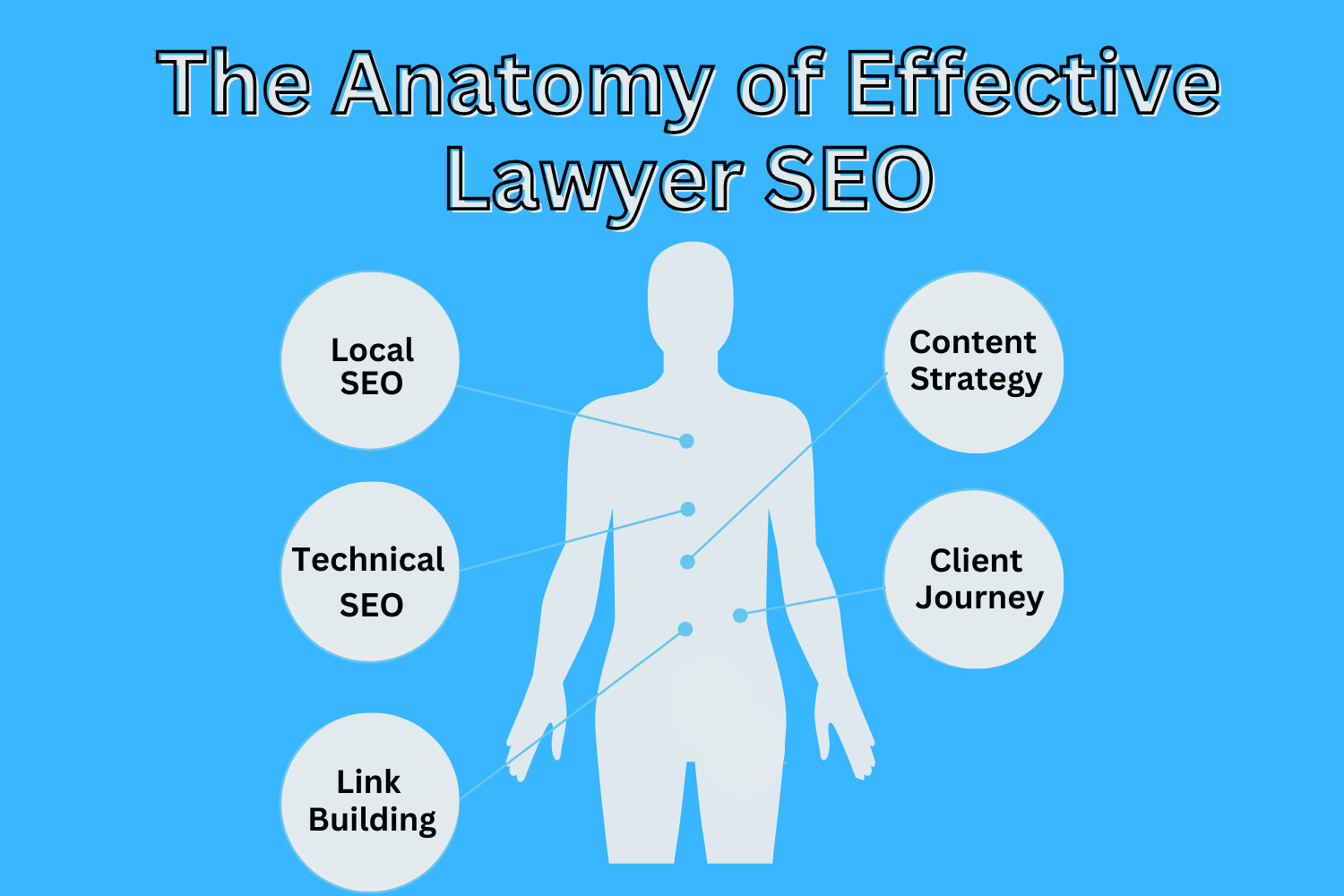
Effective measurement and tracking are essential for understanding the return on investment from your SEO efforts and identifying opportunities for improvement. Legal SEO success should be measured not just by rankings and traffic, but by the quality of leads generated and their conversion to paying clients.
Key Performance Indicators for Legal SEO
Tracking the right metrics ensures you focus on SEO activities that directly contribute to business growth rather than vanity metrics that don’t impact your bottom line. Primary KPIs should include organic traffic growth, keyword ranking improvements, local search visibility, and most importantly, lead generation and client acquisition from organic search. Establish baseline measurements for all key metrics before implementing SEO strategies to accurately measure improvement over time.
Monitor both quantity and quality metrics to get a complete picture of SEO performance. While total organic traffic is important, pay closer attention to traffic from high-intent keywords and pages that typically convert well. Track metrics like average session duration, pages per session, and bounce rate to understand how engaged your organic traffic is with your content.
Set up conversion tracking for key actions like contact form submissions, phone calls, and consultation requests. Use Google Analytics goals and Google Ads conversion tracking to monitor which SEO efforts are driving the most valuable actions. This data helps prioritize optimization efforts and demonstrate ROI to stakeholders.
| Metric Category | Key Metrics | Tracking Frequency | Business Impact |
|---|---|---|---|
| Rankings | Target keyword positions, local pack rankings | Weekly | Medium |
| Traffic | Organic sessions, pages per session, bounce rate | Weekly | High |
| Conversions | Form submissions, phone calls, consultations | Daily | Very High |
| Local Visibility | Google Business Profile views, direction requests | Weekly | High |
Analytics Setup and Reporting
Proper analytics configuration provides the foundation for accurate measurement and data-driven decision making. Set up Google Analytics 4 with enhanced ecommerce tracking to monitor user behavior throughout your website. Configure custom events to track important actions like PDF downloads, video views, and time spent on key pages. Use UTM parameters for all marketing campaigns to accurately attribute traffic sources and measure the effectiveness of different SEO initiatives.
Create custom dashboards that focus on the metrics most relevant to your law firm’s goals. Include widgets for organic traffic trends, top-performing keywords, conversion rates, and lead source attribution. Automated reporting saves time while ensuring stakeholders receive regular updates on SEO performance and progress toward established goals.
Implement call tracking to measure phone conversions from organic search traffic. Many potential legal clients prefer to call rather than fill out contact forms, so accurate call tracking is essential for understanding the full impact of your SEO efforts. Use dynamic number insertion to track calls from different traffic sources and landing pages.
ROI Calculation and Business Impact
Calculating the return on investment from SEO requires connecting organic search performance to actual business outcomes. Track the complete customer journey from initial organic search visit through client acquisition and case completion. Assign values to different types of leads based on historical conversion rates and average case values to calculate the monetary impact of SEO improvements.
Develop attribution models that account for the complex, multi-touch nature of legal client acquisition. Potential clients often visit your website multiple times, consume various content pieces, and interact with your firm through different channels before making a hiring decision. Use Google Analytics’ attribution modeling to understand how organic search contributes to the overall client acquisition process.
Compare the cost of organic search client acquisition to other marketing channels to demonstrate SEO’s value proposition. Include both direct costs (SEO tools, content creation, technical optimization) and indirect costs (time investment, opportunity costs) in your calculations. Most law firms find that organic search delivers higher-quality leads at lower acquisition costs compared to paid advertising or traditional marketing methods.
FAQ
Q: How long does it take to see results from SEO for a lawyer?
SEO results for law firms typically begin appearing within 3-6 months, with significant improvements often visible by 6-12 months. However, highly competitive practice areas like personal injury may require 12-18 months to achieve top rankings. The timeline depends on factors including website age, competition level, content quality, and the consistency of optimization efforts.
Q: What are the costs associated with implementing SEO for a lawyer?
Legal SEO costs vary significantly based on firm size and competition level. Solo practitioners might spend $2,000-5,000 monthly, while large firms often invest $10,000-25,000 monthly. DIY approaches can reduce costs but require significant time investment. Consider expenses for SEO tools, content creation, technical optimization, and ongoing monitoring when budgeting for legal SEO.
Q: Why should lawyers choose SEO over paid advertising?
SEO provides long-term value and builds cumulative results over time, while paid advertising stops generating leads when you stop paying. Organic search results often appear more trustworthy to potential clients than advertisements. SEO typically delivers higher-quality leads with better conversion rates, though it requires more patience and upfront investment compared to immediate paid advertising results.
Q: When is the best time to start SEO for a new law firm?
Start SEO immediately when launching a new law firm, as search engines need time to index and rank new websites. Early optimization efforts compound over time, giving you a competitive advantage as your practice grows. Even basic optimization during website development saves significant time and resources compared to retrofitting SEO later.
Q: Where can lawyers find reliable SEO resources and tools?
Google Search Console and Google Analytics provide free foundational tools for monitoring SEO performance. Paid tools like SEMrush, Ahrefs, and Moz offer advanced keyword research and competitive analysis features. Legal marketing blogs, SEO industry publications, and professional associations provide ongoing education and best practices for law firm digital marketing.
Q: Who should handle SEO for a law firm – internal staff or external agencies?
The choice depends on firm size, budget, and internal expertise. Small firms often benefit from specialized SEO agencies that understand legal marketing regulations and competitive landscapes. Larger firms might develop internal capabilities while using agencies for specialized projects. Consider the learning curve, time investment, and ongoing education required for effective SEO management.
Q: What are common SEO mistakes lawyers should avoid?
Common mistakes include keyword stuffing, neglecting local SEO, creating thin content, ignoring mobile optimization, and violating legal advertising ethics. Many lawyers focus too heavily on rankings rather than conversion optimization. Avoid buying low-quality backlinks, duplicating content across practice area pages, and neglecting Google Business Profile optimization.
Q: How can lawyers measure SEO success effectively?
Track both traffic metrics (organic sessions, keyword rankings, local visibility) and business outcomes (lead generation, consultation requests, client acquisition). Use Google Analytics goals to monitor conversions and implement call tracking for phone leads. Calculate return on investment by connecting SEO performance to actual case acquisitions and revenue generation.
Q: What’s the future outlook for legal SEO and digital marketing?
Legal SEO is becoming increasingly sophisticated, with artificial intelligence, voice search, and mobile-first indexing shaping the landscape. Local search continues growing in importance, while content quality and user experience factors gain more weight in rankings. Lawyers who invest in comprehensive, ethical SEO strategies now will have significant competitive advantages as digital marketing becomes even more critical.
Q: How does legal SEO compare to other marketing channels?
SEO typically provides better long-term ROI than paid advertising, though results take longer to achieve. Compared to traditional marketing like print ads or billboards, SEO offers better targeting and measurable results. Unlike networking or referral marketing, SEO scales more easily and provides consistent lead generation. Most successful law firms use SEO as part of a diversified marketing strategy.
Conclusion
The legal landscape has fundamentally shifted toward digital-first client acquisition, making SEO for a lawyer not just beneficial but essential for sustainable practice growth. Throughout this comprehensive guide, we’ve explored how strategic SEO implementation can transform your law firm’s visibility, credibility, and client acquisition capabilities. The investment in proper SEO delivers compound returns that continue growing long after initial optimization efforts are completed.
- Local search optimization generates the highest-quality leads with conversion rates often 2-3x higher than other marketing channels
- Content marketing establishes expertise and trust while capturing long-tail keyword traffic that competitors often overlook
- Technical SEO foundations ensure maximum visibility for all your optimization efforts and content investments
- Consistent measurement and refinement allows you to focus resources on strategies that directly impact client acquisition and revenue growth
The future of legal marketing will only become more competitive and sophisticated, with artificial intelligence, voice search, and mobile-first experiences reshaping how potential clients discover and evaluate legal services. Law firms that establish strong SEO foundations today will maintain significant competitive advantages as these technologies evolve and digital marketing becomes even more critical to practice success.
Partner with Case Quota for Success
Implementing the comprehensive SEO strategies outlined in this guide—from technical website optimization and local search domination to content marketing and performance tracking—requires significant expertise, time, and ongoing attention. Many law firms struggle to balance effective SEO implementation with their primary focus on serving clients and practicing law. Case Quota specializes in helping legal practices navigate these exact challenges by providing comprehensive digital marketing solutions specifically designed for the legal industry.
Our team handles everything from keyword research and content creation to technical SEO optimization and local search management, allowing you to focus on what you do best while we build your digital presence. We understand the unique compliance requirements, competitive landscape, and client behavior patterns that make legal SEO different from other industries. Whether you need help with Google Business Profile optimization, creating educational content that converts, or developing a complete SEO strategy that drives qualified leads, Case Quota provides the specialized expertise and ongoing support your firm needs to succeed in today’s digital marketplace.
Visit https://casequota.com to discover how we can help you implement these proven SEO strategies and transform your law firm’s digital marketing results into a consistent source of high-quality client acquisitions.