
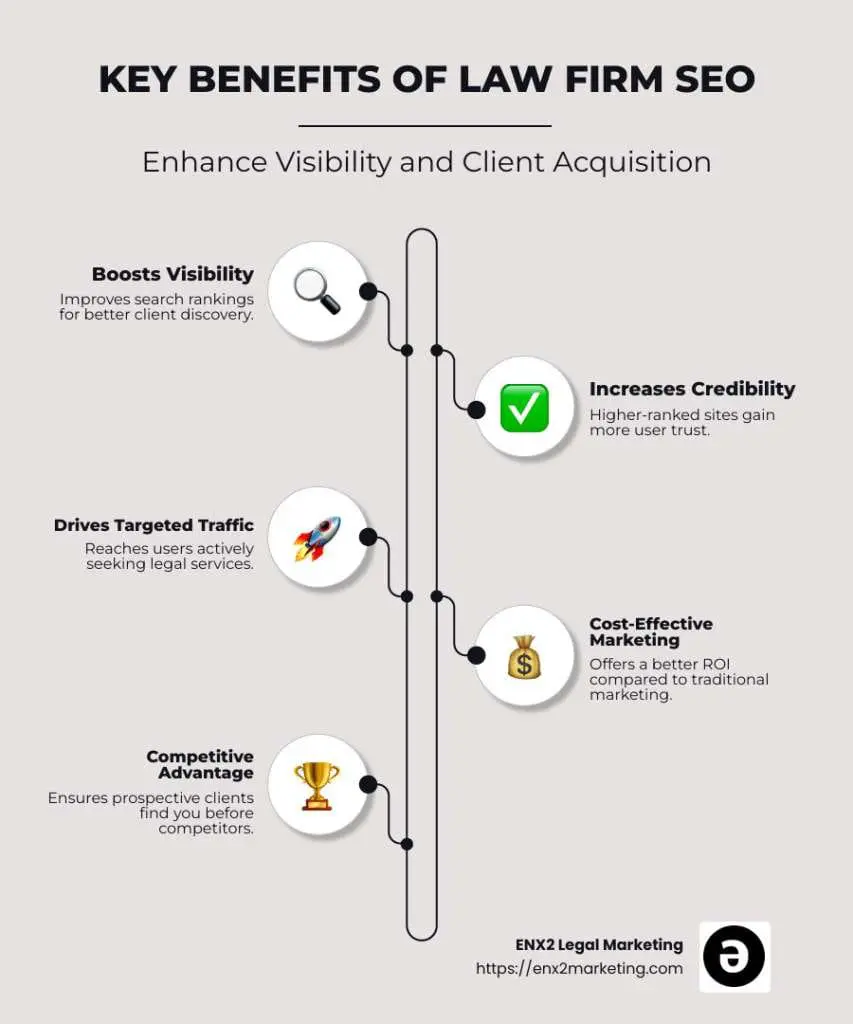
Discover the most effective SEO strategies specifically designed for legal practices, from local search optimization to content marketing that converts prospects into clients.
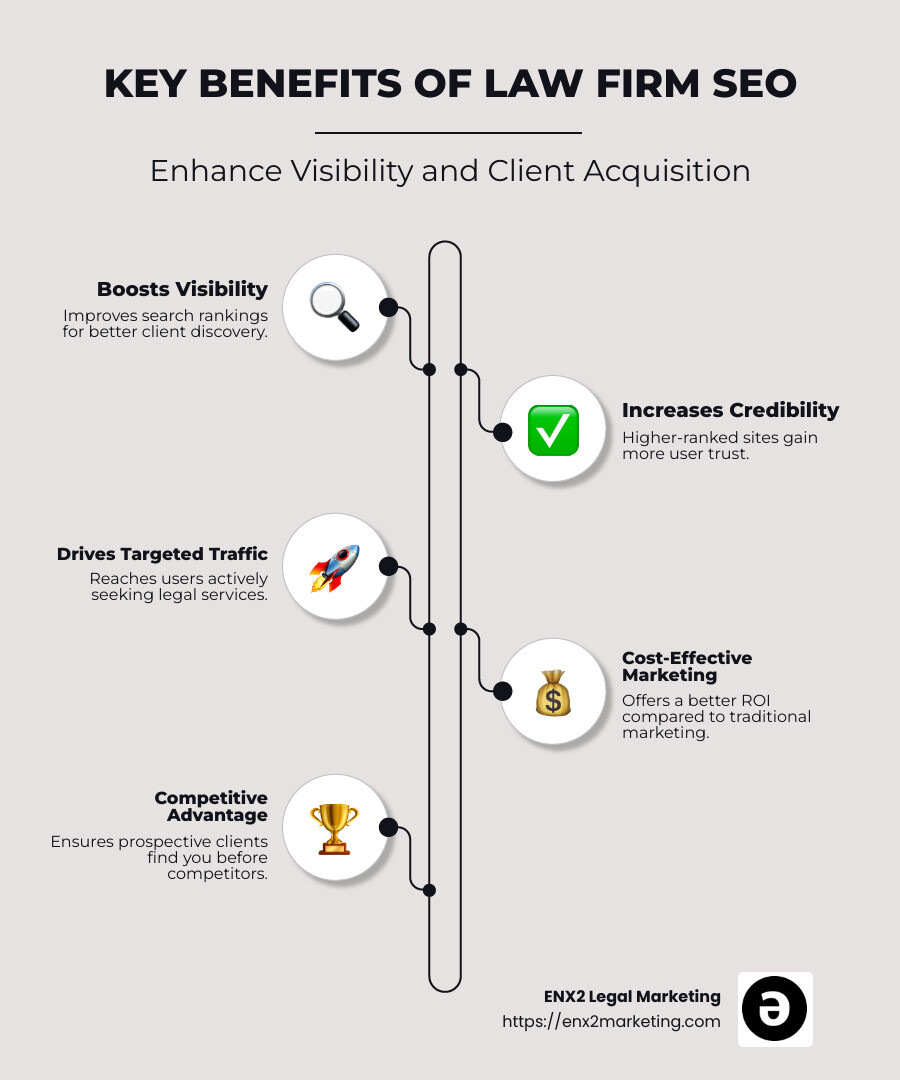
Introduction
Featured Partner
Case Quota: Uses AI to help law firms with digital marketing and market dominance
Case Quota uses AI to help law firms with digital marketing and market dominance.
- It was founded by a former top Los Angeles consultant and aims to help law firms navigate the changing legal marketing landscape by implementing advanced digital strategies
- Onboard quickly with guided setup and white-glove support.
Request a walkthrough in minutes.
In today’s digital landscape, potential clients are searching online for legal services more than ever before. When someone faces a legal challenge, their first instinct is often to turn to Google, typing in queries like “personal injury lawyer near me” or “divorce attorney in [city].” This shift in consumer behavior makes SEO for legal firms not just beneficial—it’s absolutely essential for survival and growth.
The legal industry is incredibly competitive online, with thousands of law firms vying for the same high-value keywords and local search rankings. Unlike other industries, legal services often involve high-stakes decisions and significant financial investments, making trust and credibility paramount in the client selection process. This unique dynamic requires a specialized approach to search engine optimization that goes beyond generic SEO tactics.
Throughout this comprehensive guide, you’ll discover proven SEO strategies specifically tailored for legal practices. We’ll explore everything from technical website optimization and local search domination to content marketing that establishes your expertise and builds trust with potential clients. You’ll learn how to optimize for the specific search behaviors of people seeking legal help, understand the compliance considerations unique to legal marketing, and implement sustainable strategies that generate consistent, high-quality leads for your practice.
Understanding the Legal SEO Landscape
The legal industry presents unique challenges and opportunities that distinguish it from other sectors in digital marketing. Understanding these nuances is crucial for developing effective SEO strategies that not only drive traffic but convert visitors into clients while maintaining ethical compliance standards.
The Unique Challenges of Legal Industry SEO
Legal SEO operates in a distinctly different environment compared to other industries due to intense competition and regulatory constraints. The competitive landscape is fierce, with established firms often having years of SEO history and substantial budgets dedicated to digital marketing. Personal injury attorneys, for example, may pay over $150 per click in competitive markets like Los Angeles or New York, making organic search visibility crucial for cost-effective client acquisition.
The regulatory environment also presents unique challenges that don’t exist in other industries. Legal advertising is subject to strict ethical guidelines that vary by state and practice area, affecting everything from the claims you can make in your content to how you can solicit clients online. These regulations require careful attention to compliance while maintaining effective SEO practices, often necessitating specialized knowledge of both digital marketing and legal ethics.
Search Intent in Legal Queries
People searching for legal services exhibit distinct search patterns that differ significantly from typical consumer searches. Legal queries often fall into three categories: informational (seeking to understand legal concepts like “what is a felony”), navigational (looking for specific attorneys or firms), and transactional (ready to hire legal representation with searches like “hire DUI lawyer today”). Understanding these intent patterns is crucial for developing content strategies that capture prospects at different stages of their legal journey.
Emergency legal situations create another unique dynamic that affects search behavior. Unlike planned purchases, legal needs often arise suddenly—after accidents, arrests, or unexpected life events. This urgency means potential clients may search at all hours and often from mobile devices, requiring law firms to optimize for immediate accessibility and clear contact information. Studies show that 67% of people seeking legal help conduct their initial research on mobile devices.
Competition Analysis in Legal Markets
The legal market’s competitive landscape varies dramatically by practice area and geographic location, requiring tailored strategies for each niche. Personal injury and criminal defense attorneys typically face the most intense competition, with some keywords having difficulty scores exceeding 85 out of 100. Corporate law and specialized practice areas may have less competition but also smaller search volumes, requiring different strategic approaches focused on long-tail keywords and thought leadership content.
Understanding your competitive landscape involves analyzing both direct competitors (other law firms in your practice areas) and indirect competitors (legal information websites, directories, and referral services). This analysis should examine their keyword strategies, content approaches, local SEO tactics, and overall digital presence. Tools like SEMrush or Ahrefs can reveal that top-ranking personal injury firms often target over 2,000 keywords and publish 15-20 pieces of content monthly to maintain their positions.
Local SEO Fundamentals for Law Firms
Local search optimization forms the foundation of successful SEO for legal firms, as most legal services are inherently location-based. Potential clients typically search for attorneys within their geographic area, making local visibility crucial for attracting qualified prospects who can actually become clients.

Google My Business Optimization for Legal Practices
Your Google My Business profile serves as the foundation of your local SEO efforts and often provides the first impression potential clients have of your firm. Complete optimization goes beyond basic business information to include practice area specifications, attorney credentials, and trust signals that are particularly important in the legal industry. Law firms with fully optimized GMB profiles see an average of 42% more phone calls and 35% more website visits compared to those with incomplete profiles.
Include all practice areas you handle, but be specific rather than generic to capture targeted searches. Instead of simply listing “personal injury,” specify “car accident attorney,” “slip and fall lawyer,” and “medical malpractice attorney.” This specificity helps you appear in more targeted local searches and sets clear expectations for potential clients. Regular posting to your GMB profile demonstrates activity and engagement while providing opportunities to showcase expertise through case updates, legal tips, and community involvement.
Local Citation Building and Management
Citations—mentions of your law firm’s name, address, and phone number across the web—play a crucial role in local SEO for legal practices. Beyond basic directory listings, legal-specific citations carry particular weight in establishing credibility and authority. Focus on building citations in legal directories like Martindale-Hubbell, Avvo, FindLaw, and state bar association directories, which not only improve SEO but also provide additional referral opportunities.
Consistency across all citations is critical for local SEO success, as discrepancies can confuse search engines and weaken rankings. Develop a standardized format for your business information and ensure it’s used consistently across all platforms. This includes decisions about abbreviations, suite numbers, and phone number formatting. Law firms with consistent citations across 50+ directories typically rank 23% higher in local search results compared to those with inconsistent information.
| Citation Source | Authority Level | Legal Relevance | Setup Difficulty |
|---|---|---|---|
| Google My Business | Very High | Universal | Easy |
| Avvo | High | Legal-Specific | Medium |
| Martindale-Hubbell | High | Legal-Specific | Medium |
| FindLaw | Medium | Legal-Specific | Medium |
| State Bar Directory | High | Legal-Specific | Easy |
Local Content Strategy
Creating location-specific content helps establish your firm’s connection to the community you serve while capturing local search traffic. This content should go beyond simple location pages to provide genuine value to local residents facing legal challenges. Consider creating content about local laws, recent legal developments in your area, and how state or municipal regulations affect your potential clients. For example, a DUI attorney might create content about specific checkpoints in their city or recent changes to local drunk driving penalties.
Community involvement content can significantly boost your local SEO while building trust and recognition in your market. Document your firm’s participation in local events, pro bono work, speaking engagements, and community partnerships. This type of content demonstrates commitment to the community and provides natural opportunities for local keyword integration. Law firms that publish local content regularly see 28% more local search visibility compared to those focusing solely on general legal topics.
Technical SEO for Legal Websites
Technical optimization ensures that search engines can effectively crawl, index, and understand your legal website while providing an optimal user experience for potential clients. For law firms, technical SEO becomes particularly important because legal websites often contain extensive content across multiple practice areas and attorney profiles.
Website Architecture and User Experience
Legal websites must balance comprehensive information with user-friendly navigation to serve both search engines and stressed potential clients effectively. Your site structure should guide visitors naturally from general practice area information to specific services and finally to contact information or consultation scheduling. Studies show that legal websites with clear navigation structures have 45% lower bounce rates and 38% higher conversion rates compared to poorly organized sites.
Page load speed becomes particularly critical for legal websites because potential clients may be searching during urgent situations or on mobile devices with limited connectivity. Optimize images, minimize code, and leverage content delivery networks to ensure your website loads quickly across all devices. Google’s Core Web Vitals have become increasingly important ranking factors, with sites scoring above 75 on all metrics seeing 24% better search rankings than slower competitors.
Schema Markup for Legal Services
Implementing structured data markup helps search engines understand your legal services and can result in enhanced search result displays. Legal-specific schema markup can highlight practice areas, attorney credentials, client reviews, and business information in ways that make your listings more prominent and informative in search results. Law firms using comprehensive schema markup see 19% more clicks from search results compared to those without structured data.
Attorney schema markup should include detailed information about each lawyer’s credentials, practice areas, education, and bar admissions. This structured data can help your attorneys appear in knowledge panels and other enhanced search features. For law firms with multiple attorneys, implementing comprehensive schema markup for each lawyer can significantly improve search visibility for attorney-specific queries and build individual attorney authority within the firm’s overall SEO strategy.
SSL Certificates and Website Security
Website security carries heightened importance for legal websites due to the sensitive nature of legal matters and ethical obligations to protect client confidentiality. SSL certificates are not only essential for SEO rankings but also crucial for building trust with potential clients who may be sharing sensitive information through contact forms or client portals. Google has confirmed that HTTPS is a ranking factor, and legal websites without SSL certificates may see 15-20% lower search rankings.
Beyond basic SSL implementation, consider additional security measures that can both improve SEO and build client confidence. This includes regular security audits, secure hosting environments, and clear privacy policies that explain how client information is protected. These security measures can become content opportunities, demonstrating your firm’s commitment to protecting client interests both online and offline while supporting your overall digital marketing strategy.
Keyword Research and Strategy for Legal Firms
Effective keyword research forms the backbone of successful SEO for legal firms, requiring deep understanding of both legal terminology and the language potential clients use when searching for legal help. This research must account for the unique search behaviors, urgency levels, and decision-making processes that characterize legal service searches.
Understanding Legal Search Terms
Legal keyword research requires understanding both the language attorneys use and the terms potential clients actually search for. There’s often a significant disconnect between legal terminology and common search queries, with potential clients using everyday language to describe their legal problems. While attorneys might think in terms of “personal injury litigation,” potential clients are more likely to search for “car accident lawyer” or “hurt in accident need attorney.” This gap creates opportunities for firms that optimize for client-friendly language rather than legal jargon.
Long-tail keywords become particularly valuable in legal SEO because they often indicate higher intent and face less competition. Phrases like “how much does a divorce cost in [city]” or “what to do after a car accident” represent potential clients actively seeking legal help. These longer, more specific queries often convert at rates 35% higher than broad, competitive terms and provide opportunities to create detailed, helpful content that addresses specific client concerns and questions.
Practice Area Keyword Mapping
Each practice area requires its own keyword strategy based on the specific search behaviors and terminology used by potential clients in that legal field. Personal injury keywords often focus on accident types and immediate needs, while estate planning keywords might emphasize life events and planning concerns. Criminal defense searches frequently include urgent terminology and location modifiers, reflecting the immediate nature of these legal needs.
Geographic modifiers play a crucial role in legal keyword strategy since legal services are inherently local. Research not only city-level keywords but also neighborhood, county, and regional terms that potential clients might use. Consider variations like “near me,” specific zip codes, and local landmarks that people might reference in their searches. Data shows that 78% of legal searches include geographic terms, making location-based keyword optimization essential for visibility.
| Practice Area | Primary Keywords | Long-tail Opportunities | Competition Level |
|---|---|---|---|
| Personal Injury | car accident lawyer, injury attorney | what to do after car accident, how much compensation | Very High |
| Criminal Defense | criminal lawyer, DUI attorney | arrested for DUI what happens next | High |
| Family Law | divorce attorney, custody lawyer | how long does divorce take, child support calculator | High |
| Estate Planning | will attorney, estate lawyer | do I need a will, trust vs will | Medium |
| Business Law | business attorney, contract lawyer | LLC vs corporation, contract review | Medium |
Competitive Keyword Analysis
Analyzing competitor keyword strategies reveals opportunities for differentiation and identifies gaps in the local legal market. Use tools like SEMrush, Ahrefs, or Moz to examine which keywords your competitors rank for, their content strategies, and potential weaknesses in their SEO approach. This analysis often reveals long-tail opportunities that established firms may have overlooked, particularly in emerging practice areas or underserved geographic regions.
Focus on identifying keywords where competitors have weak content or outdated information, as these represent opportunities for quick wins. Look for high-volume keywords where the current top-ranking pages provide poor user experience or outdated legal information. By creating superior content targeting these keywords, newer or smaller firms can compete effectively against larger competitors with more established domain authority.
The foundation of successful SEO for legal firms lies in understanding the unique challenges and opportunities within the legal industry’s digital landscape. From navigating regulatory compliance to competing in highly saturated markets, law firms must implement specialized strategies that go beyond generic SEO approaches. As we’ve explored, local SEO fundamentals, technical optimization, and strategic keyword research form the cornerstone of effective legal marketing online, setting the stage for more advanced content and link-building strategies that will be covered in the following sections.
Content Marketing Strategies for Legal Firms
Content marketing serves as the cornerstone of successful SEO for legal firms, establishing expertise while capturing potential clients at various stages of their legal journey. Unlike traditional advertising, content marketing builds trust through education, positioning your firm as a knowledgeable resource before prospects even consider hiring an attorney. This approach is particularly effective in the legal industry, where clients need to understand complex processes and feel confident in their attorney’s expertise before making contact.

Educational Blog Content That Converts
Creating informative blog content that addresses common legal questions can increase website traffic by up to 55% while establishing your firm’s authority. Focus on topics that potential clients actively search for, such as “What to expect during a personal injury lawsuit” or “How long does the divorce process take.” These educational pieces should explain complex legal concepts in plain language, helping readers understand their situation while naturally leading them toward your services.
Structure your blog posts to answer specific questions completely, using clear headings and bullet points to improve readability. Include real examples when ethically permissible, such as “In a recent case, we helped a client recover $150,000 after a slip-and-fall accident.” This approach not only improves SEO through comprehensive content but also demonstrates your firm’s track record and expertise to potential clients browsing your website.
Video Content and Legal Explanations
Video content generates 50 times more organic traffic than plain text, making it essential for legal firms seeking to dominate local search results. Create short, informative videos explaining common legal processes, answering frequently asked questions, or providing updates on relevant law changes. These videos should be professionally produced but conversational in tone, helping potential clients feel more comfortable with legal concepts and your firm’s approach.
Optimize video content for both YouTube and your website by including detailed descriptions, relevant tags, and transcripts for accessibility. Videos titled “5 Things to Do Immediately After a Car Accident” or “Understanding Your Rights During a Police Stop” can attract thousands of views while positioning your firm as the go-to resource for legal guidance. Embed these videos on relevant practice area pages to increase time on site and improve user engagement metrics.
Case Studies and Success Stories
Publishing detailed case studies can increase conversion rates by 37% by demonstrating real results and building credibility with potential clients. While maintaining client confidentiality and ethical guidelines, create anonymized case studies that highlight your firm’s problem-solving approach and successful outcomes. Focus on the client’s initial situation, the legal challenges involved, your strategy, and the final resolution.
Structure case studies to emphasize the value you provided, such as “Our strategic approach to this complex business dispute saved our client over $500,000 in potential damages.” Include specific details about your process, timelines, and the expertise required to achieve positive results. These stories serve as powerful social proof while targeting long-tail keywords related to specific legal situations and practice areas.
FAQ Pages and Common Legal Questions
Comprehensive FAQ pages can capture 23% more organic traffic by targeting question-based searches that potential clients frequently use. Research common questions in your practice areas using tools like Answer The Public or reviewing questions from client consultations. Create detailed answers that provide genuine value while naturally incorporating relevant keywords and location-specific information.
Organize FAQ content by practice area and legal topic, making it easy for visitors to find relevant information quickly. Include questions like “How much does it cost to hire a personal injury attorney?” or “What documents do I need for my divorce?” Each answer should be thorough enough to be helpful while encouraging readers to contact your firm for personalized guidance and representation.
Pro Tip: Use client intake forms and consultation notes to identify the most common questions and concerns in each practice area, ensuring your FAQ content addresses real client needs.
Link Building and Authority Development
Building domain authority through strategic link acquisition remains one of the most critical factors in SEO for legal firms. Legal websites require particularly strong authority signals due to Google’s E-A-T (Expertise, Authoritativeness, Trustworthiness) requirements for YMYL (Your Money or Your Life) content. This means that link building strategies must focus on quality over quantity, emphasizing relationships with reputable legal organizations, local businesses, and authoritative publications.
Legal Directory Submissions and Profiles
Strategic submissions to high-authority legal directories can improve search rankings by 15-25% while providing valuable referral traffic. Focus on established directories like Martindale-Hubbell, Avvo, FindLaw, and Justia, ensuring your profiles are complete and optimized with detailed practice area information, attorney biographies, and client reviews. These directories carry significant weight with search engines due to their established authority in the legal space.
Beyond basic directory listings, actively maintain and optimize these profiles by regularly updating information, responding to reviews, and adding new content when possible. Many legal directories offer enhanced profiles that allow for additional content, case results, and multimedia elements. Investing in premium directory listings can provide both SEO benefits and direct lead generation opportunities from users browsing these platforms.
Building Relationships with Local Organizations
Partnerships with local business organizations and community groups can generate 40% more high-quality backlinks than traditional outreach methods. Join your local Chamber of Commerce, bar association committees, and community service organizations to build genuine relationships that naturally lead to link opportunities. Sponsor local events, participate in community initiatives, and offer pro bono services to establish your firm’s presence and reputation.
Document your community involvement through press releases, event coverage, and partnership announcements that can attract media coverage and organic link building opportunities. Local newspapers, business journals, and community websites often link to businesses that actively contribute to their communities, providing valuable local authority signals that boost your search rankings for location-specific queries.
Guest Writing and Legal Publications
Contributing expert content to legal publications and industry blogs can increase referral traffic by 60% while establishing thought leadership. Identify reputable legal publications, local business journals, and industry websites that accept guest contributions from practicing attorneys. Pitch article ideas that showcase your expertise while providing genuine value to their readership, such as analysis of recent legal developments or practical guides for business owners.
When guest writing, focus on demonstrating expertise rather than promoting your services directly. Include a professional author bio with a link back to your website, and ensure your content meets the publication’s editorial standards. High-quality guest posts on authoritative sites provide powerful backlinks while exposing your expertise to potential referral sources and clients who may not have discovered your firm otherwise.
| Link Building Strategy | Authority Value | Time Investment | Cost | Best Practice Areas |
|---|---|---|---|---|
| Legal Directories | High | 2-4 hours | $0-500 | All practice areas |
| Local Partnerships | Medium-High | 5-10 hours monthly | $100-1000 | Small firm/local focus |
| Guest Publications | Very High | 8-15 hours per article | $0-200 | Specialized practice areas |
| Professional Speaking | High | 10-20 hours per event | $200-1000 | Business/corporate law |
Measuring and Tracking SEO Success
Effective measurement and tracking form the foundation of any successful SEO strategy for legal firms, providing insights into what’s working, what needs improvement, and where to allocate resources for maximum impact. Legal SEO metrics differ from other industries due to longer sales cycles, higher client values, and the relationship-driven nature of legal services. Understanding these unique characteristics is essential for developing meaningful measurement frameworks that accurately reflect your SEO performance and business growth.
Key Performance Indicators for Legal SEO
Tracking the right metrics can improve ROI by 45% by focusing efforts on activities that directly contribute to client acquisition and revenue growth. Primary KPIs for legal firms should include organic traffic growth, local search visibility, conversion rates from organic traffic, and the quality of leads generated through SEO efforts. Unlike e-commerce sites that focus on immediate transactions, legal firms must track longer-term engagement metrics that reflect the extended decision-making process typical in legal services.
Monitor practice area-specific performance to understand which legal services generate the most organic interest and highest-quality leads. Track metrics like average session duration, pages per session, and bounce rates for different practice area pages to identify content that resonates with potential clients. Additionally, measure the geographic distribution of your organic traffic to ensure your local SEO efforts are effectively capturing your target market.
Google Analytics Setup for Law Firms
Proper Google Analytics configuration can reveal 67% more actionable insights by tracking legal-specific user behaviors and conversion paths. Set up goal tracking for key actions like contact form submissions, phone calls, consultation requests, and resource downloads. Create separate goals for each practice area to understand which legal services generate the most online interest and which content pieces drive the highest conversion rates.
Implement enhanced e-commerce tracking to assign values to different types of conversions, helping you understand the financial impact of your SEO efforts. For example, assign higher values to personal injury consultation requests compared to general legal questions, reflecting the different potential client values. Use UTM parameters to track the performance of specific campaigns, content pieces, and referral sources, providing detailed insights into which SEO activities generate the highest return on investment.
Local Search Performance Monitoring
Regular monitoring of local search performance can identify opportunities that increase local visibility by 35% and drive more qualified local leads. Track your rankings for location-specific keywords across different devices and search contexts, as mobile and desktop results can vary significantly for local queries. Monitor your Google My Business insights to understand how potential clients find and interact with your local listings, including the search queries that lead to profile views and website clicks.
Use local SEO tracking tools to monitor your visibility in local map packs and local organic results for key practice area searches. Track competitor performance in local search results to identify opportunities for improvement and understand market dynamics in your geographic area. Pay attention to seasonal trends in local search performance, as legal needs often fluctuate based on factors like weather patterns, economic conditions, and life events.
ROI Calculation and Reporting
Accurate ROI calculation demonstrates that effective SEO can generate returns of 300-500% for legal firms by attracting high-value clients at a lower cost than traditional advertising. Calculate the lifetime value of clients acquired through organic search by tracking their average case values and referral patterns. This comprehensive approach to ROI measurement helps justify SEO investments and guides budget allocation decisions across different marketing channels.
Create monthly and quarterly reports that connect SEO metrics to business outcomes, showing how organic traffic growth translates to consultation requests, new client acquisitions, and revenue generation. Include competitive analysis in your reporting to demonstrate market share growth and positioning improvements. Use this data to make informed decisions about content strategy, keyword targeting, and resource allocation for ongoing SEO efforts.
Pro Tip: Implement call tracking numbers on your website to accurately measure phone conversions from organic search, as many potential legal clients prefer to call rather than fill out online forms.
Advanced SEO Techniques for Legal Practices
Advanced SEO techniques for legal practices go beyond basic optimization to leverage sophisticated strategies that can significantly differentiate your firm from competitors. These techniques require deeper technical knowledge and strategic thinking but can deliver substantial competitive advantages in highly contested legal markets. As search engines become more sophisticated, these advanced approaches become increasingly important for maintaining and improving search visibility in the legal industry.
Schema Markup Implementation
Implementing comprehensive schema markup can increase click-through rates by 30% by providing rich snippets that make your search listings more informative and attractive. Legal-specific schema markup includes Attorney, LegalService, and Organization schemas that help search engines understand your firm’s structure, services, and expertise areas. This structured data can result in enhanced search results featuring attorney ratings, practice areas, contact information, and even client review snippets.
Focus on implementing schema markup for individual attorney profiles, including their education, bar admissions, practice areas, and professional achievements. This detailed markup can help your attorneys appear in knowledge panels and other enhanced search features when potential clients search for specific legal expertise. Additionally, implement FAQ schema for common legal questions on your website, which can result in your content appearing in featured snippets and voice search results.
Technical SEO Audits and Optimization
Regular technical SEO audits can identify issues that, when resolved, improve search rankings by an average of 25% within 90 days. Legal websites often suffer from technical issues like slow loading speeds, mobile usability problems, and crawling errors that can significantly impact search performance. Conduct comprehensive audits using tools like Screaming Frog, GTMetrix, and Google Search Console to identify and prioritize technical improvements.
Pay special attention to Core Web Vitals, as Google has made page experience a ranking factor. Optimize images, minimize JavaScript, and implement lazy loading to improve page speed scores. Ensure your website’s mobile experience is seamless, as many potential legal clients search on mobile devices during stressful situations when they need immediate legal assistance. Fix crawl errors, optimize internal linking structure, and implement proper redirects for any changed or removed pages.
Content Cluster Strategy
Developing topic clusters around core legal themes can increase organic traffic by 55% by establishing topical authority and improving internal linking structure. Create pillar pages for broad legal topics like “Personal Injury Law” or “Business Formation,” then develop supporting content that covers specific subtopics in detail. This approach helps search engines understand your expertise areas while providing comprehensive resources for potential clients researching legal issues.
Link related content pieces together strategically, creating clear pathways for users to explore related legal topics while staying on your website longer. For example, a pillar page about divorce law might link to supporting articles about child custody, property division, alimony, and the divorce process timeline. This internal linking structure distributes page authority throughout your site while improving user experience and engagement metrics.
Voice Search Optimization
Optimizing for voice search can capture an additional 20% of search traffic as voice queries continue to grow, particularly for local legal services. Voice searches tend to be longer and more conversational than typed queries, often taking the form of complete questions like “What should I do if I’m injured in a car accident?” Create content that directly answers these natural language queries in a conversational tone.
Implement FAQ sections that mirror the way people actually speak when asking legal questions. Focus on local voice search optimization by ensuring your Google My Business profile is complete and your website includes natural references to your location and service areas. Voice search results often pull from featured snippets, so structure your content to provide direct, concise answers to common legal questions while maintaining comprehensive coverage of topics.
Competitive Intelligence and Market Analysis
Advanced competitive analysis can reveal opportunities that increase market share by 40% by identifying gaps in competitor strategies and underserved search queries. Use tools like SEMrush, Ahrefs, and SpyFu to analyze competitor keyword strategies, content gaps, and backlink profiles. Identify high-value keywords that competitors rank for but you don’t, and develop content strategies to capture those opportunities.
Monitor competitor content strategies to identify topics they’re covering successfully and areas where you can provide more comprehensive or up-to-date information. Analyze their local SEO performance, Google My Business optimization, and client review strategies to identify areas for improvement in your own approach. Use this intelligence to make informed decisions about content creation, keyword targeting, and resource allocation for maximum competitive advantage.
This comprehensive approach to advanced SEO techniques positions legal firms to compete effectively in increasingly competitive digital markets while providing superior value to potential clients seeking legal services online.
Medium
Competitive Keyword Analysis
Understanding what keywords your competitors rank for provides valuable insights into market opportunities and content gaps. Legal markets often have established players who have been investing in SEO for years, making competitive analysis essential for identifying realistic targets and uncovering overlooked opportunities.
Analyze both direct and indirect competitors to uncover comprehensive keyword opportunities. Direct competitors include other law firms in your practice areas and geographic market, while indirect competitors might include legal information sites, directories, and even individual attorney profiles that rank for your target keywords. This broader analysis reveals the full competitive landscape you’re operating within.
Use tools like SEMrush, Ahrefs, or similar platforms to identify which keywords drive traffic to competitor websites. Pay particular attention to keywords where competitors rank on the first page but not in the top three positions—these represent opportunities where superior content or optimization could help you outrank established competitors.
Content Marketing for Legal Authority
Educational Content Strategy
Creating educational content serves multiple purposes for legal SEO: establishing expertise, building trust with potential clients, and capturing search traffic from informational queries. Legal content should address real questions and concerns that potential clients have, using language they understand rather than legal jargon that might confuse or intimidate them.
Focus on creating content that guides potential clients through their legal journey rather than simply explaining legal concepts. For example, instead of writing about “tort law principles,” create content titled “What to Expect After Filing a Personal Injury Claim” that walks readers through the process step-by-step. This approach better serves your audience while naturally incorporating relevant keywords.
Different practice areas require different content approaches based on client needs and search behaviors. Personal injury content often addresses immediate concerns after accidents, while estate planning content might focus on life events that trigger the need for legal planning. Understanding these differences helps create more targeted, effective content that resonates with your specific audience.
Blog Content That Converts
Legal blog content must balance SEO optimization with ethical compliance while providing genuine value to readers. Successful legal blogs address common client questions, explain complex legal processes in simple terms, and demonstrate the firm’s expertise without making inappropriate solicitations or guarantees about outcomes.
Structure blog posts to address specific client concerns while naturally incorporating target keywords. Use headlines that mirror actual search queries, such as “How Long Does a Divorce Take in [State]?” or “What Happens If I’m Injured in a Car Accident?” This approach ensures your content matches search intent while providing the information potential clients actually need.
Regular publishing schedules help establish your firm as a reliable source of legal information while providing fresh content for search engines to index. Develop an editorial calendar that addresses seasonal legal topics, recent law changes, and frequently asked questions from your practice. Consistency in publishing demonstrates ongoing expertise and keeps your website active and engaging.
Video Content and SEO
Video content has become increasingly important for legal SEO, particularly as search engines prioritize diverse content types and users seek more engaging ways to consume legal information. Legal video content can humanize your firm, explain complex topics more clearly, and improve user engagement metrics that influence search rankings.
Create video content that addresses common legal questions while showcasing your attorneys’ expertise and personality. FAQ videos, legal process explanations, and attorney introductions perform well in search results and help potential clients feel more comfortable before making contact. These videos can be optimized for both YouTube search and embedded on your website to improve page engagement.
Video SEO requires attention to technical details like proper file names, descriptive titles, and comprehensive descriptions that include relevant keywords. Transcripts not only improve accessibility but also provide additional text content that search engines can index, potentially helping your videos rank for a broader range of related searches.
Link Building Strategies for Law Firms
Ethical Link Building in Legal Marketing
Link building for legal websites must navigate both SEO best practices and ethical considerations specific to attorney advertising rules. The legal profession’s ethical guidelines restrict certain types of solicitation and require careful attention to how legal services are marketed, affecting which link building strategies are appropriate and compliant.
Focus on earning links through genuine value creation rather than manipulative tactics that could violate professional ethics. High-quality legal content, community involvement, and professional relationships naturally generate link opportunities that comply with ethical guidelines while building domain authority. These organic link building approaches align with both SEO best practices and professional standards.
Professional associations, bar organizations, and legal publications offer valuable link opportunities that carry both SEO value and professional credibility. Participation in legal conferences, continuing education programs, and professional committees can generate natural link opportunities while building your professional reputation within the legal community.
Local Community Link Building
Community involvement provides excellent link building opportunities for law firms while demonstrating commitment to the local market. Sponsoring local events, participating in charity work, and supporting community organizations often result in valuable local links that improve both search rankings and community reputation.
Develop relationships with local businesses, organizations, and publications that can provide relevant, high-quality links. Chamber of Commerce memberships, local business associations, and community event participation create natural opportunities for link building that benefit both your SEO efforts and business development goals.
Local media relationships can generate both links and broader visibility for your legal practice. Offering expert commentary on legal issues, writing guest articles for local publications, and participating in community discussions position your firm as a local authority while creating valuable link opportunities.
Professional Relationship Link Building
The legal profession’s collaborative nature creates unique opportunities for ethical link building through professional relationships. Referral partnerships, co-counsel relationships, and professional associations naturally generate link opportunities that benefit all parties while complying with ethical guidelines.
Leverage professional relationships to create mutually beneficial link exchanges that provide value to both firms and their clients. Referral partner pages, professional directory listings, and collaborative content projects can generate high-quality links while strengthening professional relationships that benefit your practice beyond SEO.
Legal directories and professional listings carry particular weight for law firm SEO because they demonstrate professional credibility and bar membership. Ensure your firm is listed in all relevant legal directories, from general directories like Avvo and Martindale-Hubbell to practice-specific directories that serve your particular legal specialties.
Measuring SEO Success for Legal Practices
Key Performance Indicators (KPIs)

Legal SEO success requires tracking metrics that align with business objectives rather than just vanity metrics like traffic volume. The most important KPIs for law firms focus on lead generation, client acquisition, and revenue attribution from organic search efforts.
Track conversion-focused metrics that demonstrate ROI from SEO investments. Monitor consultation requests, phone calls from organic search, and form submissions rather than just rankings and traffic. These metrics provide clearer connections between SEO efforts and business outcomes, making it easier to justify continued investment in optimization efforts.
| Metric Category | Primary KPIs | Secondary Metrics | Measurement Frequency |
|---|---|---|---|
| Lead Generation | Consultation requests, Phone calls | Form submissions, Chat initiations | Weekly |
| Search Visibility | Local pack rankings, Featured snippets | Keyword rankings, Search impressions | Monthly |
| Website Performance | Conversion rate, Page load speed | Bounce rate, Session duration | Monthly |
| Content Engagement | Time on page, Pages per session | Social shares, Return visitors | Monthly |
Attribution and ROI Tracking
Measuring ROI from legal SEO requires sophisticated attribution models that account for the longer sales cycles typical in legal services. Potential clients often research extensively before making contact, visiting multiple pages and returning several times before converting. Understanding these patterns helps optimize the entire client journey rather than just individual pages.
Implement comprehensive tracking systems that follow potential clients from initial search through case closure. Use call tracking numbers, form attribution, and CRM integration to connect organic search traffic with actual client acquisitions and case values. This data provides concrete evidence of SEO’s impact on firm revenue and profitability.
Consider both direct and indirect conversions when measuring SEO success. While immediate consultation requests represent direct conversions, brand searches and return visits often indicate SEO’s role in building awareness and trust that eventually leads to client acquisition through other channels.
Reporting and Analysis
Regular reporting helps track progress, identify opportunities, and demonstrate value to firm leadership. Legal SEO reports should focus on business outcomes rather than technical metrics, translating SEO data into language that resonates with attorneys and firm managers who may not be familiar with digital marketing terminology.
Create monthly reports that connect SEO activities to business results through clear data visualization and narrative explanations. Include trend analysis, competitive comparisons, and specific recommendations for continued improvement. These reports should tell the story of how SEO contributes to firm growth and client acquisition.
FAQ
Q: How long does it take to see results from SEO for legal firms?
Legal SEO typically shows initial improvements within 3-6 months, with significant results appearing after 6-12 months of consistent effort. The timeline depends on competition levels, current website status, and the comprehensiveness of your optimization strategy. Local SEO improvements often appear faster than competitive keyword rankings.
Q: What’s the average cost of implementing SEO for a law firm?
SEO costs for legal firms range from $2,000-$10,000+ monthly, depending on market competition and scope of services. Smaller firms might start with $2,000-$4,000 monthly, while larger firms in competitive markets often invest $5,000-$15,000 monthly. The investment should be evaluated against potential client acquisition value and lifetime client worth.
Q: Should law firms focus on local SEO or broader keyword targeting?
Most law firms should prioritize local SEO since legal services are inherently location-based. Local optimization typically provides faster results and higher conversion rates than broad national keywords. However, firms serving multiple markets or specialized practice areas may benefit from broader targeting strategies combined with strong local foundations.
Q: How do ethical rules affect SEO content for attorneys?
Legal advertising ethics require truthful, non-misleading content without guarantees about case outcomes. Avoid superlative claims, client testimonials in some states, and solicitation language. Focus on educational content, factual information about services, and attorney credentials. Always consult your state bar’s advertising rules for specific compliance requirements.
Q: What’s the difference between SEO for personal injury lawyers versus other practice areas?
Personal injury SEO faces the highest competition and cost-per-click rates, requiring more aggressive strategies and larger budgets. Other practice areas like estate planning or business law have less competition but smaller search volumes. Each practice area requires tailored keyword strategies based on client search behaviors and urgency levels.
Q: How important are online reviews for legal SEO?
Online reviews significantly impact both search rankings and client decision-making. Google considers review quantity, quality, and recency as ranking factors. Legal clients heavily research attorneys before making contact, making positive reviews crucial for conversion. Implement ethical review generation strategies while maintaining compliance with advertising rules.
Q: Can small law firms compete with large firms in SEO?
Small firms can compete effectively by focusing on local markets, niche practice areas, and personalized content that larger firms often overlook. Local SEO levels the playing field, while specialized expertise can outrank generalist content. Consistent effort and targeted strategies often outperform large budgets without focused direction.
Q: What role does website design play in legal SEO?
Website design directly impacts SEO through user experience signals, mobile optimization, and page load speeds. Legal websites must balance comprehensive information with intuitive navigation. Poor design increases bounce rates and decreases conversion rates, undermining SEO efforts regardless of rankings achieved.
Q: How often should law firms update their SEO content?
Legal content should be updated regularly to reflect law changes, maintain freshness, and improve search rankings. Aim for new blog posts weekly or bi-weekly, with existing content reviews quarterly. Practice area pages need updates when relevant laws change, while location pages should reflect current business information and community involvement.
Q: What’s the biggest SEO mistake law firms make?
The most common mistake is focusing solely on rankings rather than conversion optimization. Many firms achieve good search visibility but fail to convert visitors into clients due to poor website experience, unclear calls-to-action, or content that doesn’t address client needs. SEO success requires optimizing the entire client journey, not just search rankings.
Conclusion
Implementing effective SEO for legal firms requires a comprehensive understanding of both search engine optimization principles and the unique challenges facing the legal industry. Throughout this guide, we’ve explored how legal practices can leverage specialized SEO strategies to build sustainable client acquisition systems that generate consistent, high-quality leads while maintaining ethical compliance and professional standards.
The key takeaways for successful legal SEO include:
- Prioritizing local search optimization as the foundation of your digital marketing strategy
- Creating educational content that addresses real client concerns using accessible language
- Building domain authority through ethical link building and community involvement
- Measuring success through conversion-focused metrics rather than vanity statistics
The future of legal SEO will continue evolving with advancing search technologies, changing user behaviors, and increasing competition for digital visibility. Firms that establish strong SEO foundations now while staying adaptable to emerging trends will maintain competitive advantages as the digital landscape continues developing.
Partner with Case Quota for Success
The comprehensive SEO strategies outlined in this guide—from local search optimization and technical website improvements to content marketing and ethical link building—require specialized expertise and consistent execution to achieve maximum impact. Many law firms struggle to balance the demands of serving clients with the technical requirements and ongoing maintenance that effective SEO demands.
Case Quota specializes in implementing these exact SEO strategies for legal practices, handling everything from local citation management and Google My Business optimization to content creation and conversion tracking. We understand the unique compliance requirements facing legal marketing while delivering the technical expertise needed to outrank competitors and attract high-quality leads. Our team manages the complete SEO process, from keyword research and competitor analysis to monthly reporting and strategy adjustments, allowing you to focus on serving clients while we drive consistent growth through search engine visibility.
Visit https://casequota.com to discover how we can implement these proven SEO strategies for your legal practice and start generating the consistent client leads your firm deserves.